Remembrances
A rare and remarkable example of Indo-Persian autobiography by the poet Mir Taqi Mir. Mir Muhammad Taqi Mir (1723–1810) is the author of six collections of Urdu poetry and widely regarded as the finest ghazal poet in that language. However, he also wrote one volume of verse and three prose works in Persian, including Zikr-e Mir, or Remembrances, a rare and remarkable example of Indo-Persian autobiography. Remembrances recounts Mir’s ancestry, his father’s spiritual quest, and his own struggles to find education and patronage both in his native Agra and in Delhi. While the work may offer few glimpses into the author’s private life or professional literary activity, it presents a vivid picture of political events and intrigues between 1760 and 1789, when north India witnessed extensive warfare. The Persian text, presented here in the Naskh script, includes all the author’s additions and alterations properly identified and chronologically arranged, along with a newly revised English

Selected Ghazals and Other Poems
The finest ghazals of Mir Taqi Mir, the most accomplished of Urdu poets. Mir Muhammad Taqi Mir (1723–1810) is widely regarded as the most accomplished poet in the Urdu language. His massive output—six divans—was produced in Delhi and Lucknow during the high tide of Urdu literary culture. Selected Ghazals and Other Poems offers a comprehensive collection of Mir’s finest ghazals, extended lyrics composed of couplets, and of his masnavis, narrative works of a romantic or didactic character. The ghazals celebrate earthly and mystical love through subtle wordplay, vivid descriptions of the beloved, and a powerful individual voice. The sometimes satirical masnavis highlight everyday subjects: domestic pets, monsoon rains, the rigors of travel. They also include two astonishing love stories: one about young men whose relationship is shattered when one marries; the other about a queen, her peacock lover, and the jealous king who seeks to drive them apart. The Urdu text, presented here in the










Zama 202 BC
An illustrated account of the epic clash that marked the end of the Second Punic War and saw two of History's greatest generals face off against each other, ideal for anyone with an interest in the minds of the military greats. The battle of Zama,...

The Prince Who Beat the Empire
An acclaimed history of empire and resistance: this is the moving story of the rebel prince who beat the world’s most powerful corporation. The ships of the East India Company first docked at India's shores in Surat in the early 17th century. In time, through astute politics and military power, the Company became masters of this great port. But the Company came not with the intention of building Indian maritime trade, but with the single-minded goal of destroying its trading prowess. By 1800 the port was completely annexed, through a Treaty that gave protection to future generations of the local Nawab rulers. But, as elsewhere in India, the Company violated its promises. It stopped the family’s income, usurping its palaces, estates, jewellery and possessions. This left the infant granddaughters of the last Nawab on the brink of destitution. But in an unprecedented counter-attack, the father of the two girls stood to defy the Empire and expose its corruption overseas to the British at

Second Punic War in Iberia 220-206 BC
The first dedicated, illustrated study of the events of the Second Punic War in Iberia, which served as a launch pad for the Carthaginian invasion of Rome. Iberia was one of three crucial theatres of the Second Punic War between Carthage and Rome....
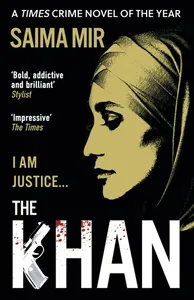
Khan
'Bold, addictive and brilliant.'¿Stylist, best fiction 2021 A Times Bestseller A¿Times &¿Sunday Times¿Best Crime Books of 2021 A Waterstones Thriller of The Month ¿ Be twice as good as men and four times as good as white men. Jia Khan has alwa...

Social Space of Language
This rich cultural history set in Punjab examines a little-studied body of popular literature to illustrate both the durability of a vernacular literary tradition and the limits of colonial dominance in British India. Farina Mir asks how qisse, a ...


Mir, S: Khan
The Khan


Coconut
Ever Feel Like you're constantly disappointing people? Meet Rumi. Rumi is a British Pakistani woman who's referred to as a 'Coconut' (brown on the outside, white on the inside). Born and brought up as a Muslim, Rumi spends more time enjoying fine wine and bacon than being at the mosque. When she meets Simon, a white guy, she hopes that his decision to convert to Islam will be enough to keep everyone happy. However, as Simon begins to explore his faith, Rumi's world spins off its axis in ways she could never have predicted. 'Mir's writing is side-achingly funny...hits both a zeitgeist and the universality of coming to terms with your own identity' FemaleArts

Yodel When You’re Winning
Yodel When You’re Winning

A Tale of Four Dervishes
Serves as an example of Urdu fiction that provides a glimpse into the customs, beliefs and people of the time.

Muslim Girls Rise
Little Leaders meets Good Night Stories for Rebel Girls in this gorgeous nonfiction picture book that introduces readers to nineteen powerhouse Muslim women who rose up and made their voices heard. Long ago, Muslim women rode into battle to defend...