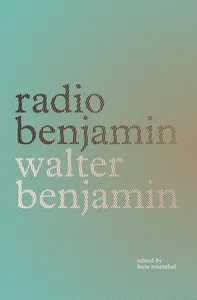
Radio Benjamin
Walter Benjamin was fascinated by the impact of new technology on culture, an interest that extended beyond his renowned critical essays. From 1927 to '33, he wrote and presented something in the region of eighty broadcasts using the new medium of...

Mourning Modernism
Mourning Modernism: Literature, Catastrophe, and the Politics of Consolation examines the writing of catastrophe, mass death, and collective loss in 20th-century literature and criticism. With particular focus on texts by Virginia Woolf, Walter Be...

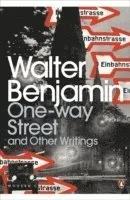
One-Way Street and Other Writings
Walter Benjamin - philosopher, essayist, literary and cultural theorist - was one of the most original writers and thinkers of the twentieth century. This new selection brings together Benjamin's major works, including 'One-Way Street', his dreaml...

Essayer Om Brecht
Innehåll: Vad är den episka teatern? Studier till den episka teaterns teori Ur Brechtkommentaren Ett familjedrama på den episka teatern Landet där proletariatet inte får nämnas Kommentarer till dikter av Brecht Brechts tolvskillingsroman Författaren som producent Samtal med Brecht

Unpacking My Library
"I fully realize that my discussion of the mental climate of collecting will confirm many of you in your conviction that this passion is behind the times, in your distrust of the collector type. Nothing is further from my mind than to shake e...


Origin of German Tragic Drama
Cited by Lukács as a principal source of literary modernism, Walter Benjamin's study of the baroque stage-form called Trauerspiel (literally, "mourning play") is the most complete document of his prismatic literary and philosophical prac...

Berlin Childhood around 1900
Composed in exile in the 1930s and published as a whole only after his death, the miniatures that make up Benjamin's Berlin Childhood are crystallized images of childhood experienced in a city later surrendered to fascism. No ordinary autobiography, the book is a Proustian experiment in memory and a meditative tour of the iconic spaces of a city irretrievably lost to the adult. Instead of details of family and friends, these miniatures evoke the sensory richness of childhood in images of the squares and courtyards, the parks and monuments of Berlin, the child's schoolbooks and the gloomy flats of elderly relatives. As Benjamin's friend Theodor Adorno writes in his afterword, 'the images the book brings up into a disturbing proximity are not idyllic and not contemplative. The shadow of Hitler's Reich falls across them. Dreamlike, they unite that horror with something that has long existed.' This new translation includes an introduction by Antonia Hofstätter, highlighting the way

Bild Och Dialektik - Essäer I Urval
Kulturkritikern Walter Benjamin (1892?1940) hade med sig anteckningsboken överallt och satt ofta och skrev på kaféer. Kanske bidrog den omständigheten till den sinnliga fräschör och improvisatoriska rörlighet som kännetecknar också hans mest intrikata och subtila resonemang. Benjamin tyckte om att leta där ingen annan letade, blottlägga symboliska dimensioner i sammanhang där sådana ansågs frånvarande eller betydelselösa. Han uppskattade gamla leksaker och gamla vykort och andra slags förbisedda ting och utvecklade (med Theodor W. Adornos beteckning) ?en mikroskopisk blick? på verkligheten. Det är den spännvidden vad gäller både perspektiv och uttryckssätt som gör honom så stimulerande att läsa. Det händer hela tiden saker i hans texter, med hans texter: varje mening är så att säga ny. "Bild och dialektik" rymmer bland annat några av Benjamins mest uppmärksammade och inflytelserika texter, som ?Liten fotografihistoria?, ?Konstverket i reproduktionsåldern? och ?Historiefilosofiska teser?, texter det är svårt att föreställa sig den moderna diskussionen om konst och kultur och historia utan. Beskrivningen i den nionde historiefilosofiska tesen av hur ?Historiens ängel? av en storm från paradiset hjälplöst slungas baklänges in i framtiden och alltså blickar bakåt istället för framåt skulle rentav kunna kallas clairvoyant. Volymen är en idealisk introduktion till Benjamins omfattande skrifställarskap. Den utkom ursprungligen 1969 och trycktes om 1991, men har sedan länge varit utgången.


Unpacking My Library
90 Classic titles celebrating 90 years of Penguin Books 'Every sort of passion verges on chaos, I know, but what the collecting passion verges on is a chaos of memories.' From intimate musings on his book collection, to a dream-like trip through t...


The Origin of German Tragic Drama
The Origin of German Tragic Drama is Walter Benjamin's most sustained and original work. It begins with a general theoretical introduction on the nature of the baroque art of the sixteenth and seventeenth centuries, concentrating on the peculiar stage-form of royal martyr dramas called Trauerspiel. Benjamin also comments on the engravings of Durer and the theatre of Calderon and Shakespeare. Baroque tragedy, he argues, was distinguished from classical tragedy by its shift from myth into history. Georg Lukacs, an opponent of Benjamin's aesthetics, singled out The Origin of German Tragic Drama as one of the main sources of literary modernism in the twentieth century.

Origin of the German Trauerspiel
Origin of the German Trauerspiel was Walter Benjamin's first full, historically oriented analysis of modernity. Readers of English know it as "The Origin of German Tragic Drama," but in fact the subject is something else-the play of mour...

Arcades Project
"To great writers," Walter Benjamin once wrote, "finished works weigh lighter than those fragments on which they labor their entire lives." Conceived in Paris in 1927 and still in progress when Benjamin fled the Occupation in 1...


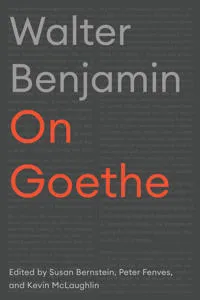
On Goethe
On Goethe contains the full range of Walter Benjamin's reflections on the central figure in modern German culture. The writings in this volume—newly translated, fully annotated, and framed by an extensive introduction—display a variety of styles and cover a vast array of topics. The collection revolves around two strikingly different essays. Whereas 'Goethe's Elective Affinities' develops a theory of critique in which a work is illuminated wholly from within itself, an article Benjamin wrote on Goethe for the Soviet Encyclopedia represents his first large-scale attempt to elaborate a historical-materialist methodology. The other thirty translations stand in similarly productive tension with one another. Some are concerned with concepts of beauty and categories of the aesthetic, others with the relation of art to politics and the status of 'classical authors' in contemporary culture, and still others with what remains of humanistic traditions in the wake of their disappearance under

Språkfilosofiska texter
Walter Benjamin (1892?1840) var en djupt originell litteratur- och kulturkritiker. Han var forskare, översättare, samlare och flanör och skrev banbrytande texter om bland annat den moderna urbana tillvaron ("Paris ? 1800-talets huvudstad"...

Om Hasch
Tog hasch klockan sju på kvällen efter att ha tvekat en lång stund. På dagen hade jag varit i Aix. Jag skriver ned det som följer endast för att kunna fastställa om några effekter infinner sig eller inte, eftersom min ensamma tillvaro inte medger någon annan sorts kontroll. Så inleder Walter Benjamin det protokoll han skrev över ett haschrus i Marseille i september 1928. I likhet med de övriga drogprotokoll som Benjamin och hans vänner förde över drogförsök under åren 1927-1934 kom texten från Marseille att få stor inverkan på hans liv och verk.Benjamin planerade att skriva en "mycket betydelsefull bok om hasch", men planerna förverkligades inte under hans levnad och Über Haschisch utgavs postumt först 1972. Men trots att han inte hann färdigställa sin haschbok är Om hasch ett fenomenalt verk helt i egen rätt. Boken består av protokoll, skisser, fragment och prosatexter i olika versioner och ger en fascinerande inblick i drogförsökens stora betydelse för Walter Benjamins tankevärld.


On Goethe
On Goethe contains the full range of Walter Benjamin's reflections on the central figure in modern German culture. The writings in this volume—newly translated, fully annotated, and framed by an extensive introduction—display a variety of styles and cover a vast array of topics. The collection revolves around two strikingly different essays. Whereas 'Goethe's Elective Affinities' develops a theory of critique in which a work is illuminated wholly from within itself, an article Benjamin wrote on Goethe for the Soviet Encyclopedia represents his first large-scale attempt to elaborate a historical-materialist methodology. The other thirty translations stand in similarly productive tension with one another. Some are concerned with concepts of beauty and categories of the aesthetic, others with the relation of art to politics and the status of 'classical authors' in contemporary culture, and still others with what remains of humanistic traditions in the wake of their disappearance under

The Work of Art in the Age of Mechanical Reproduction
One of the most important works of cultural theory ever written, Walter Benjamin's groundbreaking essay explores how the age of mass media means audiences can listen to or see a work of art repeatedly - and what the troubling social and political ...

Charles Baudelaire
Walter Benjamin, one of the foremost cultural commentators and theorists of this century, is perhaps best known for his analyses of the work of art in the modern age and the philosophy of history. Yet it was through his study of the social and cul...

Understanding Brecht
The relationship between philosopher-critic Walter Benjamin and playwright-poet Bertolt Brecht was both a lasting friendship and a powerful intellectual partnership. Having met in the late 1920s in Germany, Benjamin and Brecht both independently minded Marxists with a deep understanding of and passionate commitment to the emancipatory potential of cultural practices continued to discuss, argue and correspond on topics as varied as Fascism and the work of Franz Kafka. Faced by the onset of the 'midnight of the century', with the Nazi subversion of the Weimar Republic in Germany and the Stalinist degeneration of the revolution in Russia, both men, in their own way, strove to keep alive the tradition of dialectical critique of the existing order and radical intervention in the world to transform it. In Understanding Brecht we find collected together Benjamin's most sensitive and probing writing on the dramatic and poetic work of his friend and tutor. Stimulated by Brecht's oeuvre and

Reflections: Essays, Aphorisms, Autobiographical Writings
'This book is just that: reflections of a highly polished mind that uncannily approximate the century's fragments of shattered traditions.' -- Time A companion volume to Illuminations, the first collection of Walter Benjamin's writings, Reflections presents a further sampling of his wide-ranging work. Here Benjamin evolves a theory of language as the medium of all creation, discusses theater and surrealism, reminisces about Berlin in the 1920s, recalls conversations with Bertolt Brecht, and provides travelogues of various cities, including Moscow under Stalin. Benjamin moves seamlessly from literary criticism to autobiography to philosophical-theological speculations, cementing his reputation as one of the greatest and most versatile writers of the twentieth century.

One-Way Street
Walter Benjamin is one of the most fascinating and enigmatic intellectual figures of this century. Not only was he a thinker who made an enormous impact with his critical and philosophical writings, he shattered disciplinary and stylistic conventi...

Kapitalisme som religion
Kapitalismen er at forstå som en religion. Den er ikke blot et ‘etos’ med rødder i den protestantiske etik, ikke blot en af kristendommen begunstiget samfundsformation, men langt snarere selv et essentielt religiøst fænomen. indholdForord: Mikkel Bolt & Dominique RouthierWalter Benjamin: Kapitalisme som religionRobert Kurz: Offeret og den perverse genkomst af det arkaiskeGiorgio Agamben: En kommentar, i dag

Walter Benjamin: A Little History of Photography
Walter Benjamin: A Little History of Photography

The Correspondence of Walter Benjamin and Gershom Scholem 1932-1940
The Correspondence of Walter Benjamin and Gershom Scholem 1932-1940

Passagearbetet - Paris, 1800-talets Huvudstad. Band Ii
I Walter Benjamins livsprojekt, nu en modern klassiker, finns varken början eller slut. Under olika rubriker samlas tankar, fantasieggande citat, minimala essäer, ögonblicksbilder och hugskott. Man kan när som helst dyka ner i detta verk, en labyrint av tankebilder där Paris - med dess passager, historiska gestalter, mode och arkitektur, författar- och konstnärsöden, spelare och prostituerade, flanörer eller Baudelaire - står i centrum. Här finner vi också nycklarna till vårt eget nu. Här har vi vårt liv. Här har vi historien.


Illuminations
Illuminations contains the most celebrated work of Walter Benjamin, one of the most original and influential thinkers of the 20th Century: 'The Work of Art in the Age of Mechanical Reproduction', 'The Task of the Translator' and 'Theses on the Phi...

The Work of Art in the Age of Mechanical Reproduction
An attempt by literary critic Walter Benjamin to analyze the changed experience of art in modern society.

Berlin Childhood around 1900
Begun in Poveromo, Italy, in 1932, and extensively revised in 1938, Berlin Childhood around 1900 remained unpublished during Walter Benjamin's lifetime, one of his "large-scale defeats." Now translated into English for the first time in ...

