
Common Sense, The Rights of Man, The Age of Reason (Complete and Unabridged)
Common Sense, The Rights of Man, The Age of Reason (Complete and Unabridged)
Age of Reason
Paine's years of study and reflection on the role of religion in society culminated with this, his final work. An attack on revealed religion from the deist point of view - embodied by Paine's credo, "I believe in one God, and no more" -...

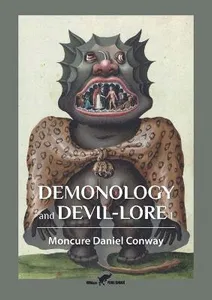

Demonology and Devil-Lore
Moncure Daniel Conway (1832-1907), the son of a Virginian plantation-owner, became a Unitarian minister but his anti-slavery views made him controversial. He later became a freethinker, and following the outbreak of the Civil War, which deeply div...


Rules of Civility
Rules of Civility



Nietzsche'S Beyond Good and Evil
Daniel Conway guides you through one of the most clearly developed statements of Nietzsche's mature philosophy, section by section. Adopting an interpretative approach throughout, Daniel Conway treats Beyond Good and Evil as a coherent, unified an...

Nietzsche'S Beyond Good and Evil
Nietzsche'S Beyond Good and Evil


Common Sense
Throughout history, some books have changed the world. They have transformed the way we see ourselves - and each other. They have inspired debate, dissent, war and revolution. They have enlightened, outraged, provoked and comforted. They have enri...

The American Crisis
The American Crisis

Common Sense
The revolutionary pamphlet that helped light the fire of American Independence in an elegant hardback gift edition. Thomas Paine arrived in America from England in 1774. A friend of Benjamin Franklin, he was a writer of poetry and tracts condemning the slave trade. In 1775, as hostilities between Britain and the colonies intensified, Paine wrote Common Sense to encourage the colonies to break the British exploitative hold and fight for independence. The little booklet of 50 pages was published January 10, 1776 and sold a half-million copies, approximately equal to 75 million copies today.
The Age of Reason
The Age of Reason

Common Sense
Common Sense

Rights of Man
One of the great classics on democracy, Rights of Man was published in England in 1791 as a vindication of the French Revolution and a critique of the British system of government. In direct, forceful prose, Paine defends popular rights, national ...


Common Sense
This famous pamphlet - published anonymously in 1776 because of its seditious content - by the British political radical Thomas Paine (1737-1809) laid out his pioneering ideas for American independence, and earned him the title of 'Father of the A...


The Age of Reason
The Age of Reason
Common Sense
Common Sense
The Rights Of Man And Common Sense
Tom Paine is celebrated for the part he played in both the American and French Revolutions. Though an Englishman by birth, he reacted violently against the political order of eighteenth-century England and in favour of radical reform. So well thought of was he outside Great Britain that he became a distinguished public figure in both France and the United States. RIGHTS OF MAN and COMMON SENSE are the two short books in which he elaborates his political and social theories in vivid, simple prose which can still be read with pleasure and excitement today. These are among the foundling texts of the radical tradition in America and Western Europe.

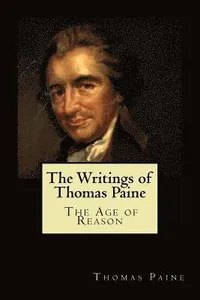
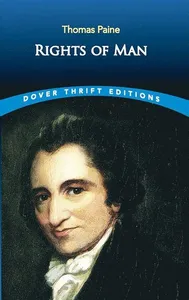
Rights of Man
One of Paine's greatest and most widely read works, considered a classic statement of faith in democracy and egalitarianism, defends the early events of the French Revolution, supports social security for workers, public employment for those in ne...


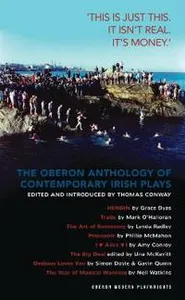
The Oberon Anthology of Contemporary Irish Plays
The Oberon Anthology of Contemporary Irish Plays


