
IT Professional's Business and Communications Guide
Get the communication skills you need for career success with this unique book. Preparing you for exams and beyond, the valuable content delves into the issues that you'll face in corporate, retail, and remote support environments. The book offers...


Farsighted
Plenty of books offer useful advice on how to get better at making quick-thinking, intuitive choices. But what about more consequential decisions, the ones that affect our lives for years, or centuries, to come? Our most powerful stories revolve a...


Infernal Machine
The Infernal Machine


Emergence
Steven Johnson's Emergence: The Connected Lives of Ants, Brains, Cities and Software is a fascinating look at how self-organising systems are changing the world. Why do people cluster together in neighborhoods? How do internet communities spring u...
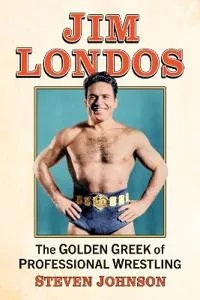
Jim Londos
The most famous active athlete in the world during the Great Depression was not Babe Ruth, Sonja Henie or Babe Didrikson. It was a determined Greek immigrant who sailed across the Atlantic Ocean as a 15-year-old to escape a demanding father and start a life abroad. Jim Londos slept in railcars and firehouses to make ends meet and quickly found refuge on the mat. Combining an Old World work ethic with a flair for the dramatic, Londos overcame skeptics and antagonists to become pro wrestling's greatest star, an international celebrity who walked with presidents, prime ministers and the common man. He was responsible for keeping wrestling alive during the Depression and representing achievement to ethnic minorities, underdogs and women, all of whom he attracted in record numbers. This complete biography of Jim Londos tells the story of the first great immigrant athlete, a man who rescued the soiled sport of wrestling when it was down for the count, and brought hope and inspiration to his

Where Good Ideas Come From
A fascinating deep dive on innovation from the New York Times bestselling author of How We Got To Now and Unexpected Life The printing press, the pencil, the flush toilet, the battery--these are all great ideas. But where do they come from? What kind of environment breeds them? What sparks the flash of brilliance? How do we generate the breakthrough technologies that push forward our lives, our society, our culture? Steven Johnson's answers are revelatory as he identifies the seven key patterns behind genuine innovation, and traces them across time and disciplines. From Darwin and Freud to the halls of Google and Apple, Johnson investigates the innovation hubs throughout modern time and pulls out the approaches and commonalities that seem to appear at moments of originality.

Best Technology Writing 2009
"The ubiquity of the digital lifestyle has forced us to write and think about technology in a different way."-Steven Johnson¿ ¿ ¿ In his Introduction to this beautifully curated collection of essays, Steven Johnson heralds the arrival of...

New York Schools of Music and the Visual Arts
Musicians and artists have always shared mutual interests and exchanged theories of art and creativity. This exchange climaxed just after World War II, when a group of New York-based musicians, including John Cage, Morton Feldman, Earle Brown, and...
Where Good Ideas Come From
From the author of Emergence and The Ghost Map, Steven Johnson's Where Good Ideas Come From: The Seven Patterns of Innovation identifies key principles that are the driving force of creativity. Learn how: A slow hunch can be much more valuable tha...
Everything Bad is Good for You
We're constantly being told that popular culture is just mindless entertainment - but, as Steven Johnson shows in Everything Bad is Good for You, it's actually making us more intelligent. Steven Johnson puts forward a radical alternative to the en...

How We Got to Now
How did photography bring about social reform? What connects refrigeration to Hollywood? And how did our battle against dirt help create smartphones? This book explores the essential innovations that changed the world and how we live in it.

Ghost Map
From the bestselling author of Everything Bad is Good For You, Steven Johnson's The Ghost Map vividly recreates Victorian London to show how huge populations live together, how cities can kill - and how they can save us. Steven Johnson is one of t...

Emergence: The Connected Lives of Ants, Brains, Cities, and Software
In the tradition of Being Digital and The Tipping Point, Steven Johnson, acclaimed as a 'cultural critic with a poet's heart' (The Village Voice), takes readers on an eye-opening journey through emergence theory and its applications. A NEW YORK TIMES NOTABLE BOOK A VOICE LITERARY SUPPLEMENT TOP 25 FAVORITE BOOKS OF THE YEAR AN ESQUIRE MAGAZINE BEST BOOK OF THE YEAR Explaining why the whole is sometimes smarter than the sum of its parts, Johnson presents surprising examples of feedback, self-organization, and adaptive learning. How does a lively neighborhood evolve out of a disconnected group of shopkeepers, bartenders, and real estate developers? How does a media event take on a life of its own? How will new software programs create an intelligent World Wide Web? In the coming years, the power of self-organization -- coupled with the connective technology of the Internet -- will usher in a revolution every bit as significant as the introduction of electricity. Provocative and






Cammie Up!
In this Marine combat memoir, Steve Johnson recounts his service in Vietnam from April 1967 to May 1968. Only 17 when he enlisted in 1964, Johnson deployed to Vietnam with the 3rd Reconnaissance Battalion, 3rd Marine Division, and his tour include...

FLORAL MIMICRY
FLORAL MIMICRY


Who Needs Classical Music?
During the last several decades, most cultural critics have come to agree that the division between 'high' and 'low' art is an artificial one, that Beethoven's Ninth and 'Blue Suede Shoes' are equally valuable as cultural texts. In Who Needs Class...


Ideas of Landscape
Ideas of Landscape discusses the current theory and practice of landscape archaeology and offers an alternative agenda for landscape archaeology that maps more closely onto the established empirical strengths of landscape study and has more contem...