



City of God
One of the great cornerstones in the history of Christian philosophy, The City of God provides an insightful interpretation of the development of modern Western society and the origin of most Western thought. Contrasting earthly and heavenly cities--representing the omnipresent struggle between good and evil--Augustine explores human history in its relation to all eternity. In Thomas Merton's words, 'The City of God is the autobiography of the Church written by the most Catholic of her great saints.' This Modern Library Paperback Classics edition is a complete and unabridged version of the Marcus Dods translation.


St. Augustine: Against the Academicians
From Mediaeval Philosophical Texts In Translation, No. 2.
City of God
'The human mind can understand truth only by thinking, as is clear from Augustine.' --Saint Thomas Aquinas Saint Augustine of Hippo is one of the central figures in the history of Christianity, and this book is one of his greatest theological works. Written as an eloquent defense of the faith at a time when the Roman Empire was on the brink of collapse, it examines the ancient pagan religions of Rome, the arguments of the Greek philosophers and the revelations of the Bible. Pointing the way forward to a citizenship that transcends worldly politics and will last for eternity, this book is one of the most influential documents in the development of Christianity. One of the great cornerstones in the history of Christian thought, 'The City of God 'is vital to an understanding of modern Western society and how it came into being. Begun in A.D. 413, the book's initial purpose was to refute the charge that Christianity was to blame for the fall of Rome (which had occurred just three years


On Free Choice of the Will
Translated with an uncanny sense for the overall point of Augustine's doctrine. In short, a very good translation. The Introduction is admirably clear.--Paul Vincent Spade, Indiana University

City of God, Volume I
A Church Father's theological citadel. Aurelius Augustine (AD 354-430), one of the most important figures in the development of western Christianity and philosophy, was the son of a pagan, Patricius of Tagaste, and his Christian wife, Monnica. Whi...

City of God, Volume III
A Church Father's theological citadel. Aurelius Augustine (AD 354-430), one of the most important figures in the development of western Christianity and philosophy, was the son of a pagan, Patricius of Tagaste, and his Christian wife, Monnica. Whi...
Select Letters
Correspondence of a Church Father. Aurelius Augustine (AD 354-430), one of the most important figures in the development of western Christianity and philosophy, was the son of a pagan, Patricius of Tagaste, and his Christian wife, Monnica. While s...
Confessions
No modern, well-versed literature lover can call their education complete without having read Augustine's Confessions. One of the most original works of world literature, it is the first autobiography ever written, influencing writers from Montaig...
City of God, Volume VI
A Church Father's theological citadel. Aurelius Augustine (AD 354-430), one of the most important figures in the development of western Christianity and philosophy, was the son of a pagan, Patricius of Tagaste, and his Christian wife, Monnica. Whi...

City of God, Volume VII
A Church Father's theological citadel. Aurelius Augustine (AD 354-430), one of the most important figures in the development of western Christianity and philosophy, was the son of a pagan, Patricius of Tagaste, and his Christian wife, Monnica. Whi...
Confessions
One of the great works of Western literature, from perhaps the most important thinker of Christian antiquity, in a revolutionary new translation by one of today's leading classicists Sarah Ruden's fresh, dynamic translation of Confessions brings us closer to Augustine's intent than any previous version. It puts a glaring spotlight on the life of one individual to show how all lives have meaning that is universal and eternal. In this intensely personal narrative, Augustine tells the story of his sinful youth and his conversion to Christianity. He describes his ascent from a humble farm in North Africa to a prestigious post in the Roman Imperial capital of Milan, his struggle against his own overpowering sexuality, his renunciation of secular ambition and marriage, and the recovery of the faith his mother had taught him during his earliest years. Augustine's concerns are often strikingly contemporary, and the confessional mode he invented can be seen everywhere in writing today.

City of God, Volume IV
A Church Father's theological citadel. Aurelius Augustine (AD 354-430), one of the most important figures in the development of western Christianity and philosophy, was the son of a pagan, Patricius of Tagaste, and his Christian wife, Monnica. Whi...
City of God, Volume V
A Church Father's theological citadel. Aurelius Augustine (AD 354-430), one of the most important figures in the development of western Christianity and philosophy, was the son of a pagan, Patricius of Tagaste, and his Christian wife, Monnica. Whi...


City of God, Volume II
A Church Father's theological citadel. Aurelius Augustine (AD 354-430), one of the most important figures in the development of western Christianity and philosophy, was the son of a pagan, Patricius of Tagaste, and his Christian wife, Monnica. Whi...

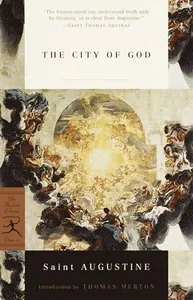
The City of God
One of the great cornerstones in the history of Christian philosophy, The City of God provides an insightful interpretation of the development of modern Western society and the origin of most Western thought. Contrasting earthly and heavenly cities--representing the omnipresent struggle between good and evil--Augustine explores human history in its relation to all eternity. In Thomas Merton's words, 'The City of God is the autobiography of the Church written by the most Catholic of her great saints.' This Modern Library Paperback Classics edition is a complete and unabridged version of the Marcus Dods translation. 'The human mind can understand truth only by thinking, as is clear from Augustine.' --Saint Thomas Aquinas

Confessions
Like the first Hackett edition of the Augustine's Confessions, the second edition features F. J. Sheed's remarkable translation of this classic spiritual autobiography with an Introduction by noted historian of late antiquity Peter Brown. New to t...

Confessions
Like the first Hackett edition of the Augustine's Confessions, the second edition features F. J. Sheed's remarkable translation of this classic spiritual autobiography with an Introduction by noted historian of late antiquity Peter Brown. New to t...


The Confessions of St.Augustine
The Confessions of St.Augustine

On Genesis
No other part of the Hebrew Scriptures, aside from the Psalter and sections of the prophet Isaiah, captured the interest and aroused the attention of the early Church as did the opening chapters of the Book of Genesis. Augustine of Hippo, the earl...

121-150
-


Confessions
The son of a pagan father and a Christian mother, Saint Augustine spent his early years torn between conflicting faiths and world views. This autobiography details how he came to turn away from his youthful ideas and licentious lifestyle, to becom...

City of God
City of God is an enduringly significant work in the history of Christian thought, by one of its central figures Written as an eloquent defence of the faith at a time when the Roman Empire was on the brink of collapse, this great theological and p...
Confessions
One of a major new Classics series - books that have changed the history of thought, in sumptuous, clothbound hardbacks. The son of a pagan father and a Christian mother, Saint Augustine spent his early years torn between conflicting faiths and wo...

51-72
-