

Calabria: Travels in the toe of Italy
Calabria is not a guide to Calabria but rather a book about Calabria. Since 1777, when Henry Swinburne, first travelled in Calabria in search of Magna Gr cia (Calabria's Greek heritage), and then wrote about his experiences, there have been a further dozen travellers, including one woman, who have written travelogues in English (as opposed to travel guides) about Italy's remote toe. Some, like Edward Lear, George Gissing and Norman Douglas, became well-known literary figures in other fields but most were just educated people with time on their hands for whom travelling in the south of Italy was a huge adventure, perhaps fuelled by the adrenalin of the pioneer. What also made them different is that they shared their experiences: frequently with humour, usually with empathy, occasionally with arrogance but always with the curiosity and insight of the traveller, as opposed to the tourist. Until Italian unification (1860), Calabria was part of the Two Sicilies, the largest and wealthiest

What Is Journalism For?
What is at stake when journalism is threatened? Does society still need journalists? Journalism faces multiple threats today all over the world: economic decline, online disinformation, the rise of AI, authoritarian curbs on freedom of the press, and violence against journalists. In such a climate, it’s more urgent than ever to ask what journalism is for. Drawing on his experience as a journalist and media commentator, and on interviews with journalists from the US to Myanmar, Jon Allsop examines key concepts that constitute journalism’s role: good judgement, concern for truth and critical scrutiny of one or more communities. Along the way, he also considers the relationship between journalism and activism; whether journalists should aspire to change the world and whether they can be seen as champions of democracy.

Poetry and Sovereignty in the English Revolution
Poetry and Sovereignty in the English Revolution
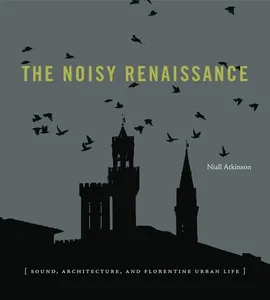
Noisy Renaissance
From the strictly regimented church bells to the freewheeling chatter of civic life, Renaissance Florence was a city built not just of stone but of sound as well. An evocative alternative to the dominant visual understanding of urban spaces, The N...

Paper and Iron
Few economic events have had a more profound or enduring impact than the German hyperinflation of 1923, still remembered popularly as a root cause of Hitler's rise to power. Yet many historians have argued that inflationary policies were, on balan...

Weathering and Durability in Landscape Architecture
Weatering and Durability in Landscape Architecture provides authoritative guidelines to weathering, durability, and physical changes in the designed landscape over time. * Provides innovative weathering strategies illustrated with case studies. * ...

The Dynamiters
In the 1880s a New York-based faction of militant Irish nationalists conducted the first urban bombing campaign in history, targeting symbolic public buildings in Britain with homemade bombs. This book investigates the people and ideas behind this...

Twenties in America
This new, revisionist approach to the Twenties in America offers the first balanced account of the history and politics of this much-maligned decade.Focusing on the two Presidents of the 1920s, the book points out key distinctions between the gove...

Green in Tooth and Claw
Through relentless propaganda, cataclysmic climate change is indoctrinated into society. But the real threat to humanity is the powerful people who are pushing this message. UN Agenda 21, executed by the World Economic Forum's 'Great Reset', is building a global technocracy. Total control of population and resources is the end, the means justified by 'saving the planet'. By stealth, digital technology is enslaving the masses, who are lured by convenience, comfort and safety. Niall McCrae's timely book presents a sociocultural perspective on the purported climate crisis. Tracing back to the eugenics movement, the role of the Rockefellers, and creation of the Club of Rome as a secular Vatican, he explains how the world (and particularly the West) has been captured by a dystopian oligarchy. By contrived shortages of food and fuel, the messianic elite deploys problem-reaction-solution mechanisms to ensure compliance while practising the old tactic of divide and rule. The author warns that

Dictionary of Postmodernism
A Dictionary of Postmodernism presents an authoritative A-Z of the critical terms and central figures related to the origins and evolution of postmodernist theory and culture. Explores the names and ideas that have come to define the postmodern co...

Athens
The citizens of ancient Athens were directly responsible for the development and power of its democracy; but how did they learn about politics and what their roles were within it? In this volume Livingstone argues that learning about political pra...

Gender in the Media
Gender in the Media

Transgressive Bodies
In recent years the body¿ has become one of the most popular areas of study in the arts, social sciences and humanities. Transgressive Bodies offers an examination of a variety of non-normative bodies and how they are represented in film, media an...

Empire: The Rise and Demise of the British World Order and the Lessons for Global Power
The British Empire was the largest in all history: the nearest thing to world domination ever achieved. By the eve of World War II, around a quarter of the world's land surface was under some form of British rule. Yet for today's generation, the British Empire seems a Victorian irrelevance. The time is ripe for a reappraisal, and in Empire, Niall Ferguson boldly recasts the British Empire as one of the world's greatest modernizing forces.An important new work of synthesis and revision, Empire argues that the world we know today is in large measure the product of Britain's Age of Empire. The spread of capitalism, the communications revolution, the notion of humanitarianism, and the institutions of parliamentary democracy-all these can be traced back to the extraordinary expansion of Britain's economy, population, and culture from the seventeenth century until the mid-twentieth. On a vast and vividly colored canvas, Empire shows how the British Empire acted as midwife to

Civilization: The West and the Rest
From the bestselling author of The Ascent of Money and The Square and the Tower 'A dazzling history of Western ideas.' --The Economist 'Mr. Ferguson tells his story with characteristic verve and an eye for the felicitous phrase.' --Wall Street Journal ' W]ritten with vitality and verve . . . a tour de force.' --Boston Globe Western civilization's rise to global dominance is the single most important historical phenomenon of the past five centuries. How did the West overtake its Eastern rivals? And has the zenith of Western power now passed? Acclaimed historian Niall Ferguson argues that beginning in the fifteenth century, the West developed six powerful new concepts, or 'killer applications'--competition, science, the rule of law, modern medicine, consumerism, and the work ethic--that the Rest lacked, allowing it to surge past all other competitors. Yet now, Ferguson shows how the Rest have downloaded the killer apps the West once monopolized, while the West has literally lost faith

Boy in the World
A beautiful and moving novel about a young boy's journey from childhood to adulthood from the bestselling author of Four Letters of Love Niall Williams draws us into life in a small village in Ireland where a boy is growing up and making his first...

Pity of War
The First World War killed around eight million men and bled Europe dry. In this provocative book Niall Ferguson asks: was the sacrifice worth it? Was it all really an inevitable cataclysm and were the Germans a genuine threat? Was the war, as is ...

The House of Rothschild
Deals with the history of the legendary Rothschild banking dynasty. This title also shows the portrait of one of the most powerful and fascinating families of modern times. It shows how their power waned as conflicts from Crimea to the Second Worl...
Cash Nexus
Modern history shows that a nation's success largely depends on the way it manages its money. But where do money and politics meet? From 1700 to the present day, Niall Ferguson offers a bold and original analysis of the evolution of today's econom...

House of Rothschild
In his rich and nuanced portrait of the remarkable, elusive Rothschild family, Oxford scholar and bestselling author Niall Ferguson uncovers the secrets behind the family's phenomenal economic success. He reveals for the first time the details of ...

The War of the World
The beginning of the twentieth century saw human civilization at its most enlightened, well-educated, globalized and wealthy. What turned it into a bloodbath? This title reveals the story of history's most savage century as a continual war that ra...

Colossus
Is America the new world empire? Presidents from Lincoln to Bush may have denied it but, this book shows, the US is in many ways the greatest imperial power of all time. This title reveals, is an empire running on empty, weakened by chronic defeci...

Doom- The Politics Of Catastrophe
Disasters are inherently hard to predict. But when catastrophe strikes, we ought to be better prepared than the Romans were when Vesuvius erupted or medieval Italians when the Black Death struck. We have science on our side, after all. Yet the responses of many developed countries to a new pathogen from China were badly bungled. Why? While populist rulers certainly performed poorly in the face of the pandemic, Niall Ferguson argues that more profound pathologies were at work - pathologies already visible in our responses to earlier disasters. Drawing from multiple disciplines, including economics and network science, Doom: The Politics of Catastrophe offers not just a history but a general theory of disaster. As Ferguson shows, governments must learn to become less bureaucratic if we are to avoid the impending doom of irreversible decline.

Square and the Tower
THE NEW YORK TIMES BESTSELLER 'Silicon Valley needed a history lesson and Ferguson has provided it' Eric Schmidt Most history is about the people at the top of the towers of power. But what if the real action is in the social networks down below, ...

Civilization
Winner of the Estoril Global Issues Distinguished Book Prize 2013 In 1412, Europe was a miserable backwater ravaged by plague, bad sanitation and incessant war, while the Orient was home to dazzling civilizations. Yet, somehow, the West came to do...

Ascent of Money
Bread, cash, dosh, dough, loot. Call if what you like, it matters now more than ever. In The Ascent of Money, Niall Ferguson shows that financial history is the back-story to all history. From the banking dynasty who funded the Italian Renaissance...
The Great Degeneration
The Great Degeneration [Bok / Pocket]

The Square and the Tower: Networks and Power, from the Freemasons to Facebook
The instant New York Times bestseller. A brilliant recasting of the turning points in world history, including the one we're living through, as a collision between old power hierarchies and new social networks. 'Captivating and compelling.' --The New York Times 'Niall Ferguson has again written a brilliant book...In 400 pages you will have restocked your mind. Do it.' --The Wall Street Journal 'The Square and the Tower, in addition to being provocative history, may prove to be a bellwether work of the Internet Age.' --Christian Science Monitor Most history is hierarchical: it's about emperors, presidents, prime ministers and field marshals. It's about states, armies and corporations. It's about orders from on high. Even history 'from below' is often about trade unions and workers' parties. But what if that's simply because hierarchical institutions create the archives that historians rely on? What if we are missing the informal, less well documented social networks that are the true


The Shock of the Global
The Shock of the Global

High Financier
This is the extraordinary story of Siegmund Warburg: the refugee from Nazi Germany who restored the Blitz-shattered City of London as the world's preeminent international financial centre. In recounting how this brilliant, scholarly man brought wi...


The Ascent of Money
The 10th anniversary edition, with new chapters on the crash, Chimerica, and cryptocurrency ' An] excellent, just in time guide to the history of finance and financial crisis.' --The Washington Post 'Fascinating.' --Fareed Zakaria, Newsweek In this updated edition, Niall Ferguson brings his classic financial history of the world up to the present day, tackling the populist backlash that followed the 2008 crisis, the descent of 'Chimerica' into a trade war, and the advent of cryptocurrencies, such as Bitcoin, with his signature clarity and expert lens. The Ascent of Money reveals finance as the backbone of history, casting a new light on familiar events: the Renaissance enabled by Italian foreign exchange dealers, the French Revolution traced back to a stock market bubble, the 2008 crisis traced from America's bankruptcy capital, Memphis, to China's boomtown, Chongqing. We may resent the plutocrats of Wall Street but, as Ferguson argues, the evolution of finance has rivaled the

Noctuary
Noctuary

Four Letters of Love
The international bestseller, now a major film starring Helena Bonham Carter and Pierce Brosnan. _________ 'A breathtaking affirmation of miracles and the power of human love' - The Times 'A delicate and graceful love story . . . Extraordinarily rooted in the Irish language and landscape' - The New York Times ‘When I was twelve years old God spoke to my father for the first time. God didn’t say much. He told my father to be a painter and left it at that . . .’ So begins Niall Williams’ magical tale about love and destiny. Strangers Nicholas and Isabel are destined for each other – they just don’t know it yet. As they each struggle to recover from the bruises of their childhood, a chance encounter on a remote island in the west of Ireland hurls them together. Tender, romantic and profound, the international bestseller Four Letters of Love established Niall Williams as one of Ireland’s most treasured writers, and has become a classic love story that testifies the forces of fate and

History of the Rain
'I am utterly obsessed with Niall Williams.' -Ann Patchett, New York Times bestselling author of Tom Lake From the author of the November 2025 Late Show with Stephen Colbert Book Club Pick, This Is Happiness, this novel introduces readers to Niall Williams' enchanting Irish village of Faha in a profound, beautifully written book about family, legacy, and the incredible power of stories. Longlisted for the Booker Prize. We are our stories. We tell them to stay alive or keep alive those who only live now in the telling. That's how it seems to me, being alive for a little while, the teller and the told. So says Ruthie Swain. The bedridden daughter of a dead poet, home from college after a collapse, she is trying to find her father through generations of family history in County Clare and through her own writing. Ruthie turns also to the books her father left behind, his library transposed to her bedroom and stacked on the floor. In her attic room, with the rain rushing down the windows,