
The Skolt Lapps Today
On the conclusion of the Second World War, Finland was obliged to cede its northeasternmost territory of Petsamo to the Soviet Union. Amongst those who lost their homes were around four hundred representatives of the original native population of the territory, the Skolt Lapps. The Skolts were subsequently resettled in two 'reservations' marked out in the wilderness of Finland's present northeastern borderlands. The contemporary organization of the Skolt community in the larger of these reservations, the Sevettijärvi area, is the subject of this 1976 study. The first part of the book the ecological imbalance created by technological innovation and commercial penetration; the second analyses the the activities and relationships built up on the fixes template of the resettlement plan; and the third explores the business of 'leap-frog' politics, which links the community into the machinery of modern government and the forum of debate on the future of native minorities.

Making
Making creates knowledge, builds environments and transforms lives. Anthropology, archaeology, art and architecture are all ways of making, and all are dedicated to exploring the conditions and potentials of human life. In this exciting book, Tim ...

Knowing from the Inside
Knowledge comes from thinking with, from and through things, not just about them. We get to know the world around us from the inside of our being in it. Drawing on the fields of anthropology, art, architecture and education, this book addresses wh...

Perception of the Environment
In this work Tim Ingold offers a persuasive new approach to understanding how human beings perceive their surroundings. He argues that what we are used to calling cultural variation consists, in the first place, of variations in skill. Neither inn...

Making
Making creates knowledge, builds environments and transforms lives. Anthropology, archaeology, art and architecture are all ways of making, and all are dedicated to exploring the conditions and potentials of human life. In this exciting book, Tim ...
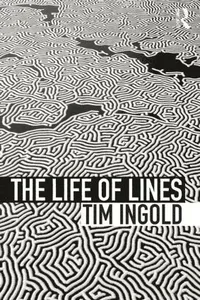
Life of Lines
To live, every being must put out a line, and in life these lines tangle with one another. This book is a study of the life of lines. Following on from Tim Ingold's groundbreaking work Lines: A Brief History, it offers a wholly original series of ...
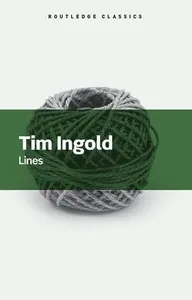
Lines
What do walking, weaving, observing, storytelling, singing, drawing and writing have in common? The answer is that they all proceed along lines. In this extraordinary book Tim Ingold imagines a world in which everyone and everything consists of in...

Evolution and Social Life
Evolution is among the most central and most contested of ideas in the history of anthropology. This book charts the fortunes of the idea from the mid-nineteenth century to recent times. By comparing biological, historical, and anthropological app...

Conversations with Tim Ingold
Conversations with Tim Ingold

Imagining for Real
What does imagination do for our perception of the world? Why should reality be broken off from our imagining of it? It was not always thus, and in these essays, Tim Ingold sets out to heal the break between reality and imagination at the heart of modern thought and science. Imagining for Real joins with a lifeworld ever in creation, attending to its formative processes, corresponding with the lives of its human and nonhuman inhabitants. Building on his two previous essay collections, The Perception of the Environment and Being Alive , this book rounds off the extraordinary intellectual project of one of the world’s most renowned anthropologists. Offering hope in troubled times, these essays speak to coming generations in a language that surpasses disciplinary divisions. They will be essential reading not only for anthropologists but also for students in fi elds ranging from art, aesthetics, architecture and archaeology to philosophy, psychology, human geography, comparative

Old Ways, New People
In this second and retitled edition of Anthropology and/as Education, Tim Ingold shows that there is more to anthropology than ethnography and more to education than teaching and learning. Building on the first edition’s exploration of the interface between the disciplines of anthropology and education, this revised edition pushes the bounds further, calling upon anthropologists to rethink their disciplinary vocation, by regarding it as fundamentally an educational rather than an ethnographic endeavour.What does a reimagining of anthropology mean for the ways we think about study and the school, teaching and learning, and the freedoms they exemplify? And how does it bear on the practices of participation and observation, on ways of study in the field and in the school, on art and science, research and teaching? This edition has been revised and expanded throughout and includes a major new chapter on how the educational mission of anthropology can shape the university of the future.

Knowing from the Inside
Knowing from the Inside

The Rise and Fall of Generation Now
Is the future about to close in, or is it open to new horizons? For anthropologist Tim Ingold, the root of our difficulty in facing up to the future lies in the way we think about generations. We imagine them as layers, succeeding one another like sheets in a stack. This view figures as a largely unquestioned backdrop to discussions of evolution, life and death, longevity, extinction, sustainability, education, climate change and other matters of contemporary concern. What if we were to think of generations, instead, as wrapping around one another along their length, more like fibres in a rope than stacked sheets? In this compelling new book, Ingold argues that a return to the idea that life is forged in the collaboration of overlapping generations might not only assuage some of our anxieties, but also offer a lasting foundation for future coexistence. But it would mean having to abandon our faith both in the inevitability of progress, and in the ability of science and technology to

Being Alive
Anthropology is a disciplined inquiry into the conditions and potentials of human life. Generations of theorists, however, have expunged life from their accounts, treating it as the mere output of patterns, codes, structures or systems variously d...

Companion Encyclopedia of Anthropology
* Provides a comprehensive survey of contemporary thinking in biological, social and cultural anthropology and establishes the interconnections between these three fields. * Useful cross-references within the text, with full biographical reference...

Rise and Fall of Generation Now
Is the future about to close in, or is it open to new horizons? For anthropologist Tim Ingold, the root of our difficulty in facing up to the future lies in the way we think about generations. We imagine them as layers, succeeding one another like...

Anthropology
Humanity is at a crossroads. We face mounting inequality, escalating political violence, warring fundamentalisms and an environmental crisis of planetary proportions. How can we fashion a world that has room for everyone, for generations to come? ...

Key Debates in Anthropology
Every year, leading social anthropologists meet to debate a motion at the heart of current theoretical developments in their subject and this book includes the first six of these debates, spanning the period from 1988 to 1993. Each debate has four...

Anthropology
Humanity is at a crossroads. We face mounting inequality, escalating political violence, warring fundamentalisms and an environmental crisis of planetary proportions. How can we fashion a world that has room for everyone, for generations to come? ...

Correspondences
We inhabit a world of more than humans. For life to flourish, we must listen to the calls this world makes on us, and respond with care, sensitivity and judgement. That is what it means to correspond, to join our lives with those of the beings, ma...

Companion Encyclopedia of Anthropology
* Provides a comprehensive survey of contemporary thinking in biological, social and cultural anthropology and establishes the interconnections between these three fields. * Useful cross-references within the text, with full biographical reference...

Imagining for Real
What does imagination do for our perception of the world? Why should reality be broken off from our imagining of it? It was not always thus, and in these essays, Tim Ingold sets out to heal the break between reality and imagination at the heart of...

What is an Animal?
This book offers a unique interdisciplinary challenge to assumptions about animals and animality deeply embedded in our own ways of thought, and at the same time exposes highly sensitive and largely unexplored aspects of the understanding of our c...












Biosocial Becomings
All human life unfolds within a matrix of relations, which are at once social and biological. Yet the study of humanity has long been divided between often incompatible 'social' and 'biological' approaches. Reaching beyond the dualisms of nature a...


Imagining Landscapes
The landscapes of human habitation are not just perceived; they are also imagined. What part, then, does imagining landscapes play in their perception? The contributors to this volume, drawn from a range of disciplines, argue that landscapes are '...

Imagining Landscapes
The landscapes of human habitation are not just perceived; they are also imagined. What part, then, does imagining landscapes play in their perception? The contributors to this volume, drawn from a range of disciplines, argue that landscapes are '...