
Age of the City
One of the Financial Times' Best Economics Books of 2023 Visionary Oxford professor Ian Goldin and The Economist's Tom Lee-Devlin show why the city is where the battles of inequality, social division, pandemics and climate change must be faced. Fr...

Development
What do we mean by development? How can citizens, governments and the international community foster development? The process by which nations escape poverty and achieve economic and social progress has been the subject of extensive examination fo...

Divided Nations
With rapid globalization, the world is more deeply interconnected than ever before. While this has its advantages, it also brings with it systemic risks that are only just being identified and understood. Rapid urbanization, together with technolo...

Divided Nations
With rapid globalization, the world is more deeply interconnected than ever before. While this has its advantages, it also brings with it systemic risks that are only just being identified and understood. Rapid urbanization, together with technolo...

Is the Planet Full?
What are the impacts of population growth? Can our planet support the demands of the ten billion people anticipated to be the world's population by the middle of this century? While it is common to hear about the problems of overpopulation, might ...
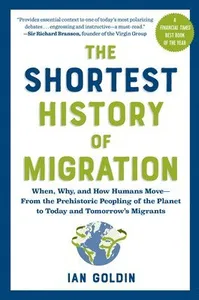
The Shortest History of Migration: When, Why, and How Humans Move - From the Prehistoric Peopling of the Planet to Today and Tomorrow's Migrants
We are a species in motion-from the first steps of Homo sapiens across Africa to America's "melting pot." And when we move-in search of better things, or against our will-our beliefs and skills clash and combine, reshaping society time a...
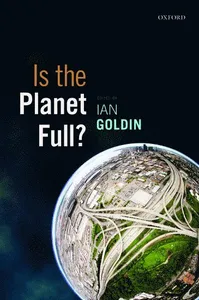
Is the Planet Full?
What are the impacts of population growth? Can our planet support the demands of the ten billion people anticipated to be the world's population by the middle of this century? While it is common to hear about the problems of overpopulation, might ...
Shortest History of Migration
The Shortest History of Migration
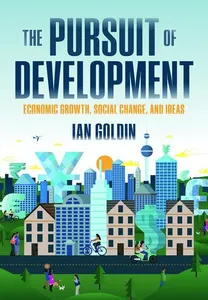
The Pursuit of Development
What do we mean by development? How can citizens, governments and the international community foster development? The process by which nations escape poverty and achieve economic and social progress has been the subject of extensive examination fo...
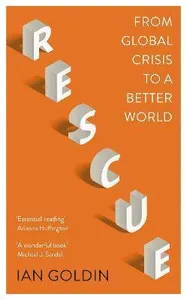
Rescue
An optimistic vision of the future after Covid-19 by a leading professor of globalisation at the University of Oxford. We are at a crossroads. The wrecking-ball of Covid-19 has destroyed global norms. Many think that after the devastation there wi...




Bullet
In August 2014, Tom Lee and his parents drove out to visit Severalls Hospital, a former in-patient psychiatric hospital. Closed since the 1990s, as part of a nationwide shuttering of psychiatric institutions, the buildings now stand derelict and o...

Alarming Palsy of James Orr
James Orr - husband, father, reliable employee and all round model citizen - wakes one morning to find himself quite transformed. There's no way he can go into the office, and the doctors aren't able to help. Waiting for the affliction to pass, he...


Understanding the Gender Gap
Using a unique set of data drawn from the US census, statistics, city directories, and other sources, the author looks at the differences between men and women in the US labour force. She shows that the 'gender gap' in income and job level that ha...

Terra Incognita
'Amazing. It would be my desert island choice' Martin Rees 'Fascinating, beautiful, alarming and revelatory use of mapping and infographics' Stephen Fry on EarthTime maps 'An indispensable read' Arianna Huffington From the global impact of the Cor...
Butterfly Defect
The Butterfly Defect addresses the widening gap between the new systemic risks generated by globalization and their effective management. It shows how the dynamics of turbo-charged globalization has the potential and power to destabilize our socie...
Age of Discovery
'A landmark new book.' - The Guardian Age of Discovery looks at the world on the brink of a new Renaissance and asks the question, how do we avoid chaos and disruption, and share more widely the benefits of progress? Now is humanity’s best moment. And our most fragile. Global health, wealth and education are booming. Scientific discovery is flourishing. But the same forces that make big gains possible for some of us deliver big losses to others—and tangle us together in ways that make everyone vulnerable. We’ve been here before. The first Renaissance, the time of Columbus, Copernicus, Gutenberg and others, redrew all maps of the world, liberated information and shifted Western civilization from the medieval to the early modern era. Such change came at a price: social division, political extremism, economic shocks, pandemics and other unintended consequences of human endeavour. Now is our second Renaissance. In the face of terrorism, Brexit, refugee crises and the global impact of a
Butterfly Defect
The Butterfly Defect addresses the widening gap between the new systemic risks generated by globalization and their effective management. It shows how the dynamics of turbo-charged globalization has the potential and power to destabilize our socie...

Review Questions for Dentistry
Review Questions for Dentistry is an essential exam practice tool designed for undergraduate dentistry students, postgraduate MJDF candidates, and overseas candidates sitting their OREs. Using the questions as a platform for learning consolidation...
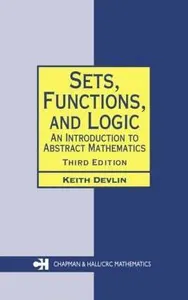
Sets, Functions, and Logic
Keith Devlin. You know him. You've read his columns in MAA Online, you've heard him on the radio, and you've seen his popular mathematics books. In between all those activities and his own research, he's been hard at work revising Sets, Functions ...

Mathematics Education for a New Era
Stanford mathematician and NPR Math Guy Keith Devlin explains why, fun aside, video games are the ideal medium to teach middle-school math. Aimed primarily at teachers and education researchers, but also of interest to game developers who want to ...

Logic and Information
Intelligence can be characterised both as the ability to absorb and process information and as the ability to reason. Humans and other animals have both of these abilities to a greater or lesser degree, but the search for artificial intelligence h...


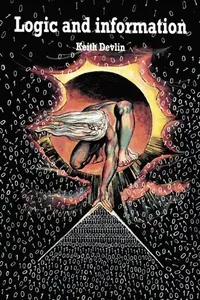
Logic and Information
Intelligence can be characterised both as the ability to absorb and process information and as the ability to reason. Humans and other animals have both of these abilities to a greater or lesser degree, but the search for artificial intelligence h...

