





Ara Guler's Istanbul
This book is a vivid photographic record of daily life in Istanbul from the 1940s to the 1980s. Captured through the unerring lens of the award winning Ara Güler, the 'Eye of Istanbul', it reflects the city's melancholy aesthetic as it oscillates ...







En flod till hjärta
Gulab Ganja är namnet på den by i Bangladesh, belägen vid en flod, där handlingen i denna roman tar sin början. I en traditionell, muslimsk och välbärgad familj, som redan är välsignad med söner, föds en dag en efterlängtad flicka. Men det är någo...

Big Gods
How did human societies scale up from tight-knit groups of hunter-gatherers to the large, anonymous, cooperative societies of today--even though anonymity is the enemy of cooperation? How did organized religions with "Big Gods"--the grea...

African Ark
The story of how Africa's mammals have helped shape the continent's landscapes over time to support an amazing diversity of life Africa is home to an amazing array of animals, including the world's most diverse assortment of large mammals. These i...

Intimate Economies of Bangkok
Bangkok has been at the frontier of capitalism's drive into the global south for three decades. Rapid development has profoundly altered public and private life in Thailand. In her provocative study of contemporary commerce in Bangkok, Ara Wilson ...

Pier Paolo Pasolini for Art History and Practice
Pier Paolo Pasolini (1922-1975) remains best known for his influential cinematic and literary works. These attest in turn to a crucial early formation: Pasolini’s intermittent practice as a painter, critic, and historian of art. Spanning the fifth-century BCE to the early twenty-first century, this volume’s chapters reflect the breadth of Pasolini’s aesthetic commitments and predilections, from Greek Attic vase painting to the to the spread of Caravaggism; from folkloric ethnography to the painting of Pablo Picasso and Andy Warhol. Alongside essays examining his influence on twentieth- and twenty-first century aesthetics, artists of different nationality, gender, and generation address Pasolini’s continued consequence for their own work. The very notion of a politically engaged artistic practice owes a debt to Pasolini’s oeuvre – one he called “extravagantly interdisciplinary,” and which finds incisive reflection in the media, methods, and subjects addressed in these pages.





Against the Avant-Garde
Recognized in America chiefly for his films, Pier Paolo Pasolini (1922-1975) in fact reinvented interdisciplinarity in post-war Europe. Pasolini self-confessedly approached the cinematic image through painting, and the numerous allusions to early ...

Futurism
Very Short Introductions: Brilliant, Sharp, Inspiring From the motorcar to the radio, modern technology radically transformed urban life by the first decade of the twentieth century. As one of Western Europe's least industrialized countries, Italy appeared impervious to such developments. It was this state of affairs at which the Futurist movement took aim. With its founding in 1909, the poet and impresario F.T. Marinetti called for a revitalization of aesthetic expression by means of 'movement and aggression.' A growing cadre of Futurist painters, poets, authors, and musicians exchanged Italy's cultural patrimony for new technologies, media, and metaphors, championing machine-propelled speed and its salutary hazards. Cubist painting, collage, and sculpture lent the Futurist campaign a revolutionary style to match its rhetorical fervor. Yet whereas Cubism remained a revolution of artistic form, Futurism sought to shatter the boundaries between art and life itself. Indeed, the


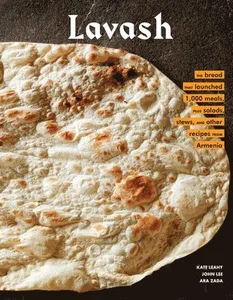
Lavash
With growing interest in fermentation and the medical benefits of a Mediterranean diet, Armenian food offers a new take on healthful deliciousness. It combines the best flavors and techniques of Mediterranean and central European cuisines into fre...