
Hitler: Volume II
'Meticulous... Probably the most disturbing portrait of Hitler I have ever read' Dominic Sandbrook, Sunday TimesBy the summer of 1939 Hitler was at the zenith of his power. Yet despite initial triumphs in the early stages of war, the F hrer's fort...

Hospitality, Volume II
Jacques Derrida explores the ramifications of what we owe to others. Hospitality reproduces a two-year seminar series delivered by Jacques Derrida at the École des hautes études en sciences sociales in Paris between 1995 and 1997. In these lecture...

Lucian, Volume II
Antiquity's satirist supreme. Lucian (ca. AD 120-190), the satirist from Samosata on the Euphrates, started as an apprentice sculptor, turned to rhetoric and visited Italy and Gaul as a successful traveling lecturer before settling in Athens and d...

Hellenica, Volume II
A continuation of Thucydides. Xenophon (ca. 430 to ca. 354 BC) was a wealthy Athenian and friend of Socrates. He left Athens in 401 and joined an expedition including ten thousand Greeks led by the Persian governor Cyrus against the Persian king. ...

Laws, Volume II
Final thoughts on an ideal constitution. Plato, the great philosopher of Athens, was born in 427 BC. In early manhood an admirer of Socrates, he later founded the famous school of philosophy in the grove Academus. Much else recorded of his life is...
Problems, Volume II
Peripatetic potpourri. Aristotle of Stagirus (384-322 BC), the great Greek philosopher, researcher, logician, and scholar, studied with Plato at Athens and taught in the Academy (367-347). Subsequently he spent three years in Asia Minor at the cou...

Odyssey, Volume II
The hero's journey home from war. Here is a new Loeb Classical Library edition of the resplendent epic tale of Odysseus' long journey home from the Trojan War and the legendary temptations, delays, and perils he faced at every turn. Homer's classi...

Confessions, Volume II
The classic account of crisis and conversion. Aurelius Augustine (AD 354-430), one of the most important figures in the development of western Christianity and philosophy, was the son of a pagan, Patricius of Tagaste, and his Christian wife, Monni...


Hippocrates, Volume II
The definitive English edition of the "Father of Medicine." This is the second volume in the Loeb Classical Library's complete edition of Hippocrates' invaluable texts, which provide essential information about the practice of medicine i...
Tragedies, Volume II
Spectacular verse drama. Seneca is a figure of first importance in both Roman politics and literature: a leading adviser to Nero who attempted to restrain the emperor's megalomania; a prolific moral philosopher; and the author of verse tragedies t...
Lives, Volume II
Comparative biographies of distinguished Greeks and Romans. Plutarch (Plutarchus), ca. AD 45-120, was born at Chaeronea in Boeotia in central Greece, studied philosophy at Athens, and, after coming to Rome as a teacher in philosophy, was given con...

Night, Volume II
This book follows and expands on the boundaries of its precursor Night: A Philosophy of the After-Dark by presenting a series of new conceptual territories, figures, sources, images and imaginative possibilities. The central idea of Night is contemplated in its intricate relation to space, silence, cruelty and secrecy while also taking thought toward the futural limits of a vision of the last world.

Metaphysics, Volume II
First things. Aristotle, great Greek philosopher, researcher, reasoner, and writer, born at Stagirus in 384 BC, was the son of a physician. He studied under Plato at Athens and taught there (367-347); subsequently he spent three years at the court...
Iliad, Volume II
The epic tale of wrath and redemption. Here is a new Loeb Classical Library edition of Homer's stirring heroic account of the Trojan war and its passions. The eloquent and dramatic epic poem captures the terrible anger of Achilles, "the best ...

Punica, Volume II
Ancient Rome's longest epic. Silius Italicus (T. Catius, AD 25-101), was consul in 68 and governor of the province of Asia in 69; he sought no further office but lived thereafter on his estates as a literary man and collector. He revered the work ...

Menander, Volume II
The master of New Comedy. Menander (?344/3-292/1 BC) of Athens, the leading playwright of the New Comedy, wrote more than 100 plays. Many of his comedies were adapted by Roman dramatists. By the middle ages, however, his works were lost. Then, at ...

Library, Volume II
Antiquity's most influential mythological handbook. The Library provides in three books a grand summary of traditional Greek mythology and heroic legends. Written in clear and unaffected style, the compendium faithfully follows the Greek literary ...

Cyropaedia, Volume II
A royal education. Xenophon (ca. 430 to ca. 354 BC) was a wealthy Athenian and friend of Socrates. He left Athens in 401 and joined an expedition including ten thousand Greeks led by the Persian governor Cyrus against the Persian king. After the d...

November Volume II
A phone call for help makes all hell break loose for three strangers connected by bad luck, a twist of fate, and a gun in a puddle of rain. In the middle of a dense criminal underworld, these strangers' lives collide on one fateful and bloody nigh...

Haiku (Volume II)
Reginald Horace Blyth (1898-1964) was a prime mover in the popularization of haiku and Zen philosophy in western culture. Born in England, Blyth spent most of his working life in Japan, where he acted as a professor of English and foreign liaison, and became a great admirer of Japanese poetry. Long considered by haiku enthusiasts an essential resource for English-speaking readers, Blyth's four-volume haiku anthology is a testament to his love and deep understanding of this singular art form. Presenting the best work of Japan's haiku masters alongside his own lucid commentary, Blyth's volumes communicate the true meaning and spirit of haiku in a way rarely accessible to western readers. The first of the seasonal volumes, Haiku Vol. II (Spring) contains some of the most iconic and beautiful haiku ever written, organized by such classic topics as life and birth, the new year, landscapes, elements, flowers, and nature gods.

Fragments, Volume II
Lost works by ancient Greece's third great tragedian. Eighteen of the ninety or so plays composed by Euripides between 455 and 406 BC survive in a complete form and are included in the preceding six volumes of the Loeb Euripides. A further fifty-t...

Republic, Volume II
The Platonic ideal of government. Plato of Athens, who laid the foundations of the Western philosophical tradition and in range and depth ranks among its greatest practitioners, was born to a prosperous and politically active family ca. 427 BC. In...
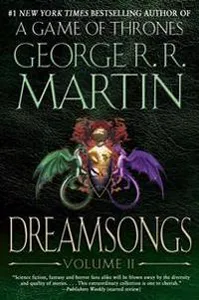
Dreamsongs: Volume II
Even before the enormous success of A Game of Thrones, George R. R. Martin had secured his reputation as one of the most exciting storytellers of our time. The second of two thrilling collections, Dreamsongs: Volume II continues the story of his amazing journey from a young writer to a #1 New York Times bestselling force of nature.

Physics, Volume II
Natural causes. Aristotle, great Greek philosopher, researcher, reasoner, and writer, born at Stagirus in 384 BC, was the son of a physician. He studied under Plato at Athens and taught there (367-347); subsequently he spent three years at the cou...

Hyborian: Volume II
Hyborian: Volume II [Vinyl LP]

Lvoe. Volume II
In the highly anticipated follow-up to the beloved LVOE: Poems, Epigrams & Aphorisms, three-time New York Times bestselling author Atticus invites readers to take a deeper look behind the mask as he continues his powerful journey inward in search of love, peace, and acceptance. LVOE. Volume II is an expanded exploration of self-love, meditation, meaning, loss, and romance from the internet's favorite poet. Atticus combines his instantly recognizable lyrical style, gorgeous illustrations, and relatable themes to once again dazzle readers, inspiring them to look within. This collection features all-new poems, each paired with beautiful sketches that bring the words alive from the page. LVOE. Volume II looks forward, backward, but most importantly inward to the often confusing yet hopeful human experience.

Epistles, Volume II
Meditative missives. Seneca, Lucius Annaeus, born at Corduba (Cordova) ca. 4 BC, of a prominent and wealthy family, spent an ailing childhood and youth at Rome in an aunt's care. He became famous in rhetoric, philosophy, money-making, and imperial...

Julian, Volume II
The emperor who renounced Christianity. Julian (Flavius Claudius Iulianus) "the Apostate," Roman Emperor, lived AD 331 or 332 to 363. Born and educated in Constantinople as a Christian, after a precarious childhood he devoted himself to ...

Geography, Volume II
The ecumene in prose. Strabo (ca. 64 BC to ca. AD 25), an Asiatic Greek of Amasia in Pontus, studied at Nysa and after 44 BC at Rome. He became a keen traveler who saw a large part of Italy, various near eastern regions including the Black Sea, va...
Correspondence, Volume II
Letters of an imperial tutor. The literary remains of the rhetorician Marcus Cornelius Fronto (ca. AD 100-176) first came to light in 1815, when Cardinal Mai, then prefect of the Ambrosian Library in Milan, discovered that beneath an account of th...
Orations, Volume II
The preeminent orator of ancient Athens. Demosthenes (384-322 BC), orator at Athens, was a pleader in law courts who later became also a statesman, champion of the past greatness of his city and the present resistance of Greece to Philip of Macedo...

Dionysiaca, Volume II
Epic revels. Nonnos of Panopolis in Egypt, who lived in the fifth century of our era, composed the last great epic poem of antiquity. The Dionysiaca, in forty-eight books, has for its chief theme the expedition of Dionysus against the Indians; but...

Histories, Volume II
Hellenistic history. The historian Polybius (ca. 200-118 BC) was born into a leading family of Megalopolis in the Peloponnese (Morea) and served the Achaean League in arms and diplomacy for many years, favoring alliance with Rome. From 168 to 151 ...

Letters, Volume II
Correspondence of a Cappadocian Father. Basil the Great was born ca. AD 330 at Caesarea in Cappadocia into a family noted for piety. He was at Constantinople and Athens for several years as a student with Gregory of Nazianzus and was much influenc...

Saturnalia, Volume II
An antiquarian's festival. The Saturnalia, Macrobius' encyclopedic celebration of Roman culture written in the early fifth century AD, has been prized since the Renaissance as a treasure trove of otherwise unattested lore. Cast in the form of a di...

Thebaid, Volume II
Fraternal strife, and the young Achilles. Statius published his Thebaid in the last decade of the first century. This epic recounting the struggle between the two sons of Oedipus for the kingship of Thebes is his masterpiece, a stirring exploratio...

Tombstones: Volume II
Tombstones: Volume II [CD]

Hitler: Volume II
'Meticulous... Probably the most disturbing portrait of Hitler I have ever read' Dominic Sandbrook, Sunday Times By the summer of 1939 Hitler was at the zenith of his power. Yet despite initial triumphs in the early stages of war, the Führer's for...

Presence, Volume II
All that is known is experiencing, and experiencing is not divided into one part (an inside self) that experiences and another part (an outside object, other, or world) that is experienced. Experiencing is seamless and intimate, made of "know...