
Colourful Semantics
*Purchasers of this book can access additional online resources at www.routledge.com/cw/speechmark* This comprehensive resource pack, developed in conjunction with education staff, draws on the principles of Alison Bryan's original Colourful Seman...

Basic Sequences: Colorcards
This title offers 48 cards illustrating everyday activities in 3-step sequences. Use these three-step sequences to demonstrate simple sequentially related actions which will help establish basic concepts and encourage an understanding of order and direction. The set of 16 three-step sequences portray a range of everyday topics including: making a bed; wrapping a present; and, dressing a baby. Intended for use in educational settings and/or therapy contexts under the supervision of an adult. This is not a toy.

Prepositions: Colorcards
Prepositions, 2nd Edition is a valuable resource for building pre-language concepts, developing verbal comprehension, and expanding expressive language. Comprising 48 fully-updated colour flashcards, divided into eight sets of six, each set represents a single preposition in a variety of contexts. The concepts and vocabulary shown relate to common circumstances and experiences, while the prepositions illustrated aim to teach awareness of space, position, and movement. This second edition of our bestselling resource contains new, modern images that have been selected for use with a wide range of ages, interests and language abilities. With the inclusion of modern, engaging images, this 2nd edition is a valuable intervention to support SLTs, SENCOs and teachers develop pupils' comprehension and use of prepositions. Each card also provides other language possibilities, in particular the opportunity to develop the use of verbs and expressive language. It may be used effectively with
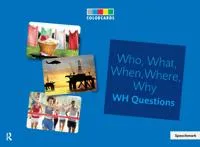
Who, What, When, Where Colorcards -Interrogative Pronouns
Who, What, When, Where, Why? Colorcards Understanding Interrogative Pronouns What are interrogative pronouns? Where can I find a set of cards that will help me understand them? The answers can be found in the carefully selected set of cards which will provide endless opportunities to discover, understand and practise interrogative pronouns. While each card is directly concerned with a specific question all the images included provide multiple opportunities to develop this key skill. Examples of card usage include: Who ...works here? ...won the race? What ...happens here? ...can you see? When ...is it time for lunch? ...when will the cake be baked? Where ...is the red shirt? ...is my pen? Why ...has the bus stopped? ...are they laughing? The cards can be used in groups or one-to-one situations and are designed to help the development of key skills of exploring and understanding through language. Age: All ages Contents: 36 A5 cards; accompanying booklet detailing ways to use the cards,

More What are They Thinking: Colorcards
Like the original set of 'What Are They Thinking?' Colorcards, this collection of cards is designed to encourage users to focus on the thoughts and feelings they and other people experience when confronted with a situation. Each card includes a 'thought bubble' to facilitate consideration of both what that individual is thinking and also the user's personal response. There are discussions about the appropriateness of the situation and of the best way to deal with it will all help to develop: Thinking skills; Understanding relationships; Problem solving, and, Social and emotional skills. The cards cover a diverse range of circumstances, including: difficult or dangerous situations; team work; tests and achievement. Intended for use in educational settings and/or therapy contexts under the supervision of an adult. This is not a toy.

Everyday Objects: Colorcards
Everyday Objects, 2nd Edition, features fully updated new images for 2016. This set of professionally-photographed cards include objects found in both indoor and outdoor settings. The cards are arranged in categories, for example, food, household objects, personal items, clothes, outside objects. The accompanying booklet details the contents of the set and includes suggested ways to use the cards. Appropriate for all ages and abilities and may be used in groups or one-to-one situations. It is a valuable resource for developing comprehension, encouraging expressive language, improving communication skills and vocabulary building. Examples include: cheese, mirror, kettle, farmyard animals, skateboard and many more. The accompanying booklet provides ideas and activities for use. Now translated into 8 different languages: German; French; Swedish; Dutch; Spanish; Italian; Portuguese; and, Japanese. Intended for use in educational settings and/or therapy contexts under the supervision of an

Sequences: Colorcards
This title features 6 and 8 - step sequences photographed in a variety of indoor and outdoor locations provide excellent opportunities for language work including syntax, grammar, vocabulary and time concepts. Adult models and appropriate activities make this set ideal for working with adults and adolescents. Some unexpected twists within the sequences add amusement and provide opportunities for discussion. The set of four six-step sequences depict: the present; football match; meal in a restaurant; and, trying to work. There are also three more complex eight-step sequences portray: lost keys; walking accident; the purse.
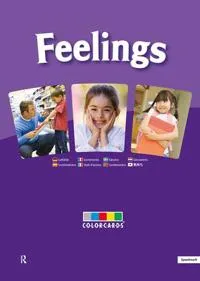
Feelings: ColorCards
Produced by Speechmark, ColorCards[registered] are a hugely adaptable teaching tool designed to help develop both language and social skills. Real objects, people, situations and activities are shown on the photographs to provide you with creative and highly visual ways to help children to explore their own feelings and emotions, and understand the feelings of other people around them. This creative set of photographic cards illustrates a huge range of feelings in children and adults - from happiness to sadness, anger to fear and so many more. Some cards feature just one person; others show two or more people and how they interact. On some cards the emotions are positive, on others they are negative and sometimes the cards feature both types of emotion. Children will learn to recognise and understand the significance of different facial expressions and body language. They will also be able to relate to many of the situations on the cards, which will encourage real understanding. Use

Odd One Out: ColorCards
Comprising 48 large-format photo cards, Odd One Out, 2nd Edition depicts groups of everyday objects. All are linked by a common category or theme – except the odd one out. This update of the enduring best-seller comprises fully refreshed, colourful, modern, engaging images, and splits the cards into three levels – showing four, five and six objects per card, increasing the level of complexity. Odd One Out is a trusted and valuable intervention to support SLTs, SENCOs and teachers develop pupils’ observation, attention and perception skills. It can be used effectively with individuals and in group settings, and includes an instruction booklet with a range of suggested activities for administration, available in nine languages - English, Dutch, French, German, Italian, Japanese, Portuguese, Spanish and Swedish. Intended for use in educational settings and/or therapy contexts under the supervision of an adult. This is not a toy.

What's Wrong?: Colorcards
This third edition of What’s Wrong? features 48 beautifully illustrated cards which develop perceptual skills. Each image shows a well-known activity in which something is wrong, either as it is happening or when it is about to happen. The game is to discover what is wrong in each case. Fully updated with fresh colour illustrations, the third edition builds on previous editions to incorporate new scenarios. The cards are a useful tool to support the development of: * Attention skills * Observation * Vocabulary building * Expressive language * Storytelling * Logical thought * Problem solving.This resource can be used effectively with students and clients of all ages and abilities and is a key resource for speech and language therapists, SENCOs, teachers and related professionals. Intended for use in educational settings and/or therapy contexts under the supervision of an adult. This is not a toy.

Pocket Adult Life: Colorcards
For a comprehensive series of daily living activities, these photographic flashcards provide clear and appealing images of 40 of the most common activities for daily living. Essential for all professionals and carers working with older adults with communication difficulties, these cards are a flexible tool to aid communication; develop vocabulary; initiate conversation and discussion; and to encourage independence. It includes: household chores (eg, vacuuming/dusting; making the beds; ironing; washing up; doing the laundry); personal hygiene (eg, bathing; cleaning teeth; dressing; going to the toilet; getting a haircut); out and about (eg, shopping; driving; walking; riding a scooter; catching a bus); financial (eg, collecting pension; paying for items; paying bills; writing a cheque); and, at home (eg, making tea; telephoning; making a sandwich; preparing dinner; sleeping; getting out of bed). Intended for use in educational settings and/or therapy contexts under the supervision of
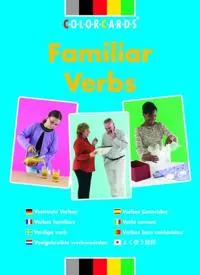
Familiar Verbs: Colorcards
The second of two verbs sets, the first being 'Basic Verbs'. These 48 cards show images of further frequently used and easily recognised verbs. Associated objects have been added to the images to give an idea of place and to encourage expressive language. Actions shown include empty (bucket), pour (drink), spill (soup) and tie (shoelaces). Illustrating frequently used and recognisable verbs. Using context the verbs illustrated include: The girl is biting a chocolate bar, a boy is blowing bubbles; the girl is copying a word; the boy is grating some cheese; and, the girl is making a paper flower, and, the boy is mixing the cake mixture. The cards show both male and female subjects with slightly more adults than the simpler Basic Verbs set, and associated objects have been added to the images to give an idea of place. 48 cards 210 x 148mm + booklet, boxed. 'The photographic representations are the same high quality that we expect from this source...a useful addition to clinical
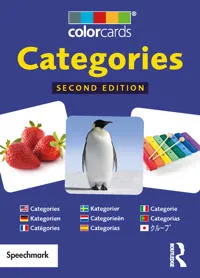
Categories: ColorCards
Comprising two identical sets of 96 photo cards, Categories, 2nd Edition depicts 24 everyday themes from animals and plants to clothes and household objects, and has been designed as a vocabulary intervention with a variety of activities. Suitable for all ages, the cards are categorised as ‘simple’ and ‘complex’ and can be used for exercises based on matching, colour, patterns, and association, among others. This 2nd edition is a valuable intervention to support SLTs, SENCOs and teachers develop pupils’ adjectives and nouns, verbal comprehension, reasoning and expressive language. Suitable for use with individuals or in group settings, it features modern, engaging colour images and has been developed in conjunction with several highly-experienced speech and language therapists. The instruction booklet contains a range of suggested activities for administration and nine languages - English, Dutch, French, German, Italian, Japanese, Portuguese, Spanish and Swedish. Intended for use in
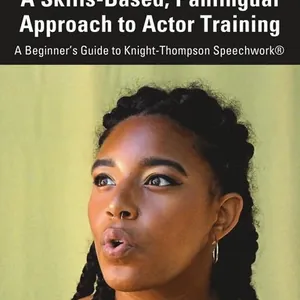
Experiencing Speech: A Skills-Based, Panlingual Approach to Actor Training
Experiencing Speech: A Skills-Based, Panlingual Approach to Actor Training is a beginner's guide to Knight-Thompson Speechwork¿, a method that focuses on universal and inclusive speech training for actors from all language, racial, cultural, and g...
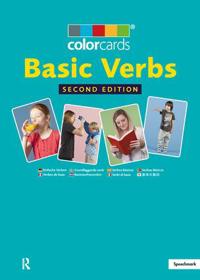
Basic Verbs: Colorcards
Basic Verbs, 2nd Edition has been fully updated for 2016, featuring 48 professionally-photographed cards that illustrate frequently used verbs in simple settings. Each card can be selected to be used independently or grouped with others for use to encourage discussion and consideration about the topic depicted. The cards in this best-selling resource are valuable for individual and group work, and may be used in a variety of settings by speech and language therapists among other professionals. The accompanying booklet details the contents of the set and includes suggested ways to use the cards. Example of the cards include: the baby is crying; the girl is dancing; the children are laughing; the man is sleeping in the armchair; and, the woman is dressing the boy. Now translated into 8 languages: German; French; Swedish; Dutch; Spanish; Italian; Portuguese; and, Japanese. Intended for use in educational settings and/or therapy contexts under the supervision of an adult. This is not a
What's Missing?: Colorcards
What’s Missing? Second Edition is designed to promote observation, visual and auditory skills including the development of descriptive language. Comprising 48 fully-updated colour flashcards depicting 24 everyday scenes, each card shows a complete scene and another with five items missing. The scenes are presented with increasing levels of difficulty to allow for selection when working with students of different ages and abilities. Missing items may be categorised as either having no influence on a situation, causing an inconvenience, preventing the functioning of an object, or not being possible in real life – both encouraging basic reasoning and the development of problem solving skills. Intended for use in educational settings and/or therapy contexts under the supervision of an adult. This is not a toy.

Emotions: Colorcards
Emotions, 2nd Edition has been designed to promote awareness of and trigger discussion about feelings and emotions. Comprising 48 fully-updated color flashcards depicting displays of emotions through facial expression and body language, Emotions aims to help develop self-expression, self-esteem, and an understanding of the importance of body language in messages. This 2nd edition of our bestselling resource is divided into three categories – individual people, difficult situations, and enjoyable situations – to enable pupils to focus on the subject of emotions more easily. It also includes an updated and expanded resource word-list to broaden vocabulary and emotional understanding. A valuable intervention to support SLTs, SENCOs and teachers, it helps develop pupils' emotional and expressive language, leading to improved communication skills and greater emotional awareness. It may be used effectively with individuals or in group settings and includes instructions in nine languages -
Action Picture Test
*The Renfrew Action Picture Test cards are now available for free, to assist with online assessments and the ease of administrating the test, but in order to fully score the RAPT the pack will need to be purchased. You can find the downloadable cards under ‘Support Materials’ on the Routledge.com product page* Since its first publication in 1967, the Renfrew Action Picture Test has been a reach-for assessment used by a range of professionals dedicated to the speech and language development of children between 3.0–8.5 years of age. Widely used by Speech and Language Therapists / Pathologists, SENCOs, and teachers, among other professionals, the test covers words used to convey information (i.e. nouns, verbs, prepositions); present, past and future tenses; irregular forms of plural and past tenses; simple and complex sentence construction; and passive voice. The test provides an Information and Grammar score that can be benchmarked against a UK school population. This 5th edition has