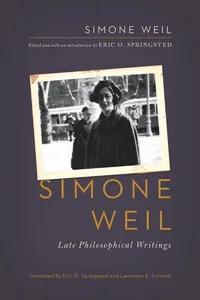
Simone Weil
Although trained as a philosopher, Simone Weil (1909-43) contributed to a wide range of subjects, resulting in a rich field of interdisciplinary Weil studies. Yet those coming to her work from such disciplines as sociology, history, political scie...
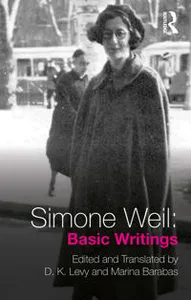
Simone Weil: Basic Writings
Simone Weil is one of the most profound and thought-provoking thinkers of the 20th century. A teacher, factory and farm labourer, a political activist at home and abroad, a loving friend, daughter and sister—all these manifest a life devoted to the good in its many forms. Her writings explore the good open to us and the various routes to it, spanning philosophy, politics, science and spirituality. While she saw her vocation primarily as a philosopher—examining questions concerning human faculties, action and thought, the limits of language and our need of mediation, suffering and beauty for contact with reality—her startlingly original thought is often obscured by her having been too readily categorized as a Christian mystic. Simone Weil: Basic Writings is an expertly edited anthology of Weil’s most important writings, presenting her philosophy as it relates to the architecture of human nature, politics, work, necessity, beauty, goodness and God. Working from the definitive French

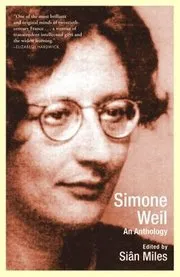
Simone Weil: An Anthology
Simone Weil was one of the foremost thinkers of the twentieth century: a philosopher, theologian, critic, sociologist and political activist. This anthology spans the wide range of her thought, and includes an extract from her best-known work 'The...

Simone Weil: Basic Writings
Simone Weil is one of the most profound and thought-provoking thinkers of the 20th century. A teacher, factory and farm labourer, a political activist at home and abroad, a loving friend, daughter and sister—all these manifest a life devoted to the good in its many forms. Her writings explore the good open to us and the various routes to it, spanning philosophy, politics, science and spirituality. While she saw her vocation primarily as a philosopher—examining questions concerning human faculties, action and thought, the limits of language and our need of mediation, suffering and beauty for contact with reality—her startlingly original thought is often obscured by her having been too readily categorized as a Christian mystic. Simone Weil: Basic Writings is an expertly edited anthology of Weil’s most important writings, presenting her philosophy as it relates to the architecture of human nature, politics, work, necessity, beauty, goodness and God. Working from the definitive French

The Notebooks of Simone Weil
Simone Weil (1909-1943) was a defining figure of the twentieth century; a philosopher, Christian, resistance fighter, anarchist, feminist, Labour activist and teacher. She was described by T. S. Eliot as 'a woman of genius, of a kind of genius akin to that of the saints', and by Albert Camus as 'the only great spirit of our time'. Originally published posthumously in two volumes, these newly reissued notebooks, are among the very few unedited personal writings of Weil's that still survive today. Containing her thoughts on art, love, science, God and the meaning of life, they give context and meaning to Weil's famous works, revealing an unique philosophy in development and offering a rare private glimpse of her singular personality.

Simone Weil
Philosopher, theologian, critic, sociologist, political activist -- Simone Weil was among the foremost thinkers of our time. Best known in this country for her theological writing, Weil wrote on a great variety of subjects ranging from classical p...
Simone Weil
Simone Weil, legendary French philosopher, mystic and political activist who died in England in 1943 at the age of thirty-four, belongs to a select group of thinkers: as with St Augustine, Pascal and Nietzsche, so with Weil a single phrase can per...
Simone Weil
Situates Weil's writing within the French literary tradition, and recognizes her as a master stylist. Simone Weil created a memorable œuvre remarkable for its lucid, striking, and seemingly transparent prose. Aphoristic and impersonal in tone, it is the instrument of a master stylist. The first to recognize Weil's achievement as a writer, this book situates her work within the French literary tradition, showing its affinities with Pascal and Baudelaire, and acknowledges its kinship to the works of poets and writers of her generation, notably the poets René Char and Marina Tsvetaeva. The parallel between Weil's concept of decreation and the impersonality of the speaker in her prose is shown ultimately to be related to her will to surpass the boundaries of the written page in her drive to self-immolation. Close reading of passages from her notebooks, several short texts, and a proposal for front-line nurses addressed to the Free French illustrates the forces and influences at work in
Simone Weil
This Very Short Introduction provides an overview of the intriguing and provocative life and ideas of twentieth century French philosopher, mystic, and social activist Simone Weil. Weil was not a typical, systematic philosopher. Despite her short ...

Subversive Simone Weil
Known as the "patron saint of all outsiders," Simone Weil (1909-43) was one of the twentieth century's most remarkable thinkers, a philosopher who truly lived by her political and ethical ideals. In a short life framed by the two world w...

Subversive Simone Weil
Known as the "patron saint of all outsiders," Simone Weil (1909-43) was one of the twentieth century's most remarkable thinkers, a philosopher who truly lived by her political and ethical ideals. In a short life framed by the two world w...

Simone Weil and Theology
Simone Weil - philosopher, religious thinker, mystic, social/political activist - is notoriously difficult to categorize, since her life and writings challenge traditional academic boundaries. As many scholars have recognized, she set out few, if ...

Discussions of Simone Weil
The work of Simone Weil has not garnered the attention it deserves in the Anglo-American tradition. In this book, Rhees, the noted thinker trained by Wittgenstein, provides the most sustained critique to date of Weil's views on science and religio...

Simone Weil on Colonialism
In 1931, Simone Weil read an article by Louis Roubaud in the Petit Parisien that exposed the Yen Bay massacre in Indochina. That article opened Weil's eyes, and from then until her death in exile in 1943, she cared most deeply about the F...

Simone Weil: 'The Just Balance'
Simone Weil: 'The Just Balance'
SPCK Introduction to Simone Weil
Simone Weil was one of the most original philosophers and political thinkers of the twentieth century. During her life her writings were almost unknown beyond a few close friends, only after her death at the age of thirty four did her work reach a...


Power of Words
'There are certain words which possess, in themselves, when properly used, a virtue which illumines and lifts up towards the good' The philosopher and activist Simone Weil was one of the most courageous thinkers of the twentieth century. Here she ...

Intimations of Christianity Among the Ancient Greeks
Simone Weil (1909-1943) is one of the most brilliant and unorthodox religious and philosophical minds of the twentieth century. She was also a political activist, worked in the Renault car factory in France in the 1930s and fought briefly as an an...

On the Abolition of All Political Parties
On the Abolition of All Political Parties

On The Abolition of All Political Parties
An NYRB Classics Original Simone Weil--philosopher, activist, mystic--is one of the most uncompromising of modern spiritual masters. In 'On the Abolition of All Political Parties' she challenges the foundation of the modern liberal political order, making an argument that has particular resonance today, when the apathy and anger of the people and the self-serving partisanship of the political class present a threat to democracies all over the world. Dissecting the dynamic of power and propaganda caused by party spirit, the increasing disregard for truth in favor of opinion, and the consequent corruption of education, journalism, and art, Weil forcefully makes the case that a true politics can only begin where party spirit ends. This volume also includes an admiring portrait of Weil by the great poet Czeslaw Milosz and an essay about Weil's friendship with Albert Camus by the translator Simon Leys.

Love in the Void
Simone Weil, the great mystic and philosopher for our age, shows where anyone can find God. Why is it that Simone Weil, with her short, troubled life and confounding insights into faith and doubt, continues to speak to today's spiritual seekers? W...

First and Last Notebooks
First and Last Notebooks


Waiting for God
'You cannot get far in these essays without sensing yourself in the presence of a writer of immense intellectual power and fierce independence of mind.' - Janet Soskice, from the Introduction to the Routledge Classics edition Simone Weil (1909-194...

Letter to a Priest
Hailed by Albert Camus as 'the only great spirit of our times', Simone Weil was one of great essayists and activists of the twentieth century. Her writings on the nature of religious faith and spirituality have inspired many subsequent thinkers. W...

Förtryck Och Frihet
Förtryck och frihet, vars franska originalutgåva utkom postumt 1955, samlar ett antal av Simone Weils texter om sociala och politiska frågor. Texterna författades under 1900-talets mest dramatiska politiska skede, från 1933 till 1943. Läsaren av Weils obönhörligt klarsynta essäer kan knappast undvika att konstatera att de olyckligtvis inte har förlorat något av sin aktualitet. Detta gäller inte endast bokens övergripande ämne - förtryckets mekanism och natur - utan även de specifika former detta förtryck tar sig i våra samhällen. Simone Weil (1909-1943) var en fransk filosof, mystiker och politisk aktivist. Hon undervisade i filosofi, arbetade på fabriksgolvet och var aktiv i fackföreningsrörelsen. I spanska inbördeskriget anslöt hon sig till den anarkistiska Durruti-kolonnen. När nazisterna ockuperade Frankrike flydde hon till USA för att kort därefter återvända till Europa. Hon avled i tuberkulos i London blott 34 år gammal.

Oordnade Tankar Kring Guds Kärlek Och Andra Texter
Simone Weil (19091943) var en fransk filosof vars betydelse bara verkar öka med tiden. Då inte bara hennes filosofisk-litterära verk, utan också myten om henne som en kämpande intellektuell. Hon insåg tidigt nazismens faror och arbetade aktivt mot den, både filosofiskt och handgripligt genom motståndsrörelsen. Här återges några texter av Weil om människans relation till Gud. Flera har aldrig tidigare översatts till svenska. Måns Magntorn har såväl översatt som skrivit ett efterord.

Waiting for God
Emerging from the thought-provoking discussions and correspondence Simone Weil had with the Reverend Father Perrin, this classic collection of essays contains the renowned philosopher and social activist's most profound meditations on the relationship of human life to the realm of the transcendent. An enduring masterwork and 'one of the most neglected resources of our century' (Adrienne Rich), Waiting for God will continue to influence spiritual and political thought for centuries to come.

Need for Roots
Hailed by Andre Gide as the patron saint of all outsiders, Simone Weil's short life was ample testimony to her beliefs. In 1942 she fled France along with her family, going firstly to America. She then moved back to London in order to work with de...

Need for Roots
A new translation of Simone Weil's best-known work: a political, philosophical and spiritual treatise on what human life could be What do humans require to be truly nourished? Simone Weil, one of the foremost philosophers of the last century, envi...


Venice Saved
Towards the end of her life, the French philosopher and mystic Simone Weil (1909-43) was working on a tragedy, Venice Saved. Appearing here in English for the first time, this play explores the realisation of Weil's own thoughts on tragedy. A figu...


Att Slå Rot
Att Slå Rot [Bok / Häftad]

Gravity and Grace
Gravity and Grace was the first ever publication by the remarkable thinker and activist, Simone Weil. In it Gustave Thibon, the farmer to whom she had entrusted her notebooks before her untimely death, compiled in one remarkable volume a compendiu...
