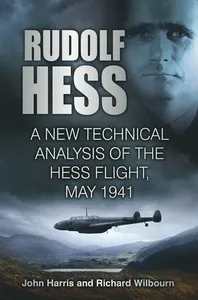
Rudolf Hess
On 10 May 1941, on a whim, Hitler's deputy Rudolf Hess flew a Messerschmitt Bf 110 to Scotland in a bizarre effort to make peace with Britain; Göring sent fighters to stop him but he was long gone. Imprisoned and tried at Nuremberg, he would die b...

The Flight of Rudolf Hess
On 10 May 1941, Rudolf Hess - Deputy Fuhrer of the Third Reich - embarked on his astonishing flight from Augsburg to Scotland.

Commandant of Auschwitz: The Autobiography of Rudolf Hoess
Rudolf Hoess was a German SS officer during the Nazi era who, after the defeat of Nazi Germany, was convicted for war crimes. He was the longest-serving commandant of the Auschwitz concentration and extermination camp (from 4 May 1940 to November 1943, and again from 8 May 1944 to 18 January 1945). He tested and implemented means to accelerate Hitler's order to systematically exterminate the Jewish population of Nazi-occupied Europe, known as the Final Solution. On the initiative of one of his subordinates Hoess introduced the pesticide Zyklon B to be used in gas chambers, where more than a million people were killed. Hoess was hanged in 1947 following a trial before the Polish Supreme National Tribunal. During his imprisonment, at the request of the Polish authorities, he wrote his memoirs, released in English under the title Commandant of Auschwitz: The Autobiography of Rudolf Hoess. Like most things in his life, Hoess undertook the autobiography with great diligence. A careful
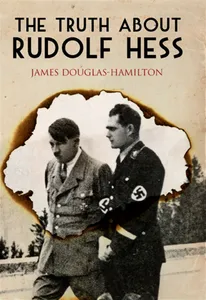
The Truth About Rudolf Hess, E-bok
Rudolf Hess' flight to Britain in May 1941 stands out as one of the most intriguing and bizarre episodes of the Second World War.In The Truth About Rudolf Hess, Lord James Douglas-Hamilton explores many of the myths which still surround the affair. He traces the developments which persuaded Hess to undertake the flight without Hitlers knowledge and shows why he chose to approach the Duke of Hamilton. In the process he throws light on the importance of Albrect Haushofer, one-time envoy to Hitler and Ribbentrop and personal advisor to Hess, who was eventually executed by the SS for his involvement in the German Resistance movement.Drawing on British War Cabinet papers and the authors unparalleled access to both the Hamilton papers and the Haushofer letters, this new and expanded edition of The Truth About Rudolf Hess takes the reader into the heart of the Third Reich, combining adventure and intrigue with a scholarly historical approach.

Rudolf
In these two novellas, Volodymyr Dibrova tells the story of how the Soviet system was sustained by individuals who never truly believed in it, but simply lacked the courage to oppose it. Peltse portrays the formation of an average apparatchik. Bot...


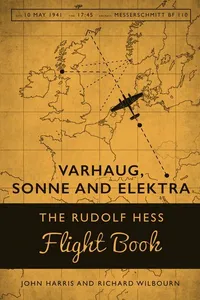
Varhaug, Sonne and Elecktra
May 11th 1941 - Berchtesgaden. The day after Rudolf Hess took off from Augsburg and hadn't yet returned or sent any signal, Adolf Hitler had to say something to justify Hess' so far unexplained disappearance. Not least for the benefit of the Germa...

The Master of Auschwitz: Memoirs of Rudolf Hoess, Kommandant SS
The Master of Auschwitz: Memoirs of Rudolf Hoess, Kommandant SS

The Occult in National Socialism
A critical history of the roots of Nazi occultism and its continuing influence Explores the occult influences on various Nazi figures, including Adolf Hitler, Albert Speer, Rudolf Hess, Alfred Rosenberg, and Heinrich Himmler Examines the foundatio...

Occult in National Socialism
A critical history of the roots of Nazi occultism and its continuing influence*; Explores the occult influences on various Nazi figures, including Adolf Hitler, Albert Speer, Rudolf Hess, Alfred Rosenberg, and Heinrich Himmler*; Examines the found...

Tales from Spandau
Sentenced to long prison sentences at the Trial of the Major War Criminals at Nuremberg, seven of Adolf Hitler's closest associates - Rudolf Hess, Albert Speer, Karl Dönitz, Erich Raeder, Walther Funk, Konstantin von Neurath, and Baldur von Schira...

Odilo Globocnik, Hitler's Man in the East
Odilo Globocnik, a collaborator of Adolf Hitler and Heinrich Himmler, was responsible for the deaths of at least 1.5 million people in three Nazi camps in occupied Poland: Treblinka, Sobibor, and Belzec. Along with Rudolf Hoss, Globocnik may be na...
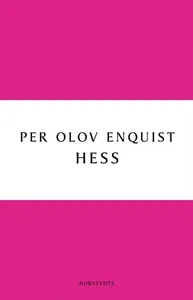
Hess
Vem är Hess? Är han en historisk person som existerar, eller är han en drömd projektion av en människa, en livshållning? Per Olov Enquists roman lämnar inget entydigt svar. Romanen har en överraskande form - både bred epik, akademisk avha...


Rudolf Nurejew
Seit Rudolf als kleiner Junge zum ersten Mal ein Ballett sah, wusste er, dass er sein Leben dem Tanz widmen wollte. Erst mit 17 durfte er zur Tanzschule gehen und trotzdem schaffte er es in kürzester Zeit, ein großartiger Tänzer zu werden. Er verz...

Rudolf Bultmann
Rudolf Bultmann was the giant of twentieth-century New Testament scholarship. His pioneering studies in biblical criticism shaped research on the composition of the gospels, and his call for demythologising biblical language sparked debate among C...
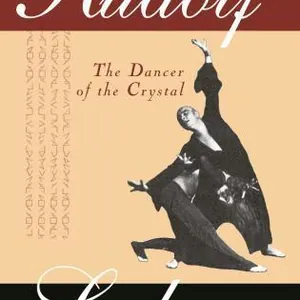
Rudolf Laban
Rudolf Laban, the famed dancer-choreographer and 'founding father' of modern dance, also had experience as a painter, sculptor, and architect, and allowed those skills to influence his innovative choreographic techniques. His important works and h...
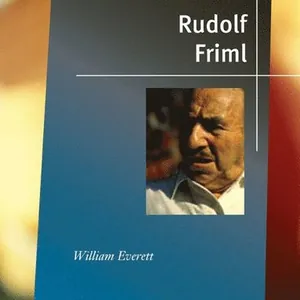
Rudolf Friml
Rudolf Friml (1879-1972) is best remembered for his romantic 1920s operettas. Born in Prague, where he studied with Dvorak, Friml moved to the United States in 1906 and pursued a career as a concert pianist and composer. Beginning in 1912, he wrot...

Rudolf Laban
Rudolf Laban was one of the leading dance theorists of the twentieth century. His work on dance analysis and notation raised the status of dance as both an art form and a scholarly discipline. This is the first book to combine: an overview of Laba...


Rudolf Steiner
Rudolf Steiner is one of the most controversially judged educational reformers of the twentieth century. Although he received little recognition within his field, his educational thought has had a sustained and profound influence, not only in the ...


Rudolf Arnheim
Rudolf Arnheim is one of this century's most influential thinkers in the visual arts, and perhaps the most lucid and accessible writer on the arts today. From his now-classic book on film theory to his definitive texts on visual perception, from h...


Kronprinz Rudolf
Der Suizid von Kronprinz Rudolf von Österreich (1858-1889) in Mayerling am 30.¿Januar 1889 war ein Schock für ganz Europa und sollte die Welt nachhaltig beeinflussen. Hier zeichnet die Bestsellerautorin Brigitte Hamann das detaillierte Bild eines ...
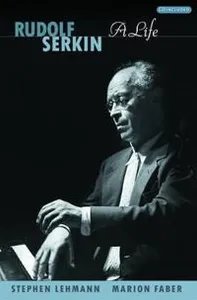
Rudolf Serkin
Rudolf Serkin
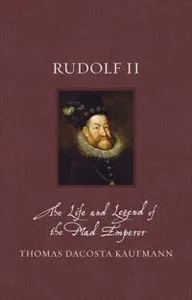
Rudolf II
Rudolf II: The Life and Legend of the Mad Emperor offers a fresh perspective on the Habsburg ruler, shedding new light on a reign often coloured by myths of madness. Contrary to popular belief, Rudolf was not a passive recluse but an engaged monarch, navigating the complexities of state affairs with a moderate hand amid turbulent times. By contextualizing his interests in astrology, alchemy and magic, Thomas DaCosta Kaufmann offers new insights into Rudolf’s support for scientific endeavours and his quest for power. It also demonstrates that Rudolf’s assembling of the greatest Kunstkammer and painting collection of his time and his patronage of artists were essential elements of Renaissance rulership. This book will appeal to a diverse audience, including enthusiasts of the occult, as well as those fascinated by Renaissance history, the Habsburg dynasty and art history.


Rudolf Nureyev
Following an unorthodox first meeting in London in 1964, Patricia Boccadoro got to know Rudolf Nureyev on a personal basis after she moved to live in Paris in the 1970s. In this amusing, informative book, she recounts how exciting it was to see hi...
Rudolf Steiner
This book covers Rudolf Steiner's biography, presented from an educational point of view and also unfolds the different aspects of Steiner's educational thought in Waldorf Education. Steiner was in many ways ahead of his time and his educational i...


Rudolf Uhlenhaut
This first comprehensive biography of Rudolf Uhlenhaut, illustrated with many previously unpublished photographs, depicts his life and technical accomplishments, including a complete compilation of his patents which puts them into a technical and ...
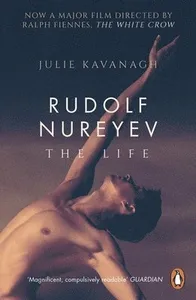
Rudolf Nureyev
NOW A MAJOR FILM BY RALPH FIENNES, THE WHITE CROW 'A gripping account of an extraordinary life' Daily Telegraph Born on a train in Stalin's Russia, Rudolf Nureyev was ballet's first pop icon. No other dancer of our time has generated the same exci...


Rudolf Steiner
Describes Rudolf Steiner's development from shy scholar to the international figurehead of Anthroposophy, his break with Madam Blavatsky's Theosophy, his struggles to find a voice, and the essence of his insights into the supersensible world. Of all the important thinkers of the twentieth century, Rudolph Steiner (1861-1925) is perhaps the most difficult to come to grips with. For the unprepared reader, his work presents a series of formidable obstacles, from the dauntingly abstract style to the often bizarre pronouncements on the nature of man and his cosmic destiny. And yet, Steiner was perhaps the most influential and charismatic occult philosopher of his generation and the movement he launched, Anthroposophy, with its educational, agricultural, and artistic applications, still has many thousands of followers worldwide. No one interested in esoteric thought can ignore Steiner, but until now there has been no genuinely accessible introduction to his ideas. This lucid and sympathetic
