

Talleyrand
A profile of the contradictory statesman Charles Maurice Prince de Talleyrand who went from church establishment figure to revolutionary, supporter of Napoleon Bonaparte to promoter of the Bourbon Restoration during one of the most turbulent perio...


Napoleon
'Vibrant and illuminating ... [Dywer] tells a fascinating tale' The Times 'Refreshing scholarship ? Energetic, readable and filled with colourful detail ? Napoleon: Passion, Death and Resurrection is a thoroughly enjoyable book which divides well ...

Violence
Very Short Introductions : Brilliant, Sharp, Inspiring Violence is part and parcel of human history and of human nature. It is one of our most distinctive traits, the one thing that all cultures and societies, across time, share in c...

Citizen Emperor
The second volume of a new and comprehensive biography about one of the history's most charismatic leaders 'a very fine book, which explains Napoleon's extraordinary rise to power and equally meteoric fall, with great erudition, skill and verve' S...


Empires of Violence
Empires of Violence

Empires of Violence
Empires of Violence

Path to Power 1769 - 1799
Napoleon Bonaparte's rise to power was neither inevitable nor smooth; it was full of mistakes, wrong turns and pitfalls. During his formative years his identity was constantly shifting, his character ambiguous and his intentions often ill-defined....
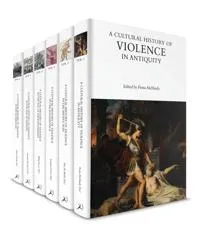
A Cultural History of Violence
Throughout history, violence has arguably played a central role in most events, movements and countries. This six volume set considers how violence can offer an insight into societies of the past. Tracing the culture of violence from the ancient world to the modern day, 54 experts explore nine themes in the history of violence to show how it has been understood, created, carried out and controlled through human history. Individual volume editors ensure the cohesion of the whole set, and the structure allows the reader to either focus on one particular period, or trace a specific theme across the ages through each of the volumes. The six volumes cover: 1. Antiquity (500 BCE to 800 CE); 2. The Middle Ages (800 to 1450); 3. The Renaissance (1450 to 1650); 4. Age of Enlightenment (1650 to 1800); 5. Age of Empire (1800 to 1920); 6. Modern Age (1920 to the present). Themes (and chapter titles) are: understanding and defining violence, sacred violence, spaces of violence, authority and


