
Property, Substance, and Effect
In engaging essays, celebrated anthropologist Marilyn Strathern reflects on the complexities of social life.¿ Property, Substance, and Effect draws on Marilyn Strathern's longstanding interest in the reification of social relations. If the world i...

Treasured
'Impeccably researched and beautifully written' David Wengrow 'Utterly original' Paul Strathern When it was found in 1922, the 3,300-year old tomb of Tutankhamun sent shockwaves around the world, turning the boy...

Brief History of Medicine
Paul Strathern follows the development of medicine through the lives of its greatest practitioners, whose discoveries (and errors) shaped the course of medical history. Includes geniuses, such as Paracelsus, the father of medical chemistry, and Ed...
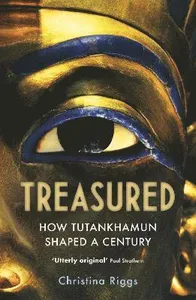
Treasured
'Impeccably researched and beautifully written' David Wengrow 'Utterly original' Paul Strathern When it was found in 1922, the 3,300-year old tomb of Tutankhamun sent shockwaves around the world, turning the boy-king into a household name overnigh...

Empire: A New History of the World
A dazzling new history of the world told through the ten major empires of human civilization.Eminent historian Paul Strathern opens the story of Empire with the Akkadian civilization, which ruled over a vast expanse of the region of ancie...


Paul Paul: Paul Paul
Paul Paul: Paul Paul [Vinyl 12"]


The Other Renaissance
'Enlightening and fascinating' John Banville, Wall Street JournalThrough the lives of major figures from the fifteenth to the seventeenth centuries, including Copernicus, Gutenberg, Luther, Catherine de Medici, Rabelais, van Eyck and Shakespeare, Paul Strathern tells the fascinating story of the northern European Renaissance, which rivalled its Italian counterpart.There is no denying that many of the first developments of the Renaissance took place in Italy. However, a revolution of similar magnitude was also occurring across northern Europe, which would forever alter European culture in its own unique fashion. Initially centred on the city of Bruges, its influence was soon felt in France, the German states, England and even in Italy itself.By vividly bringing to life the key players of the northern Renaissance, Paul Strathern explores some of the most significant advances of the whole era, revealing how they not only introduced new ways of thinking in art, literature, science, philosophy, mathematics and medicine, but also allowed for the evolution of an entirely different concept of life.In this compelling and original history, Strathern shows how the 'Other Renaissance' would play a role at least as significant as the Italian Renaissance in shattering the constraints of medieval life and bringing our modern world into being.

Season in Abyssinia
Marseilles, 1891: as Arthur Rimbaud lies dying in hospital, his mind wanders fitfully - taking him back to Commune-era Paris, and the scandalous life he led with Verlaine. But, above all, he is transported to Harar, Abyssinia, where he ventured in...

Spirit of Venice
The Spirit of Venice is a history of the first great economic and naval power of the modern Western world, from its struggle to ascendancy, through the arc of its glory - when its trading empire reached as far afield as China, Syria and West Afric...
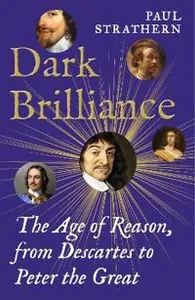
Dark Brilliance
A sweeping history of the Age of Reason, which shows how, although it was a time of progress in many areas, it was also an era of brutality and intolerance, by the author of The Borgias and The Florentines. During the 1600s, between the end of the Renaissance and the start of the Enlightenment, Europe lived through an era known as the Age of Reason. This was a revolutionary period which saw great advances in areas such as art, science, philosophy, political theory and economics. However, all this was accomplished against a background of extreme political turbulence and irrational behaviour on a continental scale in the form of internal conflicts and international wars. Indeed, the Age of Reason itself was born at the same time as the Thirty Years' War, which would devastate central Europe to an extent that would not be seen again until the twentieth century. The period also saw the development of European empires across world and a lucrative new transatlantic commerce began, which


Rise and Fall
A dazzling new history of the world through ten major empires.
Rise and Fall
Rise and Fall opens with the Akkadian Empire, which ruled over a vast expanse of the region of ancient Mesopotamia, then turns to the immense Roman Empire, where we trace back our western and eastern roots. Next Strathern describes how a great dea...


Ten Cities that Led the World
'A book of ideas [...] Strathern ably guides us through these moments of glory.' -- The Times *** Great cities are complex, chaotic and colossal. These are cities that dominate the world stage and define eras; where ideas flourish, revolutions are...

Florentines
Between the birth of Dante in 1265 and the death of Galileo in 1642 something happened which completely revolutionized Western civilization. Painting, sculpture and architecture would all visibly change in a striking fashion. Likewise, the thought...

Napoleon in Egypt
Napoleon's attack on Egypt in 1798 was the first on a Middle Eastern country by a Western power in modern times. With 335 ships and 40,000 men, it was the largest long-distance seaborne force the world had ever seen. Napoleon's assault was intende...



Mendeleyev's Dream: The Quest for the Elements
The wondrous and illuminating story of humankind's quest to discover the fundamentals of chemistry, culminating in Mendeleyev's dream of the Periodic Table. **One of Bill Gates' Top Five Book Recommendations** In 1869 Russian scientist Dmitri Mendeleyev was puzzling over a way to bring order to the fledgling science of chemistry. Wearied by the effort, he fell asleep at his desk. What he dreamed would fundamentally change the way we see the world. Framing this history is the life story of the nineteenth-century Russian scientist Dmitri Mendeleyev, who fell asleep at his desk and awoke after conceiving the periodic table in a dream-the template upon which modern chemistry is founded and the formulation of which marked chemistry's coming of age as a science. From ancient philosophy through medieval alchemy to the splitting of the atom, this is the true story of the birth of chemistry and the role of one man's dream. In this elegant, erudite, and entertaining book, Paul Strathern


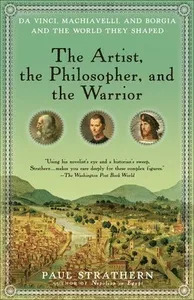
Artist, The Philosopher and The Warrior
In the autumn of 1502 three giants of the Renaissance period - Cesare Borgia, Leonardo da Vinci and Niccolò Machiavelli - set out on one of the most treacherous military campaigns of the period. Cesare Borgia was a ferocious military leader whose ...

Borgias
· · A Daily Mail Book of the Week · · The sensational story of the rise and fall of one of the most notorious families in history. ____________________ 'A wickedly entertaining read' The Times ____________________ The Borgias have become a byword ...

Dark Brilliance
Between the end of the Renaissance and the start of the Enlightenment, Europe lived through an era known as the Age of Reason. This was a period which saw advances in areas such as art, science, philosophy, political theory and economics. However, all this was achieved against a background of extreme turbulence in the form of internal conflicts and international wars. While the 'land of liberty' was beginning to import slaves from Africa.Focusing on key characters from the seventeenth to the eighteenth centuries, including Caravaggio, Rembrandt, Newton, Descartes, Spinoza, Louis XIV and Charles I, Dark Brilliance is a fascinating and wide-ranging history that explores the human costs of imposing progress and modernity.

Medici
A dazzling piece of Italian history of the infamous family that become one of the most powerful in Europe, weaving its history with Renaissance greats from Leonardo da Vinci to Galileo Against the background of an age which saw the rebirth of anci...
Death in Florence
Lorenzo de' Medici: The embodiment of Florence's most powerful family, a brutal man who ruled the city with an iron fist, whilst protecting it from the shifting mire of Italian politics. Fra Girolamo Savonarola: An unprepossessing provincial monk ...


Paul
Paul is the most powerful human personality in the history of the Church. A missionary, theologian, and religious genius, in his epistles he laid the foundations on which later Christian theology was built. In his highly original introduction to P...
Paul
Paul
Paul
This compelling reconstruction of the life and thought of St Paul paints a vivid picture of the Roman world in which he preached his revolutionary message and explains the significance of his lasting impact on both the Church and the world. Regard...

Paul
A groundbreaking new portrait of the apostle Paul, from one of today's leading historians of antiquity Often seen as the author of timeless Christian theology, Paul himself heatedly maintained that he lived and worked in history's closing hours. H...