
Oxbow Orchard Hö 1,13 kg
Oxbow Orchard Hö Gnagare älskar den söta doften och smaken av Oxbow Orchard Hö, och det gör detta höet till ett perfekt komplement till andra hösorter. Precis som andra gräshöer har örthö en hög fiberhalt och en låg proteinhalt vilket främjar hälsan i mag-tarmkanalen. Mixa örthö med något annat av Oxbows höer för en perfekt diet för vuxna gnagare! Förpackningsstorlekar: 425 g 1,13 kg 4,08 kg

Oxbow Orchard Hö 4,08 kg
Oxbow Orchard Hö Gnagare älskar den söta doften och smaken av Oxbow Orchard Hö, och det gör detta höet till ett perfekt komplement till andra hösorter. Precis som andra gräshöer har örthö en hög fiberhalt och en låg proteinhalt vilket främjar hälsan i mag-tarmkanalen. Mixa örthö med något annat av Oxbows höer för en perfekt diet för vuxna gnagare! Förpackningsstorlekar: 425 g 1,13 kg 4,08 kg

Oxbow Western Timotej Hö 4,08 kg
Oxbow Western Timotej Hö Letar du efter ett gott bashö med högt näringsinnehåll och en fräschhet som dina gnagare inte kan motstå? Då tror vi att du har hittat helt rätt här! Oxbow Western Timotej är med sina långa fibrer idealiskt för att bibehålla en god hälsa i mag- och tarmkanalen hos gnagare såsom exempelvis kaniner och marsvin. Western Timothy timotejhö är Oxbows absolut mest populära gräshö. Det har en hög fiberhalt och en låg protein- och kalciumhalt vilket rekommenderas av ledande veterinärer. Oxbow var de första att introducera timotejhö som ingrediens i smådjursfoder - idag är det standard! Förpackningsstorlekar: 425 g 1,13 kg 2,55 kg 4,08 kg
Oxbow: Love's Holiday
Oxbow: Love's Holiday [Vinyl LP]
Oxbow: Love's Holiday
Oxbow: Love's Holiday [Vinyl LP]
Oxbow: Love's Holiday
Oxbow: Love's Holiday [CD]

Oxbow Essentials Adult Rabbit Kaninfoder 2,25 kg
Oxbow Essentials Adult Rabbit KaninfoderOxbow Essentials Adult Rabbit är pellets baserade på Timotejgräs, som ges utöver kaninens ordinarie kost. Kom ihåg att kaniner ska alltid ha fri tillgång till hö.Alla kaniner behöver en högfiberdiet för att deras mag- och tarmsystem ska fungera ordentligt. Kaniner behöver även vitaminer och mineraler för optimal hälsa. Oxbow Essentials Adult Rabbit kombinerar viktiga fibrer med stabiliserade vitaminer och mineraler. Genom att utfodra med detta fodret tillsammans med Oxbows gräshö så ser man till att kaninen får en välbalanserad kost.Oxbows grundare och ägare John Miller tillverkade industrins första timotejbaserade pellets för små gräsätare.

Oxbow: Let Me Be a Woman
Oxbow: Let Me Be a Woman [Vinyl LP]

Oxbow Essentials Young Rabbit Kaninfoder
Oxbow Essentials Young Rabbit Kaninfoder Unga kaniner behöver en god balans mellan fibrer och protein för att hålla sig friska och få en god tillväxt. Oxbow Essentials Young Rabbit Kaninfoder innehåller energitätt alfalfahö och är speciellt framtaget för att upprätthålla en god hälsa hos växande kaniner. Fodret kan också ges till åldrande kaniner som tappar i vikt på grund av ålder eller sjukdom. Även dräktiga och digivande kaniner kan med fördel äta detta fodret då de är i behov av extra energirik föda!

Book on Books
From scrolls and sheets of papyrus to elaborate and expensive codices to the mass press-printed volumes as we know them today, books have come a long way since writing was first developed. Although digital technology has impacted how we consume in...

Book of Books
The great stories of the Old and New Testaments are best understood in the contexts in which they were shaped: contexts which help sift storytelling and history, poetry and prose, chronicle and commentary. Trevor Dennis is an academic theologian w...

Book of Books
The King James Bible has often been called the Book of Books both in itself and in what it stands for. Since its publication in 1611 it has been the best selling book in the world, and many believe, had the greatest impact. The King James Bible ha...

Book Nooks
Home is where the books are.¿This inspiring home decor book is brimming with photos of cozy places to read and creative ways to display books at home. For stylish bookworms and bookish stylists, this covetable home décor book merges the literary a...

Oxbow Hay Blends Western Timothy & Orchard Hö 2,55 kg
Oxbow Hay Blends Western Timothy & Orchard Hö Att kaniner och andra gnagare behöver ha fri tillgång till hö är nog ingen nyhet, men visste du att många av dem gillar att få variation, även i sitt hö? Oxbow Hay Blends är smaskiga blandningar av olika hö-sorter, för extra variation och matglädje för din lilla vän! Precis som alla hösorter från Oxbow så håller Oxbow Hay Blends Western Timothy & Orchard Hö hög kvalitet. Det är rikt på både fibrer och näring! Blandningen består av timotejhö, och det lite mer fruktiga orchard-höet. De olika hösorterna varierar i smak, men även i textur. Förpackningsstorlekar: 1,13 kg 2,55 kg

Oxbow Hay Blends Western Timothy & Orchard Hö 1,13 kg
Oxbow Hay Blends Western Timothy & Orchard Hö Att kaniner och andra gnagare behöver ha fri tillgång till hö är nog ingen nyhet, men visste du att många av dem gillar att få variation, även i sitt hö? Oxbow Hay Blends är smaskiga blandningar av olika hö-sorter, för extra variation och matglädje för din lilla vän! Precis som alla hösorter från Oxbow så håller Oxbow Hay Blends Western Timothy & Orchard Hö hög kvalitet. Det är rikt på både fibrer och näring! Blandningen består av timotejhö, och det lite mer fruktiga orchard-höet. De olika hösorterna varierar i smak, men även i textur. Förpackningsstorlekar: 1,13 kg 2,55 kg

Shearwater: Jet plane and oxbow 2016
Det amerikanska indierock-bandet Shearwater kommer här med sitt elfte studioalbum, deras största och mest högljudda hittills. Albumet är producerat av Danny Reisch och medverkande är bland andra filmkompositören och trummisen Brian Reitzell (The Virgin Suicides och Lost In Translation m.m) varit med och delgett sitt ofantliga bibliotek av ljud som har hjälp "Jet Planes and Oxbow" hitta ett näst intill filmiskt djup.
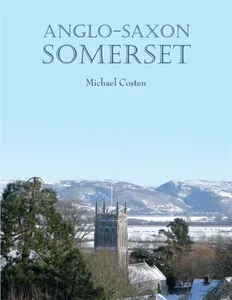
Anglo-Saxon Somerset, E-bok
The county of Somerset cannot lay claim to have been an Anglo-Saxon kingdom like Kent or Sussex, but nevertheless it has a history as a distinct region which can be traced to the seventh century and there are hints of an earlier entity in the post-Roman period. Although the detail of this society is difficult to recover, there is no doubt that it was successful in maintaining its independence for over two centuries before it was over-run by the Anglo-Saxons from the east. On the edge of the highland zone, with its diverse topography, newly conquered Somerset provided the early Anglo-Saxon kings and aristocracy with a rich prize, which they were quick to exploit. This book traces the way in which the king and his warrior followers shaped the countryside to meet the particular needs of a society which was still in the process of formation when it created Somerset. The westward expansion of the Anglo-Saxons of Hampshire and Wiltshire was a step in the formation of Wessex, both as a kingdom and as a self-conscious society. The landscape still bears witness to the changes that took place in a highly ordered and stratified polity over the course of the eighth and ninth centuries. The book also examines the response to the challenge presented by the attacks of the Vikings and traces the impact of the new technologies introduced into agriculture which underpinned a profound change in the structure of society at all levels and provided the economic impetus for a growth in population and the final shaping of the landscape we see today. Although profoundly rural and agricultural even Somerset felt the impact of trade with the outside world, though a connection with distant parts of the Mediterranean did not last long. Instead the shire came to feel the influence of Gaul and Ireland through its ecclesiastical links and also through the Vikings, who had a commercial side to their contacts with western Britain. The influence of the Church on this society was profound, successfully replacing the gods of the Romano-British world with the faith which now dominated the Eastern Empire and the barbarian successor states of the western Empire. Evidence of Christianity in post-Roman Somerset is strong. The enthusiastic acceptance of Christianity by the Anglo-Saxons was closely bound up with the emergence of their petty kingdoms and the ideological support offered by the Church underpinned much of the new structures of their society. In return the Church prospered as a major economic and cultural force in the landscape. Somerset provides good evidence of long-term monastic survival from the late post-Roman world through to the great rebirth of the tenth century. It is at some of its church sites that we should look for the continuity between the post-Roman and the Anglo-Saxon worlds.

Down By the River, E-bok
East Anglia has long been known for its internationally significant cultural and environmental Palaeolithic archaeology, often overshadowing the potential of its Holocene resource. This volume details the results of 8 years of palaeoenvironmental, archaeological and geoarchaeological investigations focused on the post-glacial history and evolution of the Suffolk river valleys, funded by Historic England and a number of commercial developers. The volume illustrates the largely untapped research potential of the region and provides information concerning the timing, pattern and process of alluvial development, landscape change, and human activity. The highlight of these investigations was the excavation and associated analyses of three well-preserved later prehistoric timber alignments and their environmental records, discovered during flood alleviation works on the floodplain of the lower Waveney Valley. As well as documenting these internationally significant remains, the research described includes innovative approaches to wetland archaeological and palaeoenvironmental study, highlighting important methodological considerations with respect to radiocarbon dating and chronology, applying novel geophysical approaches to site prospection,and recording wooden artefacts using 3-D laser scanning.The volume also discusses the results of groundwater monitoring of sediments containing the late prehistoric timber alignment at Beccles and considers the longer-term preservation potential of these fragile remains, which – as with other wetland archaeological sites – are at ever increasing risk from development pressures, as well as the longer term impacts of climate and environmental change.EPUB3: Reflowable

Bosworth 1485, E-bok
Bosworth stands alongside Naseby and Hastings as one of the three most iconic battles ever fought on English soil. The action on 22 August 1485 brought to an end the dynastic struggle known as the Wars of the Roses and heralded the dawn of the Tudor dynasty. However, Bosworth was also the most famous lost battlefield in England. Between 2005 and 2010, the techniques of battlefield archaeology were used in a major research programme to locate the site. Bosworth 1485: a battlefield rediscovered is the result. Using data from historical documents, landscape archaeology, metal detecting survey, ballistics and scientific analysis, the volume explores each aspect of the investigation – from the size of the armies, their weaponry, and the battlefield terrain to exciting new evidence of the early use of artillery – in order to identify where and how the fighting took place. Bosworth 1485 provides a fascinating and intricately researched new perspective on the event which, perhaps more than any other, marked the transition between medieval and early modern England.

Autopsy in Athens, E-bok
This is an exciting time to study in Athens. The “rescue” excavations of recent years, conducted during construction of the Metro system and in preparation for the 2004 Olympics Games, combined with major restoration projects and a new enthusiasm for fresh examination of old material, using new techniques and applications, brings new perspectives and answers on many aspects of the ancient city of Athens and life, politics and religion in Attica.The 15 papers presented here contribute new findings that result from intensive, firsthand examinations of the archaeological and epigraphical evidence. They illustrate how much may be gained by reexamining material from older excavations, and from the methodological shift from documenting information to closer analysis and larger historical reflection. They offer a variety of perspectives on a range of issues: the ambiance of the ancient city for passersby, filled with roadside shrines; techniques of architectural construction and sculpting; religious expression in Athens including cults of Asklepios and Serapis; the precise procedures for Greek sacrifice; how the borders of Attica were defined over time, and details of its road-system. In presenting this volume the contributors are continuing in a long tradition of autopsy – in the sense of 'personal observation' – in Athens, that began even in the Hellenistic period and has continued through the writings of centuries of travelers and academics to the present day.
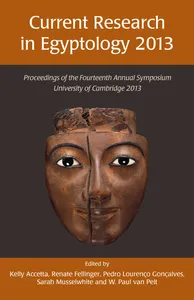
Current Research in Egyptology 14 (2013), E-bok
The fourteenth Current Research in Egyptology conference, held at the University of Cambridge in March 2013 brought together speakers and attendees from six continents and hosted more than 50 presentations covering multiple aspects of Egyptology and its related fields. The aim of the conference was to cross cultural and disciplinary boundaries. The papers presented in these proceedings reflect this aim by presenting current research that draws on insights derived from anthropology, archaeology, archaeobotany, ethnography, organic chemistry, geography, linguistics, and law, amongst others.
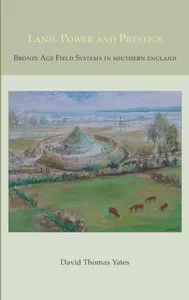
Land, Power and Prestige, E-bok
A major phase of economic expansion occurred in southern England during the second and early first millennium BC, accompanied by a fundamental shift in regional power and wealth towards the eastern lowlands. This book offers a synthesis of available data on Bronze Age lowland field systems in England, including a gazetteer of sites. The research demonstrates the importance of large-scale animal husbandry in the mixed farming regimes as evidenced in the design of the field systems which incorporate droveways, stock proof fencing, watering holes, cow pens, sheep races and gateways for stockhandling. It is argued that the field systems represented a form of conspicuous production, an "intensification" of agrarian endeavour or a statement of intent, to be understood in relation to the maintenance, display and promotion of hierarchical social systems involved in exchange with their counterparts across the English Channel.

Thinking Mesolithic, E-bok
Studies of the European Mesolithic have gone through a renaissance since the seminal Warsaw conference on the subject in 1973, and Stefan Kozlowski has been at its heart. This book presents a comprehensive, re-edited selection of his most important writings on the subject, along with new papers written especially for this edition. Kozlowski begins with thematic chapters exploring Mesolithic archaeology's key themes - the technologies people employed, the human ecology of Mesolithic communities and chronology. In a series of core chapters arranged according to European macro-regions, he then examines the diversity of Europe's Mesolithic cultures, remembering Kapuscinski's adage that 'for most people the world ends on the threshold of their own home, the outskirts of their own village, the borders of the valley they live in at the farthest.' He argues that the Mesolithic 'stage' resulted from the adaptation of Palaeolithic tundra communities to the new ecological conditions of the early Post Glacial, to a forested environment where the primitive agriculture that emerged in the Mediterranean region was not possible. With his eye simultaneously on both the continental and local levels, Kozlowski offers a compelling portrait of a period in which Europe was characterised by a wide range of different human ecologies, and seethed with human activity from the Pyrenees to the Urals.
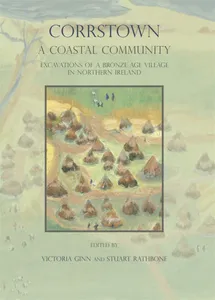
Corrstown, E-bok
Corrstown in County Londonderry, Northern Ireland, is a highly important Bronze Age site. This came to light during excavations carried out by Archaeological Consultancy Services Ltd on behalf of the Northern Ireland Environment Agency in 2002-2003, the results of which are detailed here. A total of 74 Middle Bronze Age roundhouse platforms was identified and organised into pairs or short rows, the majority of which appeared to be contemporary. The Corrstown village represents a site type hitherto unknown in Britain and Ireland, where the standard settlement pattern consists of roundhouses occurring in relative isolation or in small conglomerations. A two-tier network of roads and pathways also serviced the village: one large cobbled roadway and a second probable roadway (perhaps left un-surfaced) were identified along with a multitude of smaller paths leading from the entrances of the houses onto the roadways. The large cobbled road extended beyond the village perimeter, indicating connectivity with the wider landscape. The artefact assemblage from the site was dominated by domestic pottery (over 9,000 sherds) and lithics (over 165,000 pieces). A small assemblage of stone axes and moulds was also retrieved. Radiocarbon analysis indicated that the village had three phases, an initial growth phase (commencing after c.1550 BC), followed by a considerable occupation phase (lasting up to 200 years) and a decline phase (commencing c.1150 BC). Early medieval occupation was also observed at Corrstown and the results are included as an appendix. Another Bronze Age settlement site, also excavated by Archaeological Consultancy Services, is also included as an appendix. It is hoped that this volume represents a beginning of the study of the Corrstown village, a site of national and international significance that urges archaeologists to reconfigure the settlement structure and associated social patterns of the Bronze Age.
TRAC 2011, E-bok
This volume was derived from the twenty-first annual Theoretical Roman Archaeology Conference, which took place at the University of Newcastle (14-17 April 2011).
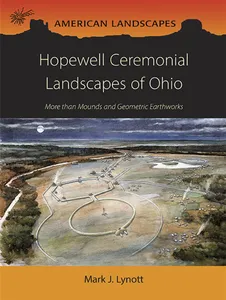
Hopewell Ceremonial Landscapes of Ohio, E-bok
Nearly 2000 years ago, people living in the river valleys of southern Ohio built earthen monuments on a scale that is unmatched in the archaeological record for small-scale societies. The period from c. 200 BC to c. AD 500 (Early to Middle Woodland) witnessed the construction of mounds, earthen walls, ditches, borrow pits and other earthen and stone features covering dozen of hectares at many sites and hundreds of hectares at some. The development of the vast Hopewell Culture geometric earthwork complexes such as those at Mound City, Chilicothe; Hopewell; and the Newark earthworks was accompanied by the establishment of wide-ranging cultural contacts reflected in the movement of exotic and strikingly beautiful artefacts such as elaborate tobacco pipes, obsidian and chert arrowheads, copper axes and regalia, animal figurines and delicately carved sheets of mica. These phenomena, coupled with complex burial rituals, indicate the emergence of a political economy based on a powerful ideology of individual power and prestige, and the creation of a vast cultural landscape within which the monument complexes were central to a ritual cycle encompassing a substantial geographical area.The labour needed to build these vast cultural landscapes exceeds population estimates for the region, and suggests that people from near (and possibly far) travelled to the Scioto and other river valleys to help with construction of these monumental earthen complexes. Here, Mark Lynott draws on more than a decade of research and extensive new datasets to re-examine the spectacular and massive scale Ohio Hopewell landscapes and to explore the society that created them.

Rough Cilicia, E-bok
The region of Rough Cilicia (modern area the south-western coastal area of Turkey), known in antiquity as Cilicia Tracheia, constitutes the western part of the larger area of Cilicia. It is characterised by the ruggedness of its territory and the protection afforded by the high mountains combined with the rugged seacoast fostered the prolific piracy that developed in the late Hellenistic period, bringing much notoriety to the area. It was also known as a source of timber, primarily for shipbuilding. The twenty-two papers presented here give a useful overview on current research on Rough Cilicia, from the Bronze Age to the Byzantine period, with a variety of methods, from surveys to excavations. The first two articles (Yağcı, Jasink and Bombardieri), deal with the Bronze and Iron Ages, and refer to the questions of colonisation, influences, and relations. The following four articles (Tempesta, de Souza, Tomaschitz, Rauh et al.) concern the pirates of Cilicia and Isauria who were a big problem, not only for the region but throughout the Mediterranean and Aegean during the late Hellenistic and especially Roman periods. Approaching the subject of Roman Architecture, Borgia recalls Antiochus IV of Commagene, a king with good relations to Rome. Six papers (Spanu, Townsend, Giobbe, Hoff, Winterstein, and Wandsnider) publish work on Roman architecture: architectural decoration, council houses, Roman temples, bath architecture, cenotaph, and public buildings. Ceramics is not neglected and Lund provides a special emphasis on ceramics to demonstrate how pottery can be used as evidence for connections between Rough Cilicia and northwestern Cyprus. Six contributions (Varinliog(lu, Ferrazzoli, Jackson, Elton, Canevello and Özy?ld?r?m, Honey) deal with the Early Christian and Byzantine periods and cover rural habitat, trade, the Kilise Tepe settlement, late Roman churches, Seleucia, and the miracles of Thekla. The final article (Huber) gives insight into methods applied to the study of architectural monuments.

Medicine and Healing in the Ancient Mediterranean, E-bok
There are many recoverable aspects and indications concerning medicine and healing in the ancient past – from the archaeological evidence of skeletal remains, grave-goods comprising medical and/or surgical equipment and visual representations in tombs and other monuments thorough to epigraphic and literary sources. The 42 papers presented here cover many aspects medicine in the Mediterranean world during Antiquity and early Byzantine times, bringing together both internationally established specialists on the history of medicine and researchers in the early stages of their career. The contributions are grouped under a series of headings: medicine and archaeology; media (online access to electronic corpus); the Aegean; medical authors/schools of medicine; surgery; medicaments and cures; skeletal remains; new research in Cyprus; Asklepios and incubation; and Byzantine, Arab and medieval sources. These subject areas are addressed through a combination of wide ranging archaeological and osteological data and the examination and interpretation of philosophical, literary and historiographical texts to provide a comprehensive suite of studies into early practices in this fundamental field of human experience.

Excavations by K. M. Kenyon in Jerusalem 1961-1967, E-bok
The fifth volume in the series of final reports on the work of the Joint Expedition to Jerusalem in the 1960s describes the discoveries made in six sites in the ancient city and places them in the archaeological and historical context of Jerusalem and the surrounding lands. Among the most debated issues are the extent of the occupation of the city during the Iron Age, the location of the southern defence line in Herodian and Roman times, and the date of the destruction of an Umayyad palatial structure. There is fresh information on the civic amenities of the southern half of the Byzantine city, and on the structure of the Ottoman city defences built under Sulaiman the Magnificent in the sixteenth century. Fine glazed pottery, both locally made and imported, and the wide range of materials reaching Jerusalem through trade and pilgrimage, reflect elite patronage and the high status of the holy city under Islamic rule.

Medieval Adaptation, Settlement and Economy of a Coastal Wetland, E-bok
Romney Marsh is the largest coastal lowland on the south coast of England. Since 1991 excavations in advance of gravel extraction around Lydd on Romney Marsh, have uncovered large areas of medieval landscape, one of the largest to be exposed in southern England. Features uncovered include 12th-13th century drainage ditches, ditched field systems and sea defences. Also of particular significance is the identification of a series of occupation sites and their enclosures. The excavation of dispersed settlements is particularly difficult, because of the scale of work required to produce meaningful results. In this case it has been possible to work on sufficiently large areas to allow significant conclusions to be drawn. The excavations at Lydd Quarry have shown how dispersed settlement existed alongside the nucleated market settlements on Romney Marsh. This extensive report details the archaeological investigations of the field systems and occupation sites, finds and environmental material. There is also a section by Sheila Sweetinburgh on the documentary evidence. Two final chapters set out broader conclusions from the evidence for the field systems, settlements, and economy, and set the area in its wider context. The research has provided an unprecedented opportunity to study reclamation, occupation and economy of a large tract of marginal landscape through a considerable period of time.

Quality Management in Archaeology, E-bok
Quality Management in Archaeology deals with the effects of the profound changes that have had an impact on the discipline of archaeology all over the world. In North America, in Europe and increasingly in other parts of the world, new legislation and international treaties have changed its position in society. What was once a university based research activity by a limited number of academics has become a socially relevant field with many practitioners that are mostly employed in some branch of archaeological resource management. Archaeology has been successful in persuading governments and the general public that more should be done to preserve archaeological heritage and to investigate it where it will be irretrievably lost. The scale and frequency of archaeological work has increased vastly, at considerable cost to society. Consequently, there is pressure to do the work efficiently and economically. At the same time, academic standards have to be maintained to assure that the end result will be the relevant knowledge about the past that society pays for. Different countries have found different approaches and solutions to deal with this dilemma. Sometimes commercial archaeology is allowed, sometimes it is not, but in every national context quality has to be managed in some way. This book presents a survey by specialists from the US, Canada, and several European countries on how this is done, what the principles are, and also the priorities. It will be useful for anyone interested in archaeological resource management.EPUB3: Reflowable

The Bull Ring Uncovered, E-bok
The excavations in the centre of Birmingham uncovered evidence of habitation from prehistoric and Roman times, but the 12th to 19th centuries presented by far the most evidence, from artefacts, environmental samples and structural remains. The medieval industrial past was of particular interest, with tanning and the manufacture of hemp and linen all playing a large role in the city's prosperity. Metal working reached its peak in the seventeenth century, with brass founding becoming important from the eighteenth century onwards. Most of the artefactual evidence attests to Birmingham's industrial past, indeed the evidence for domestic life is comparatively scant, with an anomalous burial of two people at Park Street presenting something of a mystery. This volume presents insights into the early industrial past of this important city and is an invaluable record covering eight hundred years of occupation.

Recent Advances in Ageing and Sexing Animal Bones, E-bok
This volume in the ICAZ series deals with the technical advances made over the last twenty years in the field of ageing and sexing animal bones. The analysis of ancient DNA holds great possibilities for sexing certain faunal assemblages (though by no means all), which is an urgent issue in the study of hunting and animal husbandry. It can be assumed that our forebears used more subtle taxonomic criteria than we do today, and it is important therefore that we are able to recognise traits that will allow for more accurate classification in terms of calendar age or sex. The eighteen papers in this book examine the state of research for various techniques of age/sex determination and assess potential future development.
Cypriot Cultural Details, E-bok
There are countless references to Cyprus in Venice: in palaces, primarily that of Queen Caterina Corner, in the church of Saints Giovanni e Paolo, where the skin of Mark Antonius Bragadin (the staunch defender of Famagusta) is guarded, in the spices, and especially in the wine of Cyprus (Commandaria), that is today still recalled in Venetian sayings. The Venetian past, too, has many references in Cyprus where evidence is focused on the fortresses and fortifications of Nicosia, Famagusta and Kerynia and in the lions that adorn them as well as in traditional dishes and language. The papers presented here have been selected from 30 given at the 10th Annual Meeting of young researchers in Cypriot archaeology (POCA 10), held in Venice where it celebrated two important events: the 500th anniversary of the death of Caterina Cornaro (1454–1510) and the twinning of the cities of Venice and Larnaca. Papers cover a wide range of subjects reflecting the many centuries of trade in products (especially textiles) and the cultural exchange in ideas, religious practices and people between the island and City at various times from prehistory to the Ottoman period. Archaeological and historical data are brought together to showcase recent research.

A Handbook of Geoarchaeological Approaches to Settlement Sites and Landscapes, E-bok
Geoarchaeology is a major branch of archaeological science at the interfaces between geology, geography and archaeology, involving the combined study of archaeological, soil and geomorphological records and the recognition of how natural, climatic and human-induced processes alter landscapes. The formation and modification of past soils, and occupation sequences can be examined primarily through the use of soil micromorphological techniques and various physical and geo-chemical techniques. This short text aims to explain some of the basics of geoarchaeological approaches and research design used to tackle the investigation of landscapes and settlement archaeology, and the application of soil micromorphology to archaeological situations. The intention is to present a basic handbook of good practice, with case studies and examples, that any archaeologist or aspiring geoarchaeologist can use.
Changing Pictures, E-bok
This volume derives from a workshop held at the University of Kalmar (now Linnaeus University), Sweden between the 20-24 of October 2008. The aim of this gathering was to provide a forum for rock art researchers from different parts of northern Europe to discuss traditional as well as current interpretative trends within rock art research. Changing Pictures aims to return to traditional interpretative notions regarding the meaning and significance of rock art to investigate if and why any information had been left behind to recover and rethink. During the last decades, there has been an immense global interest among archaeologists and anthropologists in studying rock art. Research in northern Europe, as elsewhere, has intensely explored a manifold of methodological and theoretical perspectives. Most of these studies however, have been published in languages that seldom reach beyond the native speakers of Norwegian, Danish, and Swedish, Russian or Finnish. Therefore an important motivation for this volume is to try to apprise some of the current movements within this field of research and present it for an international audience. These papers explore the relevance of older ideas, such as notions about prehistoric religion, ritual performance, sympathetic magic, animism and totemism, the mindscapes of landscapes etc., as well as the present "state of the art" in order to develop a broader understanding of the phenomenon we call rock art. This aspiration can be seen as a common thread linking the different chapters in this book. Saying that, some, if not all, of the articles presented in this volume challenge the notion "rock art" itself, arguing that sometimes the rock, the "canvas" and rather intangible but equally important sensual encounters, such as sound, echoes, touch and temporal phenomenological changes and the perception of decorated rock art panels, should be regarded, at least, as important as the "art" itself. By reassessing traditional approaches to Scandinavian rock art and creatively reworking these ideas, whilst also addressing significant new concepts such as the agency of rock and the performativity of rock art, this anthology of papers offers not only a snapshot of current debates, but also reflects pivotal changes in the study of rock art.
Pompeii, E-bok
Even after more than 250 years since its discovery, Pompeii continues to resonate powerfully in both academic discourse and the popular imagination. This volume brings together a collection of ten papers that advance, challenge and revise the present conceptions of the city's art, industry and infrastructure. The discussions of domestic art in this book, a perennial topic for Pompeian scholars, engage previously neglected subjects such as wall ornaments in domestic decoration, the sculpture collection in the house of Octavius Quartio, and the role of the covered walkways in luxury villa architecture. The famous cupid's frieze from the house of the Vettii is given a novel and intelligent reinterpretation. The place of industry at Pompeii, in both the physical and economic landscapes has long been overlooked. The chapters on building practice in inhabited houses, on the presence of fulling workshops in atrium houses, and on the urban pottery industry serve as successful contributions to a more complete understanding of the life of the ancient city. Finally, this volume breaks new ground in the consideration of the urban infrastructure of Pompeii, a topic that has won serious attention only in the last decades, but one that is playing an increasingly central role in Pompeian studies. The final three chapters offer a reassessment of the Pompeian street network, a scientific analysis of the amount of lead in Pompeian drinking water, and a thorough analysis of the water infrastructure around the forum that supported its architectural transformation in the last decades before the eruption of mount Vesuvius in AD 79.

Back to the Beginning, E-bok
Ever since their first discovery, more than a century ago, the Minoan Palaces have dominated scholarship on the Cretan Bronze Age. Opinion long held that their first appearance, seemingly at the beginning of the Middle Bronze Age, marked a pivotal transformation point, during which the simple, egalitarian societies of the Early Bronze Age were transformed into something significantly more complex, hierarchical and civilised. Over the last three decades, however, theoretical developments, together with new research and discoveries, have so thoroughly undermined this conceptualisation of the Early and Middle Bronze Age that it seemed advisable to go back to the beginning, re-evaluate our theories and models and ask anew what we really know about social and political complexity on Crete from the end of the Neolithic to Middle Minoan II (c.3600-1750/00 BC). Back to the Beginning explores this theme through fifteen papers. They cover both the principal central Cretan urban centres of Knossos, Malia and Phaistos and the smaller communities that lay beyond them in central and eastern Crete. Many present significant new bodies of settlement and cemetery data, whether recently acquired or re-interpreted from older excavations. All place a clear and concerted emphasis on breaking down complexity into different social processes and relations and building up an understanding of society, from the bottom up, as a host of interacting and potentially conflicting agents or scales of identity. All too are concerned with addressing longstanding and fundamental research questions. When, in fact, does the Bronze Age begin in real terms? How did socioeconomic diversity play out across the Cretan landscape? When and where did the monumental Court Complexes, which convention terms Palaces, emerge; how did they function and how did this vary? Were the Court Complexes entirely new phenomena or were they rooted more firmly in pre-existing traditions and practices? What happened in MM I and how, more generally, might we frame and explain the Early and Middle Bronze Age in more inclusive terms? How were different communities structured and how did this vary? Is it appropriate to talk of urbanism and state formation during this period and if so, when and where? By taking us significantly closer to resolving these questions, Back to the Beginning ushers in a new era of understanding for the Early and Middle Bronze Age on Crete.

The Anglo-Saxon Cemetery at Empingham II, Rutland, E-bok
Report on the rescue excavations of an Anglo-Saxon cemetery discovered during 1974/5. Full catalogue of some 150 graves - mostly of the sixth century AD - and of the jewellery, weapons and other objects found with them. Fully illustrated catalogue of the finds and a discussion of them and their significance. Numerous specialist reports.EPUB3: Reflowable

Excavations at Cill Donnain, E-bok
The SEARCH (Sheffield Environmental and Archaeological Research Campaign in the Hebrides) project began in 1987 and covers the Scotland’s Outer Hebrides. The aim of the project is to investigate how human societies adapted in the long-term to the isolated environment of the Outer Hebrides. The first major excavation on South Uist discovered that what was thought to be a shell midden at Cill Donnain was in fact a wheelhouse, a type of dwelling used in the period c.300 BC – AD 500; under which lay the remains of a Bronze Age settlement. This settlement was partly investigated by Marik Zvelebil in 1991 and then later by Mike Parker Pearson and Kate MacDonald in 2003. The site itself is situated at the foot of a high steep-sided dune on the eastern edge of a large sand valley, close to the western shore of Loch Cill Donnain. The archaeological report of the excavation at the Cill Donnain wheelhouse shows that, in comparison with contemporary neighbouring settlements, it was unlikely that each was an independent unit and that they were linked by social and economic inter-dependency. The wheelhouse thus provides striking new evidence that contributes to developing theories about the social, material and economic life in the period.This volume presents the extensive archaeological evidence found at the site, including pottery, faunal remains and a variety of bone and metal tools, illustrating that the Cill Donnain landscape is rich in archaeological sites of all periods from the Beaker to the post-Medieval.