Ludwig Wittgenstein
In the safety of his manuscripts, Ludwig Wittgenstein was free to endlessly revise, rework and reframe his philosophical thoughts. Thus his published work yields a glimpse of just a small portion of Wittgenstein's philosophical thought-the portion...
Ludwig Wittgenstein
Ludwig Wittgenstein, writes noted scholar Edward Kanterian, was a 'philosopher's philosopher'. He was one of the founders of modern analytic philosophy and is regarded as the greatest philosophical genius since Immanuel Kant. In this book, Kanteri...


Ludwig Wittgenstein
'Monk's energetic enterprise is remarkable for the interweaving of the philosophical and the emotional aspects of Wittgenstein's life' Sunday Times 'Ray Monk's reconnection of Wittgenstein's philosophy with his life triumphantly carries out the Wi...

Ludwig Wittgenstein
After his intellectual biography of Saint Augustine of Hippo, Miles Hollingworth now turns his attention to one of Augustine's greatest modern admirers: The Austrian philosopher Ludwig Wittgenstein. Wittgenstein's influence on post-war philosophic...
Ludwig Wittgenstein
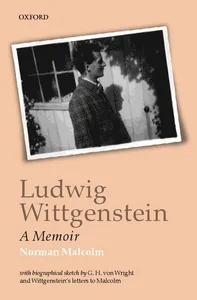
Ludwig Wittgenstein, who died in Cambridge in 1951, is one of the most powerful influences on contemporary philosophy, yet he shunned publicity and was essentially a private man. His friend Norman Malcolm (himself an eminent philosopher) wrote thi...
Ludwig Wittgenstein
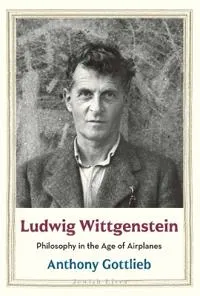
The first biography in more than three decades of the Austrian-born thinker Ludwig Wittgenstein, one of the most influential philosophers of the twentieth century According to the philosopher Ludwig Wittgenstein (1889–1951), philosophy is a “battle against the bewitchment of our intelligence by means of language.” This audacious idea changed the way many of its practitioners saw their subject. In the first biography of Wittgenstein in more than three decades, Anthony Gottlieb evaluates this revolutionary idea, explaining the evolution of Wittgenstein’s thought and his place in the history of philosophy. Wittgenstein was born into an immensely rich Viennese family but yearned to live a simple life, and he gave away his inheritance. After studying with Bertrand Russell in Cambridge, he wrote his famous Tractatus Logico-Philosophicus while serving in World War I. He then took several positions as a primary-school teacher in rural Austria before returning as a fellow to Cambridge,
Ludwig Wittgenstein
Offers new insights into how Ludwig Wittgenstein understood matters concerning the meaning of life. Widely considered one of the greatest philosophers of the twentieth century, Ludwig Wittgenstein was deeply interested in the significance of relig...

Ludwig Wittgenstein
'Monk's energetic enterprise is remarkable for the interweaving of the philosophical and the emotional aspects of Wittgenstein's life' Sunday Times'Ray Monk's reconnection of Wittgenstein's philosophy with his life triumphantly carries out the Wit...

Literary Wittgenstein
The Literary Wittgenstein is a stellar collection of articles relating the philosophy of Ludwig Wittgenstein (1889-1951) to core problems in the theory and philosophy of literature. Amid growing recognition that Wittgenstein's philosophy has impor...
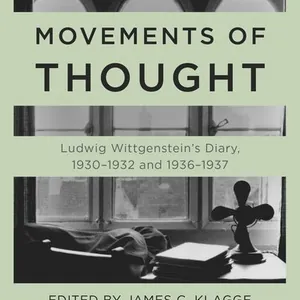
Movements of Thought
While the published works of Ludwig Wittgenstein reveal the final, coalesced thoughts of this philosophical giant, Wittgenstein's diary reveals his process of doing philosophy. Only in his private writing does Wittgenstein's philosophical practice...
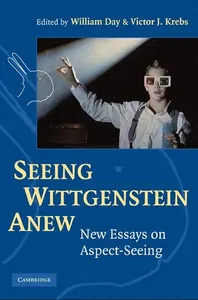
Seeing Wittgenstein Anew
Seeing Wittgenstein Anew is a collection which examines Ludwig Wittgenstein's remarks on the concept of aspect-seeing, showing that it was not simply one more topic of investigation in Wittgenstein's later writings but rather a pervasive and guidi...
Wittgenstein: Rules, Grammar and Necessity
The Second Edition of Wittgenstein: Rules, Grammar and Necessity (the second volume of the landmark analytical commentary on Wittgenstein's Philosophical Investigations) now includes extensively revised and supplemented coverage of the Wittgenstei...
Tractatus Logico-Philosophicus
"Philosophy", Ludwig Wittgenstein once wrote, "should actually be written only as poetry". That Tractatus Logico-Philosophicus-Wittgenstein's master-work, and the only book he published during his lifetime-endures as the defini...

Wittgenstein's Antiphilosophy
Alain Badiou takes on the standard bearer of the "linguistic turn" in modern philosophy and anatomizes the "antiphilosophy" of Ludwig Wittgenstein. In the course of his interrogation of Wittgenstein's thinking, Badiou refines h...

Companion to Wittgenstein's "Tractatus"
Ludwig Wittgenstein's Tractatus Logico-Philosophicus is an unquestioned philosophical masterpiece. It is a work of extreme compression. Within a compass of twenty thousand words, and in cryptic and elliptical sentences, Wittgenstein writes of the ...
Wittgenstein
Ludwig Wittgenstein (1889-1951) was an extraordinarily original philospher, whose influence on twentieth-century thinking goes well beyond philosophy itself. In this book, which aims to make Wittgenstein's thought accessible to the general non-spe...

Lectures and Conversations on Aesthetics, Psychology and Religious Belief
Notes from Wittgenstein's small-group, philosophical lectures on aesthetics This book is based on a series of lectures on aesthetics that Ludwig Wittgenstein, an influential Austrian-British philosopher, gave at the University of Cambridge in 1938...
Remarks on the Philosophy of Psychology, Volume II
A significant body of work from a 20th Century philosopher Remarks on the Philosophy of Psychology is an English translation of Ludwig Wittgenstein's writings on topics such as sensation and expectation. Wittgenstein was an Austrian-British philos...
Wittgenstein's Lasting Significance
Ludwig Wittgenstein (1889-1951) has exerted a more powerful influence on contemporary philosophy than any other twentieth-century thinker. But what is the nature of this influence and why has it proved so enduring? In Wittgenstein's Lasting Signif...

Moore and Wittgenstein on Certainty
Ludwig Wittgenstein's On Certainty was finished just before his death in 1951 and is a running commentary on three of G.E. Moore's greatest epistemological papers. In the early 1930s, Moore had written a lengthy commentary on Wittgenstein, anticip...

Ludwig Wittgenstein - Geniets Plikt
Ray Monk låter oss följa Wittgenstein genom hela hans växlingsrika levnad. Från uppväxten i den högborgerliga och förmögna familjen i det slutande artonhundratalets Wien - "ett laboratorium för självförintelse" - via de ingenjörsvetenskapliga studierna i Berlin och Manchester, de komplicerade vänskapsrelationerna till Bertrand Russell, J M Keynes och G E Moore - Monk berättar historien om hur den odrägligt intensive unge Wittgenstein fick Russell att söka igenom sitt arbetsrum för att bevisa att där inte fanns någon noshörning - till den dödslängtan som fick honom att uppsöka första världskrigets skyttegravar och arbeta som sjukvårdare under blitzen i London. Monk skildrar också Wittgensteins misslyckade försök att bli folkskollärare, hans förakt för den akademiska filosofin och dess förvaltare, hur han för att finna arbetsro uppsöker ensliga platser i Norge - där han i Skjolden, i det inre av Sognefjord, bygger sig en hytte - och på Irland, hans planer på att emigrera till Sovjet. Driven av en moralisk och intellektuell kompromisslöshet utan motstycke kom Wittgenstein inte bara att leva ett egensinnigt liv, hans radikala ifrågasättande av etablerade filosofiska sanningar har i grunden ändrat vår uppfattning om vad tänkande är och kan vara. "... utan tvivel den mest väldokumenterade och allsidiga framställningen vi har av filosofens liv och verk... Det är en utmärkt sak att vi nu har Monks bok på svenska och i en god översättning. Den kommer att öka intresset för filosofi i allmänhet och för Wittgenstein i synnerhet." /Carl-Göran Ekerwald Dagens Nyheter "En av de absolut bästa böcker jag har läst. Den kombinerar ett liv, ett mycket komplicerat liv som var denne Ludwig Wittgensteins, med hans idéer och filosofi. Läser man boken får man en inblick i det han har gjort som filosof och samtidigt ser man detta Europa han levde i. Han dog i början av femtiotalet och levde alltså i ett sammanbrytande Habsburgvälde, i ett England där Bertrand Russell sprang runt och jagade flickor medan Wittgenstein hade en annan läggning. Allt detta är serverat på ett jättefint sätt. Det visar att liv och verk med nödvändighet hänger ihop." /Pierre Guilliet de Monthoux, Vetandets värld
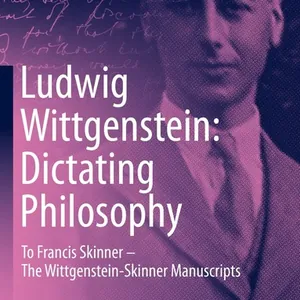
Ludwig Wittgenstein: Dictating Philosophy
The book displays a considerable wealth and variety of Wittgenstein's fundamental experiments in philosophy across a wide array of subjects that include the mind, pure and applied mathematics, metaphysics, the identities of ordinary and creative l...
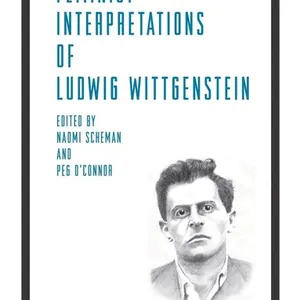
Feminist Interpretations of Ludwig Wittgenstein
The original essays in this volume, while written from diverse perspectives, share the common aim of building a constructive dialogue between two currents in philosophy that seem not readily allied: Wittgenstein, who urges us to bring our words ba...
Tractatus Logico-Philosophicus
Ludwig Wittgenstein's influential Tractatus Logico-Philosophicus explores the assumption that it is philosophy's task to 'sanitize' language. Therefore, it is necessary for philosophy to develop an artificial language that avoids the pitfalls of ordinary language. This is the only philosophical work Wittgenstein published in his lifetime. Laid out in succinct well-numbered paragraph, it is an essential read for those interested in the philosophy of language or understanding the influential figure of Wittgenstein.
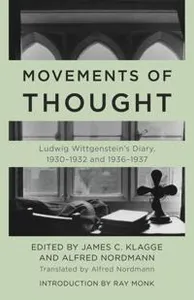
Movements of Thought
While the published works of Ludwig Wittgenstein reveal the final, coalesced thoughts of this philosophical giant, Wittgenstein’s diary reveals his process of doing philosophy. Only in his private writing does Wittgenstein's philosophical practice fully come to light. Wittgenstein’s diary entries from the 1930s reveal themselves as a first-person spiritual epic. Wittgenstein agonizes over his relationship with Marguerite Respinger and tries to come to terms with its failure. He relates and interprets several of his dreams. He comments on his philosophical colleagues Frank Ramsey and G.E. Moore; on musicians such as Beethoven, Bruckner and Brahms; and on authors such as Kraus, Mann, Nietzsche, Dostoevsky, and Kierkegaard. He struggles to make confessions to friends and family. He relates in painful detail his spiritual crisis in Norway in the late winter of 1937. From a man who once recommended silence about spiritual matters, we find here an honest and searing articulation of his

Wittgenstein
"Remarkable how well Bouwsma understood Wittgenstein's approach to philosophical problems and how intelligently he was able to recount Wittgenstein's discussions. The bits about sensation are especially good. And the asi...
Wittgenstein
This volume provides a wide-ranging collection of newly-commissioned essays on Wittgenstein by internationally established philosophers.
Wittgenstein
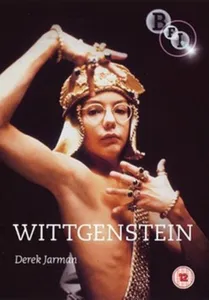
OBS! Import. Kontrollera att språk och textning passar dig.Derek Jarman's biography of the philosopher Ludwig Wittgenstein makes economical use of minimal sets and costumes, to trace its subject's education in Austria and Cambridge, his life and his work. Karl Johnson stars, with Michael Gough as Bertrand Russell.Typ: DVD

Wittgenstein
In 1938 Wittgenstein delivered a short course of lectures on aesthetics to a small group of students at Cambridge. The present volume has been compiled from notes taken down at the time by three of the students: Rush Rhees, Yorick Smythies, and Ja...

Wittgenstein
This collection of essays deals with the relationship between Wittgenstein's life and his philosophy. The first two essays reflect on general problems inherent in philosophical biography itself. The essays that follow draw on recently published le...
Wittgenstein
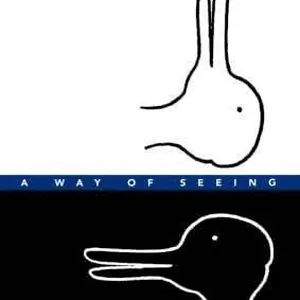
In Wittgenstein's Way of Seeing, Judith Genova provides a an illuminating introduction to two surprisingly neglected aspects of his work: his conception of philosophy and his search for a style to embody his revolutionary practice. Genova examines...
Wittgenstein
In this new book, Alessandra Tanesini demonstrates that feminist thought has a lot to offer to the study of Wittgenstein's philosophical work, and that -at the same time-that work can inspire feminist reflection in new directions. In Wittgenstein,...

Wittgenstein
This volume provides a wide-ranging collection of newly-commissioned essays on Wittgenstein by internationally established philosophers.

Wittgenstein
Wittgenstein: Meaning and Mind is the third volume of a four-volume analytical commentary on Wittgenstein's Philosophical Investigations, consisting of two parts. Part 1 is a sequence of fifteen essays that examine in detail all the major topics d...
Wittgenstein
Wittgenstein's complex and demanding work challenges much that is taken for granted in philosophical thinking as well as in the theorizing of art, theology, science and culture. Each essay in this collection explores a key concept involved in Witt...
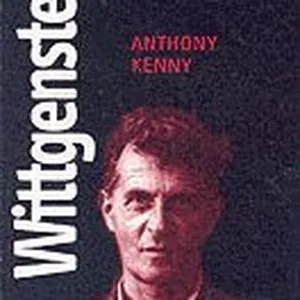
Wittgenstein
This revised edition of Sir Anthony Kenny's classic work on Wittgenstein contains a new introduction which covers developments in Wittgenstein scholarship since the book was first published. Widely praised for providing a lucid and historically in...