

Psychologie der Massen
Mit seinem Buch Psychologie der Massen, das 1895 in der französischen Originalfassung und 1908 erstmals auf Deutsch, in eben dieser Übersetzung von Rudolf Eisler, erschien, wurde Le Bon zum Begründer der Massenpsychologie und zum bedeutenden Wegbe...
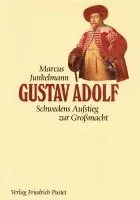
Gustav Adolf
Gustav II. Adolf (1594-1632) war der bedeutendste König Schwedens. Durch umfassende Reformen machte er aus einem zurückgebliebenen Land einen modernen Staat und eine europäische Großmacht.Im Kampf um die Herrschaft im Ostseeraum wurde Gustav Adolf...


Psychology of Crowds
In this clear and vivid book, Gustave Le Bon throws light on the unconscious irrational workings of group thought and mass emotion as he places crowd ideology in opposition to free-thinking and independent minded individuals. The ideas le Bon expl...



Gustav II Adolf
Gustav II Adolfs osannolika levnadsbana tillhör hävdernas allra ärorikaste, och borde i alla generationer förelysa svenskarna till efterdöme. Axel Oxenstierna satte honom högst. "Aldrig", skrev han, "har Sverige ägt en större konung...

Gustav II Adolf
Gustav II Adolf


Hermans historia - Gustav II Adolf/Karl X Gustaf
Del 1 - Gustav II Adolf är troligen den internationellt mest berömde av Sveriges alla kungar. Inte minst hans beslut att ingripa i det som skulle bli det "Trettioåriga kriget" gav Sverige en enorm maktposition i Europa. Hemma i Sverige innebar hans regeringstid en mängd reformer: näringslivet och ämbetsverken utvecklades, och många svenska orter fick sina stadsrättigheter - bland dem Göteborg. I två delar berättar Herman Lindqvist om den mytiske och dynamiske kungen Gustav II Adolf.Del 2 - Gustav II Adolf var krigarkonungen som fick se Sverige växa till en europeisk, protestantisk stormakt under sitt blott 38-åriga liv. Han rustade upp den svenska armén och flottan (med bland annat krigsskeppet Vasa, som dock sjönk på jungfruturen 1628). Och han drog ofta ut i fält, bland annat det "Trettioåriga kriget". När Gustav II Adolf stupade i dimman i Lützen 1632 hade han själv fått ett nästan mystiskt rykte och Sverige var en stormakt. Det här är den andra delen av Herman Lindqvists berättelse om Gustav II Adolf.Karl X Gustav efterträdde sin kusin Drottning Kristina, efter att hon abdikerat år 1954. Han kom att bli en imposant fältherre, som i stort sett förde krig mot Danmark och Polen under hela sin regeringstid. Mest känd blev han för den berömda svenska framryckningen över isen mellan Stora och Lilla Bält år 1658 - en våghalsig militär operation, som i förlängningen medförde att Halland, Skåne, Blekinge och Bohuslän blev svenskt vid freden i Roskilde samma år. Herman Lindqvist berättar här levande och på plats om den svenske krigarkonungen Karl XX Gustav.

Rudolf Virchow und Gustav Adolph Spiess
Wolfgang U. Eckart kommentiert aus heutiger Sicht die beiden in die Medizingeschichte eingegangenen Arbeiten "Cellular-Pathologie" (1855) im Archiv für pathologische Anatomie und Physiologie von Rudolf Virchow und ?Die Cellular-Pathologi...


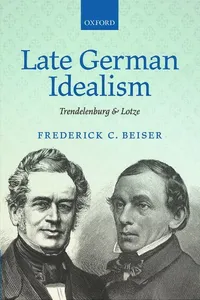
Late German Idealism
Frederick C. Beiser presents a study of the two most important idealist philosophers in Germany after Hegel: Adolf Trendelenburg and Rudolf Lotze. Trendelenburg and Lotze dominated philosophy in Germany in the second half of the nineteenth century...

Kunze Heinz-Rudolf: Nonstop/Das Bisher Beste Von
Kunze Heinz-Rudolf: Nonstop/Das Bisher Beste Von [CD]

Crowd
Gustav Le Bon's The Crowd is not only a classic, but one of the best-selling scientific books in social psychology and collective behavior ever written. Here, Le Bon analyzes the nature of crowds and their role in political movements. He presents ...

WHAT IS MOB MENTALITY? - 8 Essential Books on Crowd Psychology
This meticulously edited collection is formatted for your eReader with a functional and detailed table of contents:The Social Contract (Jean-Jacques Rousseau)The Crowd: A Study of the Popular Mind (Gustave Le Bon)The Psychology of Revolution (Gust...

Psychology of Crowds
In this clear and vivid book, Gustave Le Bon throws light on the unconscious irrational workings of group thought and mass emotion as he places crowd ideology in opposition to free-thinking and independent minded individuals. He also shows how the...

Rudolf
In these two novellas, Volodymyr Dibrova tells the story of how the Soviet system was sustained by individuals who never truly believed in it, but simply lacked the courage to oppose it. Peltse portrays the formation of an average apparatchik. Bot...






The Age of the Crowd
The Age of the Crowd is at one level an historical account of the development of mass psychology, and at another an analysis of its implications for prevalent political and social life. It was the prophecy of Gustave Le Bon in 1895 that the twenti...

Gustave Caillebotte
More than any other French Impressionist, painter Gustave Caillebotte (1848-1894) observed and depicted the many men in his life, including his brothers and friends, employees, and the workers and bourgeois in his Parisian neighborhood. Male subje...

Gustave Caillebotte
Though largely out of the public eye for more than a century, Gustave Caillebotte (1848 - 94) has come to be recognized as one of the most dynamic and original artists of the impressionist movement in Paris. His paintings are favorites of museum-g...

Gustave Courbet
No biographer could ask for a more colourful or difficult subject than the painter and revolutionary Gustave Courbet. One of the fathers of Realism, a style he created with his huge canvases of his birthplace in Ornans ( After Dinner at Ornans, 19...


The Crowd
The Crowd: A Study of the Popular Mind is a classic and fascinating crowd psychology study authored by Gustave Le Bon and first published in 1895. In the book, Le Bon claims that there are several characteristics of crowd psychology: 'impulsiveness, irritability, incapacity to reason, the absence of judgement of the critical spirit, the exaggeration of sentiments, and others...' Crowd psychology, also known as mob psychology, is a branch of social psychology. Social psychologists have developed several theories for explaining the ways in which the psychology of a crowd differs from and interacts with that of the individuals within it. Major theorists in crowd psychology include Gustave Le Bon, Gabriel Tarde, Sigmund Freud, and Steve Reicher. This field relates to the behaviors and thought processes of both the individual crowd members and the crowd as an entity. Crowd behavior is heavily influenced by the loss of responsibility of the individual and the impression of universality of

Crowd
One of the greatest and most influential books of social psychology ever written, brilliantly instructive on the general characteristics and mental unity of a crowd, its sentiments and morality, ideas, reasoning power, imagination, opinions and mu...