

Homeland
-
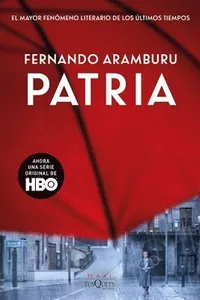

Patria
Patria
Patria
-

Patria
-


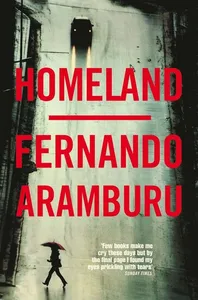
Homeland
The international bestseller, longlisted for the Dublin Literary Award 2021. Fernando Aramburu's Homeland is an epic and heartbreaking story of two best friends whose families are divided by the conflicting loyalties of terrorism. 'It's been a lon...
Hombre Caído (Relatos Cortos) / Fallen Man (Short Stories)
El nuevo libro de un narrador imprescindible. Una inolvidable colecci n de relatos de Fernando Aramburu. Un gran libro que nos muestra a un Aramburu distinto: entre la atrocidad y la delicadeza. I aki Ezkerra, El Correo Qu bien escribe Aramburu y qu gusto da dejarse ir por su elegancia y su sobriedad. Eva Cosculluela, Heraldo de Arag n Relatos llenos de humor sin negar la tragedia... No decepcionar al lector m s exigente. J.A. Masoliver R denas, Cultura/s (La Vanguardia) Incisivo humor e intencionada cr tica social y un profundo conocimiento de la condici n humana conforman lo mejor de estos interesantes relatos. Jes s Ferrer, La Raz n Te mete el dedo en el ojo, en la llaga y en ambos a la vez. Ana Trasobares, Esquire Relatos que tratan sobre lo que nos inquieta... aderezados con un humor a menudo desternillante. Ascensi n Rivas, El Cultural Amuebla cada trama con una aparente sencillez que te hace disfrutarla antes del desasosiego final. Jos Mar a Pozuelo Yvancos, Abc Cultural Una


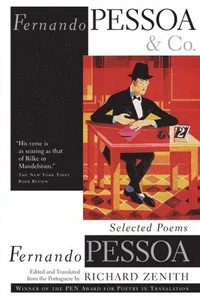
Poems of Fernando Pessoa
"At last, at last, at last, Pessoa again! More Pessoa! One of the very great poets of the twentieth century, again and more! And one of the fascinating figures of all literature, with his manifold identities, his amazing audacities, his brill...
El Niño (Novela) / The Child (a Novel)
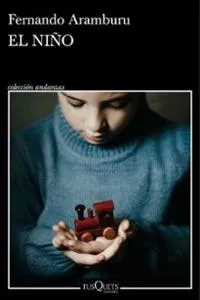
Un accidente real en el Pa s Vasco de los a os ochenta, la vida devastada de una familia. Una historia emocionante, adictiva y conmovedora, como solo Aramburu sabe contar. Nicasio, ya jubilado, acostumbra a subir los jueves al cementerio de Ortuella a visitar la tumba de su nieto. Es uno de los muchos ni os fallecidos tras una explosi n de gas en un colegio de aquella localidad, un accidente que sacudi al Pa s Vasco y a toda Espa a en 1980. Por las andanzas del abuelo, una figura que se agranda hasta hacerse inolvidable, por el testimonio de la madre muchos a os despu s, por la cr nica objetiva de lo que le ocurri a la familia, descubriremos c mo aquella tragedia lacerante y devastadora les alter , c mo sac a relucir aspectos inesperados, c mo trastoc sus vidas. Con la maestr a habitual de Aramburu, el lector se ver inmerso en una historia de emociones inesperadas, una exploraci n psicol gica y literaria con afilado bistur que nos mantiene pegados al devenir de los destinos de los

El niño
El niño
El niño
Un accidente real en el País Vasco de los años ochenta, la vida devastada de una familia. Una historia emocionante, adictiva y conmovedora, como solo Aramburu sabe contar.
The Selected Prose of Fernando Pessoa
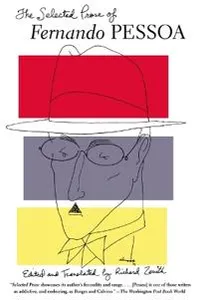
The Washington Post Book World has written that Fernando Pessoa was 'Portugal's greatest writer of the twentieth century though] some critics would even leave off that last qualifying phrase' and 'one of the most appealing European modernists, equal in command and range to his contemporaries Rilke and Mandelstam.' The Selected Prose of Fernando Pessoa, a Los Angeles Times Best Book of 2001, spans playful philosophical inquiry, Platonic dialogue, and bitter intellectual scrapping between Pessoa and his many literary alter egos ('heteronyms'). The heteronyms launch movements and write manifestos, and one of them attempts to break up Pessoa's only known romantic relationship. Also included is a generous selection from Pessoa's masterpiece, The Book of Disquiet, freshly translated by Richard Zenith from newly discovered materials. The Selected Prose of Fernando Pessoa is an important record of a crucial part of the literary canon.


Fernando
Since its release in 1976, ABBA’s song “Fernando” has been loved by fans around the globe, both for its sing-along chorus and its revolutionary spirit. In Fernando, Kay Dickinson takes readers from Sweden and Chile to Australia and Poland, tracing the complicated ways the song could express support with anti-capitalist and Third World liberation struggles while remaining an unrepentant commodity. A song about freedom fighters was unlikely to become a pop mega-hit, yet, as Dickinson demonstrates, ABBA’s lucrative, longstanding appeal rests on their ability to bridge contradictions within everyday life. Five decades later, “Fernando’s” rousing calls for freedom continue to resonate with gay liberation movements and other social struggles, demonstrating how a song can both be revolutionary and an envoy for global capital.



Don Fernando
Considered by Graham Greene to be Maugham's best work, Don Fernando is a paean to a golden age of enormous creative energy. It discusses the writings of St. Teresa and the paintings of El Greco, and comments with sagacity and wit on such illustrio...
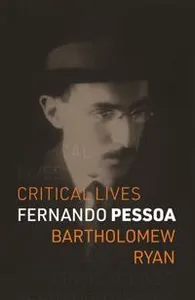
Fernando Pessoa
As a young man, Fernando Pessoa wrote ‘be plural like the universe.’ Staying true to this, he went on to invent more than one hundred fictional alter-egos, which he called heteronyms. This biography, probing Pessoa’s experience and imagination of reality, navigates the poet’s early days in Lisbon and South Africa, reveals a philosopher-poet and pioneer of Portuguese modernism, and delves into the birth of Pessoa’s heteronymic universe. Bartholomew Ryan traverses Pessoa’s writings on evolving radical politics and his messianic dream of an empire of poets, his ventures into esoteric realms and his expertise in astrology. The book unravels Pessoa’s real and imaginary relationships, and explores his unfinished prose masterpiece, The Book of Disquiet. This is a compelling, timely exploration of Pessoa’s profound and innovative ideas, including his revolutionary concepts of identity and self-multiplicity.

Fernando Pessoa
A Critical Introduction proposes a new didactic and dynamic way of reading the great twentieth-century poet Fernando Pessoa (1888-1935). The aim is to present a holistic vision of this complex poet, promoting his literary geniality in order to better understand his orthonymic-heteronymic poetry. A guiding motif is Pessoa's own Be as plural as the universe. In leading the reader through the poet's published literary work, Jerónimo Pizarro allows an intimate perspective, alongside an academic one, to better understand the workings of Pessoa's mind and life. Discussion centres on the dilemmas an editor faces when editing posthumously. A prime question revolves around the genesis of Pessoa's heteronyms and orthonyms. Understanding is revealed by a critical perspective on the unity that exists in all of Pessoa's literary work. Interpretations of the poems; explanation of the profundity of The Book of Disquiet; and his isms of Paulism, Caeirism, Intersectionism and Cessationism, are