
A Natural History of Time
For most of history, people trusted mythology or religion to provide an answer to the pressing question of the earth's age, even though nature abounds with clues. In "A Natural History of Time", geophysicist Pascal Riche...

Natural History of Time
For most of history, people trusted mythology or religion to provide an answer to the pressing question of the earth's age, even though nature abounds with clues. In "A Natural History of Time", geophysicist Pascal Richet tells the fasci...

A Briefer History of Time
Stephen Hawking''s worldwide bestseller, A Brief History of Time, has been a landmark volume in scientific writing. Its author''s engaging voice is one reason, and the compelling subjects he addresses is another: the nature of space a...

A Brief History Of Time
Published more than two decades ago to great critical acclaim and commercial success, A Brief History of Time has become a landmark volume in science writing. Stephen Hawking, one of the great minds of our time, explores such profound questions as: How did the universe begin—and what made its start possible? Does time always flow forward? Is the universe unending—or are there boundaries? Are there other dimensions in space? What will happen when it all ends? Told in language we all can understand, A Brief History of Time plunges into the exotic realms of black holes and quarks, of antimatter and “arrows of time," of the big bang and a bigger God—where the possibilities are wondrous and unexpected. With exciting images and profound imagination, Stephen Hawking brings us closer to the ultimate secrets at the very heart of creation.

A Brief History Of Time
Was there a beginning of time? It begins by reviewing the great theories of the cosmos from Newton to Einstein, before delving into the secrets which still lie at the heart of space and time, from the Big Bang to black holes, via spiral galaxies a...

A Brief History of Time
#1 NEW YORK TIMES BESTSELLER A landmark volume in science writing by one of the great minds of our time, Stephen Hawking's book explores such profound questions as: How did the universe begin--and what made its start possible? Does time always flow forward? Is the universe unending--or are there boundaries? Are there other dimensions in space? What will happen when it all ends? Told in language we all can understand, A Brief History of Time plunges into the exotic realms of black holes and quarks, of antimatter and 'arrows of time,' of the big bang and a bigger God--where the possibilities are wondrous and unexpected. With exciting images and profound imagination, Stephen Hawking brings us closer to the ultimate secrets at the very heart of creation.

A Brief History of Time
Was there a beginning of time? Could time run backwards? Is the universe infinite or does it have boundaries? These are just some of the questions considered in an internationally acclaimed masterpiece which begins by reviewing the great theories of the cosmos from Newton to Einstein, before delving into the secrets which still lie at the heart of space and time.
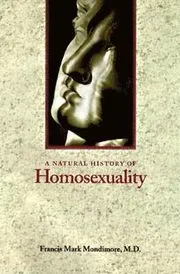
A Natural History of Homosexuality
A terrible sin, a gift from the gods, a mental illness, a natural human variation--over the centuries homosexuality has been defined in all these ways. Now, in a generous work which synthesizes research in biology, history, psychology, and politic...
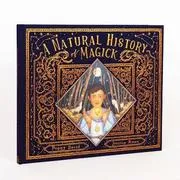
A Natural History of Magick
This enchantingly illustrated natural history of magick, compiled in the 1920s by the globetrotting naturalist Professor Conrad Gessner for his grandson, is now unveiled for readers of today. Featuring a gold foilembossed cloth cover, a ribbon mar...

A Natural History of Nettles
Nettles, followers of mankind, steeped in folklore. Enter their fascinating and beautiful world without being stung! Learn about their great utility which has alleviated suffering during war, disease and famine.

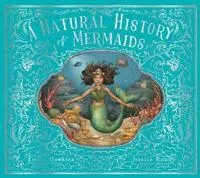
A Natural History of Mermaids
Featuring a silver-foil-embossed cloth cover, a ribbon marker and sprayed silver edges, this gorgeous volume is filled with beautiful illustrations and precise notes detailing the secret life of mermaids. In 1872, intrepid (fictional) explorer Darcy Delamare disguised herself as a man to claim a place on board the (real life) scientific expedition of the HMS Challenger. She made a record of her findings on the trip, recounting the extraordinary sea creatures she witnessed: creatures that, until now, nobody had believed really existed... mermaids! Following on from the beautiful A Natural History of Fairies and A Natural History of Magick, this beautifully illustrated vintage album is filled with descriptions and illustrations of Delamare's findings, from tales of mermaids in ancient lore to more recent sightings as well as facts on the beliefs and superstitions surrounding these elusive creatures. Children will delight in discovering the anatomy, behaviour and lifecycles of the

A Natural History of Peace
A stimulating and innovative consideration of the concept, causes, and practice of peace in societies both ancient and modern, human and primate.We know a great deal about aggression, conflict, and war, but relatively little about peace, partially because it has been such a scarce phenomenon throughout history and in our own times. Peace is more than the absence of war. Peace requires special relationships, structures, and attitudes to promote and protect it. A Natural History of Peace provides the first broadly interdisciplinary examination of peace as viewed from the perspectives of social anthropology, primatology, archeology, psychology, political science, and economics. Among other notable features, this volume offers: a major theory concerning the evolution of peace and violence through human history; an in-depth comparative study of peaceful cultures with the goal of discovering what it is that makes them peaceful; one of the earliest reports of a new theory of the organization

A Natural History of Fairies
This enchantingly illustrated natural history of fairies, compiled in the 1920s by the botanist Professor Elsie Arbour for her niece, is now unveiled for readers of today. Featuring a gold foil-embossed cloth cover, a ribbon marker, and sprayed gold edges, this gorgeous volume is filled with colorful sketches and precise notes detailing the secret life of fairies and their important role in the natural world. Inside, you will discover the wide and wonderful array of different species of fairies around the globe and explore where and how they live. Delight in this hidden world as you learn all about: • The anatomy of a fairy (Land-based fairies have individual, separated toes, just as humans do. However, many species of water fairies have webbed feet.) • The life cycle of a fairy (When walking in the heather, be careful of the tiny flutterpillar of the Wicklow Fairy, decked out in greens and purples.) • Clever fairy camouflage (Reed fairies living in wetlands usually wear striped

A History of Natural Philosophy
Natural philosophy encompassed all natural phenomena of the physical world. It sought to discover the physical causes of all natural effects and was little concerned with mathematics. By contrast, the exact mathematical sciences were narrowly conf...

A Natural History of Latin
Beginning in Rome around 600 BC, Latin became the language of the civilized world and remained so for more than two millennia. French, Spanish, Italian, and Romanian are among its progeny and it provides the international vocabulary of law and lif...

A Natural History Of Dragons
Marie Brennan begins a thrilling new fantasy series in A Natural History of Dragons, combining adventure with the inquisitive spirit of the Victorian Age.You, dear reader, continue at your own risk. It is not for the faint of heart-no more so than the study of dragons itself. But such study offers rewards beyond compare: to stand in a dragon's presence, even for the briefest of moments-even at the risk of one's life-is a delight that, once experienced, can never be forgotten.. . . All the world, from Scirland to the farthest reaches of Eriga, know Isabella, Lady Trent, to be the world's preeminent dragon naturalist. She is the remarkable woman who brought the study of dragons out of the misty shadows of myth and misunderstanding into the clear light of modern science. But before she became the illustrious figure we know today, there was a bookish young woman whose passion for learning, natural history, and, yes, dragons defied the stifling conventions of her day. Here at last, in her own words, is the true story of a pioneering spirit who risked her reputation, her prospects, and her fragile flesh and bone to satisfy her scientific curiosity; of how she sought true love and happiness despite her lamentable eccentricities; and of her thrilling expedition to the perilous mountains of Vystrana, where she made the first of many historic discoveries that would change the world forever. "Saturated with the joy and urgency of discovery and scientific curiosity."-Publishers Weekly (starred review) on A Natural History of Dragons An NPR Best Book of 2013
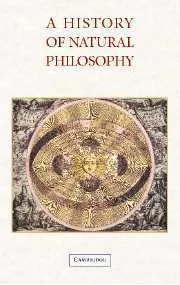
A History of Natural Philosophy
Natural philosophy encompassed all natural phenomena of the physical world. It sought to discover the physical causes of all natural effects and was little concerned with mathematics. By contrast, the exact mathematical sciences were narrowly conf...
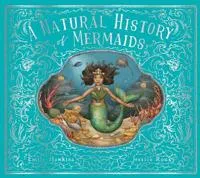
A Natural History of Mermaids
Featuring a silver-foil-embossed cloth cover, a ribbon marker and sprayed silver edges, this gorgeous volume is filled with beautiful illustrations and precise notes detailing the secret life of mermaids. In 1872, intrepid (fictional) explorer Darcy Delamare disguised herself as a man to claim a place on board the (real life) scientific expedition of the HMS Challenger. She made a record of her findings on the trip, recounting the extraordinary sea creatures she witnessed: creatures that, until now, nobody had believed really existed... mermaids Following on from the beautiful A Natural History of Fairies and A Natural History of Magick, this beautifully illustrated vintage album is filled with descriptions and illustrations of Delamare's findings, from tales of mermaids in ancient lore to more recent sightings as well as facts on the beliefs and superstitions surrounding these elusive creatures. Children will delight in discovering the anatomy, behaviour and lifecycles of the Merfolk
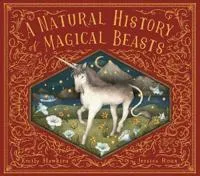
A Natural History of Magical Beasts
Featuring a gold-foil-embossed cloth cover, a ribbon marker and sprayed gold edges, this gorgeous volume is filled with beautiful illustrations and precise notes detailing the secret lives of magical beasts. Tales of magical creatures have been told across the world for generations... but are these stories merely flights of fancy, or is there any truth to the legends of unicorns and dragons, centaurs and griffins? Presented as the notebook of a 1920s zoologist, this lavish volume sets out to answer this question, revealing the hidden world of the magical beasts that live among us. Within these pages you will meet bizarre and beautiful creatures from around the globe, discovering their habits, habitats and the legends surrounding them. Learn about the anatomy of a unicorn, the life cycle of a phoenix, incredible dragon courtship dances and much more in this ultimate guide to magical creatures. This exquisitely illustrated album will entrance all true-believers and fantasy enthusiasts.
A Natural History of Bat Foraging
A Natural History of Bat Foraging

A Natural History of Empty Lots
A genre-bending blend of naturalism, memoir, and social manifesto for rewilding the city, the self, and society. A Natural History of Empty Lots is a genre-defying work of nature writing, literary nonfiction, and memoir that explores what happens when nature and the city intersect. During the real estate crash of the late 2000s, Christopher Brown purchased an empty lot in an industrial section of Austin, Texas. The property-abandoned and full of litter and debris-was an unlikely site for a home. Brown had become fascinated with these empty lots around Austin, so-called 'ruined' spaces once used for agriculture and industry awaiting their redevelopment. He discovered them to be teeming with natural activity, and embarked on a twenty-year project to live in and document such spaces. There, in our most damaged landscapes, he witnessed the remarkable resilience of wild nature, and how we can heal ourselves by healing the Earth. Beautifully written and philosophically hard-hitting, A
A Natural History of Empty Lots
'Brown lives far from any conventional battlefield, but he is surrounded by the wreckage of a different war, and he, too, finds hope in cultivating the ruins of nature...A Natural History of Empty Lots is less a departure from the nature writing tradition than a welcome addition to its edgelands.' -New York Review of Books 'The nature writing we need now.' -Michelle Nijhuis, author of Beloved Beasts 'Incredible' -Kelly Link, Pulitzer Prize finalist 'An instant classic' -Jeff VanderMeer, New York Times bestselling author During the real estate crash of the late 2000s, Christopher Brown purchased an empty lot in an industrial section of Austin, Texas. The property-abandoned and full of litter and debris-was an unlikely site for a home. Brown had become fascinated with these empty lots around Austin, so-called 'ruined' spaces once used for agriculture and industry awaiting their redevelopment. He discovered them to be teeming with natural activity, and embarked on a twenty-year project


A Brief Natural History of Civilization
A compelling evolutionary narrative that reveals how human civilization follows the same ecological rules that shape all life on Earth

A Natural History of Ladybird Beetles
The Coccinellidae are a family of beetles, known variously as ladybirds or ladybugs. In Britain alone, some 46 species belong to the Coccinellidae family, although only 26 of these are recognisably ladybirds. Composed largely of Professor Michael ...

A Natural History of the Senses
Diane Ackerman's lusciously written grand tour of the realm of the senses includes conversations with an iceberg in Antarctica and a professional nose in New York, along with dissertations on kisses and tattoos, sadistic cuisine and the music played by the planet Earth. 'Delightful . . . gives the reader the richest possible feeling of the worlds the senses take in.'--The New York Times. (Literature--Classics & Contemporary)

Brief History Of Time
Was there a beginning of time? Could time run backwards? Is the universe infinite or does it have boundaries? These are just some of the questions considered in the internationally acclaimed masterpiece by the world renowned physicist - generally ...
Briefer History of Time
Stephen Hawking's worldwide bestseller, A Brief History of Time, has been a landmark volume in scientific writing. Its author's engaging voice is one reason, and the compelling subjects he addresses is another: the nature of space and time, the ro...

The History of Time
Why do we measure time in the way that we do? Why is a week seven days long? At what point did minutes and seconds come into being? Why are some calendars lunar and some solar? The organisation of time into hours, days, months and years seems immu...
Brief History Of Time
Brought to you by Penguin.Was there a beginning of time? Could time run backwards? Is the universe infinite or does it have boundaries?These are just some of the questions considered in the internationally acclaimed masterpiece by the world renown...

Brief History Of Time
How, when and why did the universe begin? Will it end, and if so, how? Stephen Hawking spares no energy, nor ambition, in this classic book on physics, from the Big Bang to black holes. Hawking has deliberately made the book readable to profession...

Europe- A Natural History
A place of exceptional diversity, rapid change, and high energy, for the past 100 million years Europe has literally been at the crossroads of the world: ever since the interaction of Asia, North America and Africa formed the tropical island archipelago that would become the continent of today. In this unprecedented ecological history, Tim Flannery shows how Europe has absorbed wave after wave of immigrant species ever since; taking them in, transforming them, and sometimes hybridising them. Flannery reveals how, in addition to playing a vital role in the evolution of our own species, Europe was once the site of the formation of the first coral reefs, the home of some of the world's largest elephants, and now has more wolves than North America. This groundbreaking book charts the history of the land itself and the forces shaping life on it - including modern humans - to create a portrait of a continent that continues to exert a huge influence on the world today.


Kenya: A Natural History
Kenya: A Natural History

Teenagers: A Natural History
During the second decade of human life, the body and brain undergo a profound and complex transformation, with emotions and intellect changing as rapidly and unpredictably as weight and height. These changes can be baffling - to teenagers and to t...

A Brief History of the Philosophy of Time
Adrian Bardon's A Brief History of the Philosophy of Time is a short yet thorough introduction to the history, philosophy, and science of the study of time-from the pre-Socratic philosophers through Einstein and beyond. Its treatment is roughly ch...

A Brief History of the Philosophy of Time
This thoroughly revised and updated edition of Adrian Bardon's A Brief History of the Philosophy of Time is a short introduction to the history, philosophy, and science of the study of time--from the pre-Socratic philosophers through Einstein and ...