

Plutarch: Alexander
Based on Ziegler's revised text, this book provides a commentary on Plutarch's "Life of Alexander". It devotes most of its space to historical matters, comparing Plutarch's narrative at every point with the sources. In addition, it adds ...

A Commentary on Jeremiah
A Commentary on Jeremiah

A Commentary on Ovid's Metamorphoses
A Commentary on Ovid's Metamorphoses

A Commentary on Plato's Meno
The Meno, one of the most widely read of the Platonic dialogues, is seen afresh in this original interpretation that explores the dialogue as a theatrical presentation. Just as Socrates's listeners would have questioned and examined their own...

A Commentary on Virgil's Eclogues
A Commentary on Virgil's Eclogues


Commentary on John
Cyril of Alexandria (ca. 378-444), one of the most brilliant representatives of the Alexandrian theological tradition, is best known for championing the term Theotokos (God-bearer) in opposition to Nestorius of Constantinople. Cyril's great Commentary on John, offered here in the Ancient Christian Text series in two volumes, predates the Nestorian controversy, however, and focuses its theological fire power against Arianism. The commentary, which is addressed to catechists, displays Cyril's breath-taking mastery of the full content of the Bible and his painstaking attention to detail as he seeks to offer practical teaching on the cosmic story of God's salvation. David Maxwell provides readers with the first complete English translation of the text since the nineteenth century. It rests on Pusey's critical edition of the Greek text and puts on display Cyril's theological interpretation of Scripture and his appeal to the patristic tradition that preceded him. Today's readers will find

Commentary on John
Commentary on John


Commentary on Exodus
In this volume Thomas Dozeman presents a fresh translation of the Hebrew text of Exodus along with a careful, critical interpretation of its central themes, literary structure, and history of composition. He explores two related themes in the formation of the book of Exodus: the identity of Yahweh, the God of Israel, and the authority of Moses, the leader of the Israelite people. / Dozeman clarifies the multiple literary genres within the text, identifies only two separate authors in the book's composition, and highlights the rich insights that arise from the comparative study of the ancient Near Eastern literary tradition. Also treating the influence of Exodus in the history of Jewish and Christian interpretation, Dozeman's comprehensive commentary will be welcomed by Old Testament scholars.


Commentary on Genesis
Blind since early childhood, the Egyptian theologian and monk Didymus (ca. 313-398) wielded a masterful knowledge of Scripture, philosophy, and previous biblical interpretation, earning the esteem of his contemporaries Athanasius, Antony of Egypt,...

Commentary on Matthew
St. Jerome (347-420) has been considered the pre-eminent scriptural commentator among the Latin Church Fathers. His Commentary on Matthew, written in 398 and profoundly influential in the West, appears here for the first time in English translatio...


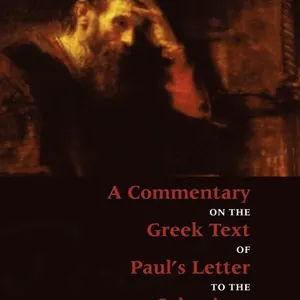




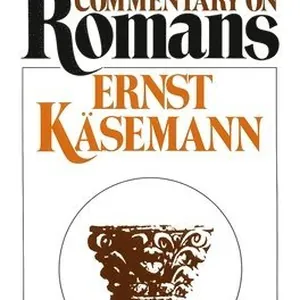
Commentary on Romans
A Commentary on Romans
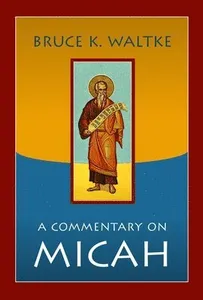
Commentary on Micah
Commentary on Micah

A Narratological Commentary on the Odyssey
Whereas traditional commentaries tend to be comprehensive and micro-textual, this narratological commentary, first published in 2001, focuses on one aspect of the Odyssey, its narrativity, and pays lavish attention to the meso- and macro-levels. D...

A Commentary on Vergil, Aeneid 3
The Aeneid, generally considered the greatest poem of Roman literature, is a story of migration, and Book 3 is at the heart of this story-the arrestingly dramatic account that Aeneas gives to the Carthaginian Queen Dido of his people's journey fro...

Planetary Strength: A Commentary on Morinus
Planetary Strength - a commentary on Morinus is an intermediate level textbook on natal horoscope interpretation. Taking as its point of departure Astrologia Gallica by Jean Baptiste Morin de Villefranche (1583 - 1656), Planetary Strength explains...

Pericles on Stage
Since the eighteenth century, classical scholars have generally agreed that the Greek playwright Aristophanes did not as a matter of course write "political" plays. Yet, according to an anonymous Life of Aristophanes, when Dionysius the ...
Moralia, III
Eclectic essays on ethics, education, and much else besides. Plutarch (Plutarchus), ca. AD 45-120, was born at Chaeronea in Boeotia in central Greece, studied philosophy at Athens, and, after coming to Rome as a teacher in philosophy, was given co...

Moralia, I
Eclectic essays on ethics, education, and much else besides. Plutarch (Plutarchus), ca. AD 45-120, was born at Chaeronea in Boeotia in central Greece, studied philosophy at Athens, and, after coming to Rome as a teacher in philosophy, was given co...
Moralia, VII
Eclectic essays on ethics, education, and much else besides. Plutarch (Plutarchus), ca. AD 45-120, was born at Chaeronea in Boeotia in central Greece, studied philosophy at Athens, and, after coming to Rome as a teacher in philosophy, was given co...
Moralia, VI
Eclectic essays on ethics, education, and much else besides. Plutarch (Plutarchus), ca. AD 45-120, was born at Chaeronea in Boeotia in central Greece, studied philosophy at Athens, and, after coming to Rome as a teacher in philosophy, was given co...
Moralia, V
Eclectic essays on ethics, education, and much else besides. Plutarch (Plutarchus), ca. AD 45-120, was born at Chaeronea in Boeotia in central Greece, studied philosophy at Athens, and, after coming to Rome as a teacher in philosophy, was given co...
Moralia, X
Eclectic essays on ethics, education, and much else besides. Plutarch (Plutarchus), ca. AD 45-120, was born at Chaeronea in Boeotia in central Greece, studied philosophy at Athens, and, after coming to Rome as a teacher in philosophy, was given co...