
Energy in Nature and Society
Energy in Nature and Society

Should We Eat Meat?
Meat eating is often a contentious subject, whether considering the technical, ethical, environmental, political, or health-related aspects of production and consumption. This book is a wide-ranging and interdisciplinary examination and critique o...

Feeding the World
Feeding the World

Energy at the Crossroads
Energy at the Crossroads

Earth's Biosphere
The Earth's Biosphere

Harvesting the Biosphere
Harvesting the Biosphere

Enriching the Earth
Dr. Smil is the world's authority on nitrogenous fertilizer. The industrial synthesis of ammonia from nitrogen and hydrogen has been of greater fundamental importance to the modern world than the invention of the airplane, nuclear energy, space flight, or television. The expansion of the world's population from 1.6 billion people in 1900 to today's six billion would not have been possible without the synthesis of ammonia. In Enriching the Earth, Vaclav Smil begins with a discussion of nitrogen's unique status in the biosphere, its role in crop production, and traditional means of supplying the nutrient. He then looks at various attempts to expand natural nitrogen flows through mineral and synthetic fertilizers. The core of the book is a detailed narrative of the discovery of ammonia synthesis by Fritz Haber-a discovery scientists had sought for over one hundred years-and its commercialization by Carl Bosch and the chemical company BASF. Smil also examines the emergence of the

Prime Movers of Globalization
Prime Movers of Globalization

Materials and Dematerialization
MATERIALS AND DEMATERIALIZATION World-renowned scientist Vaclav Smil examines a critical topic in the research and policy domain of sustainable resource use Over the course of time, the modern world has become dependent on unprecedented flows of m...

Natural Gas
Natural gas is the world's cleanest fossil fuel; it generates less air pollution and releases less CO2 per unit of useful energy than liquid fuels or coals. With its vast supplies of conventional resources and nonconventional stores, the extension...
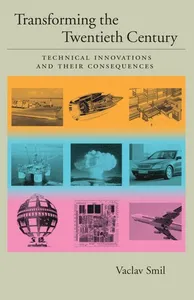
Transforming the Twentieth Century: Technical Innovations and Their Consequences
This inquiry into the technical advances that shaped the 20th century follows the evolutions of all the principal innovations introduced before 1913 (as detailed in the first volume) as well as the origins and elaborations of all fundamental 20th ...

Energy Transitions
This bold and controversial argument shows why energy transitions are inherently complex and prolonged affairs, and how ignoring this fact raises unrealistic expectations that the United States and other global economies can be weaned quickly from...

Still the Iron Age
Although the last two generations have seen an enormous amount of attention paid to advances in electronics, the fact remains that high-income, high-energy societies could thrive without microchips, etc., but, by contrast, could not exist without ...

Energies
-
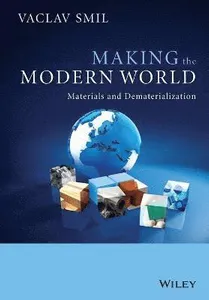
Making the Modern World
How much further should the affluent world push its material consumption? Does relative dematerialization lead to absolute decline in demand for materials? These and many other questions are discussed and answered in Making the Modern World: Mater...
Oil
Oil is the lifeblood of the modern world. Without it, there would be no planes, no plastic, no exotic produce, and a global political landscape few would recognise. Humanity's dependence upon oil looks set to continue for decades to come, but what...


Grand Transitions
From one of the world's leading experts on the history of energy, a rigorous examination of the transitions that structure our modern world--and the environmental reckoning that will mark its success or failure. What makes the modern world work? T...
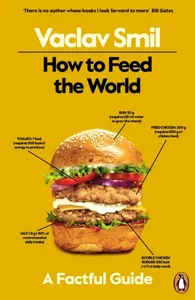
How To Feed The World
'There is no author whose books I look forward to more' Bill Gates'A fascinating deep dive...a wonderful fact-based tour of our food system, past and present. It opens up plenty of interesting debates on what to do next to feed 10 billion people without wrecking the planet' Hannah Ritchie, author of Not the End of the World In this ambitious, myth-busting book, leading scientist and internationally bestselling author Vaclav Smil investigates many of the burning questions facing the world today: Why are some of the world's biggest food producers also the countries with the most undernourished populations? Why is food waste a colossal 1,000kcal per person daily, and how can we solve that? Could we all go vegan and be healthy? Should we? How will we feed the ballooning population without killing the planet?How Food Really Works shows how we misunderstand the essentials of where our food really comes from, how our dietary requirements shape us, and why this impacts our planet in drastic ways. Ultimately, this data-based, rigorously researched guide explains how we will survive and thrive long into the future.

Size: How It Explains the World
Size: How It Explains the World
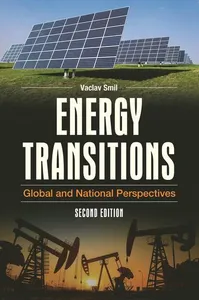
Energy Transitions
This book provides a detailed, global examination of energy transitions, supplying a long-term historical perspective, an up-to-date assessment of recent and near-term advances in energy production technology and implementation, and an explanation...
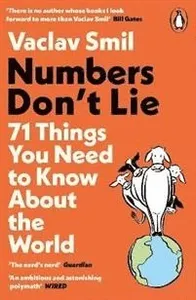
Numbers Don't Lie
'My favourite author has done it again. Numbers Don't Lie is by far his most accessible book to date, and I highly recommend it to anyone who is curious about the world. I unabashedly recommend this book to anyone who loves learning' Bill Gates Is...
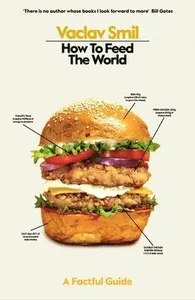
How to Feed the World
'How to Feed the World had a lot to teach me - and I'm sure it will teach you a lot, too. It challenges readers to think differently about a problem we thought we understood' Bill Gates 'Concise and erudite . . . How to Feed the World is weighted ...

Energy
With one famous equation, E=mc2, Einstein proved all matter can be described as energy. It is everywhere and it is everything. In this newly updated and engaging introduction, renowned scientist Vaclav Smil explores energy in all its facets - from...
How The World Really Works - A Scientist's Guide To Our Past, Present And F
We have never had so much information at our fingertips and yet most of us don't know how the world really works. This book explains seven of the most fundamental realities governing our survival and prosperity.From energy and food production, through our material world and its globalization, to risks, our environment and its future, How the World Really Works offers a much-needed reality check - because before we can tackle problems effectively, we must understand the facts. In this ambitious and thought-provoking book we see, for example, that globalization isn't inevitable and that our societies have been steadily increasing their dependence on fossil fuels, making their complete and rapid elimination unlikely. Drawing on the latest science and tackling sources of misinformation head on - from Yuval Noah Harari to Noam Chomsky - ultimately Smil answers the most profound question of our age: are we irrevocably doomed or is a brighter utopia ahead?

China's Past, China's Future
China has a population of 1.3 billion people which puts strain on her natural resources. This volume, by one of the leading scholars on the earth's biosphere, is the result of a lifetime of study, and provides the fullest account yet of the enviro...
Size
'There is no author whose books I look forward to more' Bill GatesThe New York Times bestselling author returns with a mind-opening exploration of how size defines life on Earth.Explaining the key processes shaping size in nature, society and technology, Smil busts myths around proportions - from bodies to paintings and the so-called golden ratio - tells us what Jonathan Swift got wrong in Gulliver's Travels - the giant Brobdingnagian's legs would buckle under their enormous weight - and dives headfirst into the most contentious issue in ergonomics: the size of aeroplane seats.It is no exaggeration to say this fascinating and wide-ranging tour de force will change the way you look at absolutely everything.

Size
Following his New York Times bestseller How the World Really Works, Vaclav Smil returns with a mind-opening exploration of how size defines life on Earth (and beyond) - from microbes to economies and the expanding universe To answer the most important questions of our age, and secure our future, we must understand size. Neither bacteria nor empires are immune to its laws. Measuring it is challenging, especially where complex systems like economies are concerned, yet mastering it offers rich rewards. Grounded in history and drawing on the latest science, with much recourse to art and classic literature, Size explains the regularities - and peculiarities - of the key processes shaping life (from microbes to whales), the Earth (from asteroids to volcanic eruptions), technical advances (from architecture to transportation), and societies and economies (from cities to wages). We learn, for example, the rules governing beauty, why a biosphere needs diversity, how to predict the size of a country, why bigger animals need proportionately less food and how a particular level of wealth inequality is inherent. Is bigger always better? Can something keep growing indefinitely, or be too big to fail? Vaclav Smil tackles this goliath subject and it is no exaggeration to say that this tour de force will change the way you look at absolutely everything. 'There is no author whose books I look forward to more than Vaclav Smil' Bill Gates 'The nerd's nerd' Guardian

Grand Transitions
What makes the modern world work? The answer to this deceptively simple question lies in four "grand transitions" of civilization--in populations, agriculture, energy, and economics--which have transformed the way we live. Societies that...

Energy and Civilization
A comprehensive account of how energy has shaped society throughout history, from pre-agricultural foraging societies through today's fossil fuel-driven civilization. "I wait for new Smil books the way some people wait for the next 'Star Wars...
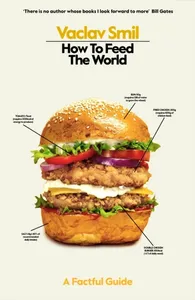
How Food Really Works
'There is no author whose books I look forward to more' BILL GATESIn this ambitious, myth-busting book, leading scientist and internationally bestselling author Vaclav Smil investigates many of the burning questions facing the world today:Why are some of the world's biggest food producers also the countries with the most undernourished populations?Why is food waste a colossal 1,000kcal per person daily, and how can we solve that?Could we all go vegan and be healthy? Should we?How will we feed the ballooning population without killing the planet?How Food Really Works shows how we misunderstand the essentials of where our food really comes from, how our dietary requirements shape us, and why this impacts our planet in drastic ways. Ultimately, this data-based, rigorously researched guide explains how we will survive and thrive long into the future.'There is perhaps no other academic who paints pictures with numbers like Smil' GUARDIAN
How the World Really Works: The Science Behind How We Got Here and Where We're Going
INSTANT NEW YORK TIMES BESTSELLER 'A new masterpiece from one of my favorite authors... How The World Really Works] is a compelling and highly readable book that leaves readers with the fundamental grounding needed to help solve the world's toughest challenges.'--Bill Gates 'Provocative but perceptive . . . You can agree or disagree with Smil--accept or doubt his 'just the facts' posture--but you probably shouldn't ignore him.'--The Washington Post An essential analysis of the modern science and technology that makes our twenty-first century lives possible--a scientist's investigation into what science really does, and does not, accomplish. We have never had so much information at our fingertips and yet most of us don't know how the world really works. This book explains seven of the most fundamental realities governing our survival and prosperity. From energy and food production, through our material world and its globalization, to risks, our environment and its future, How the World

Invention and Innovation
From the New York Times-bestselling author, a new volume on the history of human ingenuity and its attendant breakthroughs and busts. Included in BILL GATES's 2023 Holiday Reading List Included in Lit Hub s Most Anticipated Books of 2023 Included ...

Growth
A systematic investigation of growth in nature and society, from tiny organisms to the trajectories of empires and civilizations.Growth has been both an unspoken and an explicit aim of our individual and collective striving. It governs the lives o...

Creating the Twentieth Century
The period between 1867 and 1914 remains the greatest watershed in human history since the emergence of settled agricultural societies: the time when an expansive civilization based on synergy of fuels, science, and technical innovation was born. ...

Creating and Transforming the Twentieth Century, Revised and Expanded
Creating and Transforming the Twentieth Century, Revised and Expanded

Power Density
Power Density
Speed
'There is no author whose books I look forward to more' Bill Gates'There is perhaps no other academic who paints pictures with numbers like Smil' GuardianExplore how speed influences every aspect of life on Earth, from the slow grind of geological processes and the fleeting lifespans of organisms to the astonishing speed of light and the remarkable adaptations of creatures like the swift antelope and the soaring albatross. In this ambitious and wide-ranging ideas book, internationally bestselling author Vaclav Smil uncovers the intricate connections between speed, nature, and human innovation.With counterintuitive insights, such as how erosion actually accelerates mountain growth, Smil challenges long-held myths. For example, Smil debunks the notion that our modern lives are accelerating at an unprecedented pace: the rapid adoption of mobile phones - from 0% in 1983 to 90% in 2002 (19 years) - is like the spread of earlier technologies such as radio (22 years), colour television (24 years) and even microwave ovens (17 years).In SPEED, Smil combines his trademark compelling statistics with insightful analysis to take readers on a captivating journey through the vast timescales of Earth's history and the complexities of modern life. He explains how we measure speed and reveals the theoretical limits that shape our societies, offering a thought-provoking exploration of the forces that define our world. This eye-opening book encourages readers to see speed's vital role in everything around us.