
A Liberated Mind
'In all my years studying personal growth, Acceptance and Commitment Therapy is one of the most useful tools I've ever come across, and in this book, Dr. Hayes describes it with more depth and clarity than ever before.'-Mark Manson, #1 New York Times best-selling author of The Subtle Art of Not Giving a F*ck Life is not a problem to be solved. ACT shows how we can live full and meaningful lives by embracing our vulnerability and turning toward what hurts. In this landmark book, the originator and pioneering researcher into Acceptance and Commitment Therapy (ACT) lays out the psychological flexibility skills that make it one of the most powerful approaches research has yet to offer. These skills have been shown to help even where other approaches have failed. Science shows that they are useful in virtually every area--mental health (anxiety, depression, substance abuse, eating disorders, PTSD); physical health (chronic pain, dealing with diabetes, facing cancer); social processes

Process-Based CBT
CBT is one of the most proven-effective and widely used forms of psychotherapy today. But while there are plenty of books that provide an overview of CBT, this is the first to present the newest recommendations set forth by a special task force of...

Mindfulness and Acceptance for Addictive Behaviors
This fascinating book for mental health professionals explores emerging mindfulness and acceptance treatments for addictions of all kinds, including gambling addiction, binge eating disorder, pornography addiction, cigarette smoking, and substance...

Act in Context
The Canonical Papers of Steven C. Hayes is a compilation of his most pivotal articles written from 1982-2012. Through these selected papers, Hayes again revisits the theoretical struggles between behavioral and cognitive-behavior theories, taking ...

Liberated Mind
Over the last 35 years, Steven C. Hayes and his colleagues have developed Acceptance and Commitment Therapy (ACT) with many hundreds of studies supporting the impact of his approach on everything from chronic pain to weight loss to prejudice and b...

Acceptance and Commitment Therapy
This is a unique empirically-based psychological intervention that uses acceptance and mindfulness processes, and commitment and behaviour change processes to produce psychological flexibility. Steven C. Hayes, who helped develop ACT, and co-autho...



Portal to Paradise
Arizona's rugged Chiricahua Mountains have a special place in frontier history. They were the haven of many well-known personalities, from Cochise to Johnny Ringo, as well as the home of prospectors, cattlemen, and hardscrabble farmers eking out a...
Restoring Our Competitive Edge
This problem solver offers a wealth of remedies for American industry's neglect of competitive manufacturing strategies and its resulting loss of productivity. Drawing upon the example of world-class and foreign manufacturers, the book illustrates...


Process-Based CBT
Edited by Steven C. Hayes and Stefan G. Hofmann, and based on the new training standards developed by The Inter-Organizational Task Force on Cognitive and Behavioral Psychology Doctoral Education, this groundbreaking resource is the first to present the core competencies of cognitive behavioral therapy (CBT) in a way that honors the behavioral, cognitive, and acceptance and mindfulness wings of that tradition, and includes contributions from some of the luminaries in behavioral science today.

Traditional Bowyer's Handbook: How to build wooden bows and arrows: longbows, selfbows, & recurves.
I can't really explain my attraction to the bow and arrow. I can't explain the pull of a camp fire either, or the ocean, or the open hills where you can see forever. It's just there. These things are in all of us I think, some vestige of our primitive past buried so deep in our genome as to be inseparable from what it is to be human. What we think of as civilization is a new experiment in the eyes of Father Time. Experts say that humans have been around for some fifty thousand years. We've been carrying the bow for maybe five thousand (atlatls and spears before that), and pushing the plow for maybe two thousand. We have been hunters forever. We are built to run, to pursue big game on the open savannas, to kill and eat them. With the dwindling of the Pleistocene mega fauna, mammoths and such, the bow became more important and indeed helped to make us who we are today. It still holds that attraction, same as the hearth. When I was a kid I would make crude bows from green plum branches,

Materials and Technology for Sportswear and Performance Apparel
Materials and Technology for Sportswear and Performance Apparel takes a close look at the design and development of functional apparel designed for high-performance sportswear. Implementing materials, performance, technology, and design and market...

Practical Guide to Acceptance and Commitment Therapy
This volume is the most practical clinical guide on Acceptance and Commitment Therapy (ACT) yet available. It is designed to show how the ACT model and techniques apply to various disorders, settings, and delivery options with the goal of allowing...

Practical Guide to Acceptance and Commitment Therapy
This book is the most practical clinical guide on Acceptance and Commit ment Therapy (ACT said as one word, not as initials) yet available. It is designed to show how the ACT model and techniques apply to various disorders, settings, and delivery ...
Beyond the DSM
As a mental health clinician, you know that every client is unique and a client's symptoms are the result of a complex combination of psychological, environmental, genetic, and neural factors. However, the de facto DSM model poses considerable con...


Neoliberalism and the Global Restructuring of Knowledge and Education
This book examines the influence of neoliberal ideas and practices on the way knowledge has been conceptualized, produced, and disseminated over the last few decades at different levels of public education and in various national contexts around t...

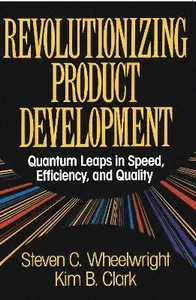
Revolutionizing Product Development
Today, a company's capability to conceive and design quality prototypes and bring a variety of superior products to market quicker than its competitors is increasingly the focal point of competition, contend leading product development experts Ste...
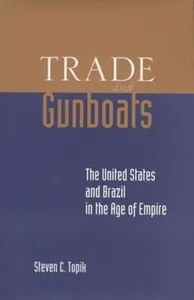
Trade and Gunboats
A hundred years ago, the United States first projected itself onto the international stage, hoping to stake out a sphere of influence in Latin America just as the largest of Latin American countries, Brazil, ending a 67-year-long monarchical regim...


Case Against George W. Bush
The Case Against George W. Bush chronicles the presidency of George W. Bush through almost 600 quotes from over ninety authors, including former British Prime Minister Tony Blair, former President George W. Bush, former Vice President Dick Cheney,...


Schaums Outline of Digital Signal Processing
The ideal review for your digital signal processing course More than 40 million students have trusted Schaum's Outlines for their expert knowledge and helpful solved problems. Written by renowned experts in their respective fields, Schaum's...

Concerto for Cootie
Jazz legend Cootie Williams left home to start his career as a professional musician at the age of fifteen. In 1940, after eleven years as one of the major soloists with the Duke Ellington orchestra, Williams was lured away to the band of Benny Goodman, one of the most popular bands in the country. At the time, it was a controversial move—it was still taboo for African Americans to share the bandstand with white people. Current references to the move usually reduce it to a song written by Raymond Scott, 'When Cootie Left the Duke.' In reality, it was a seismic event. The Black press predicted Black bands would collapse from raids on their ranks. White musicians were afraid they would be put out of work. And the white press stirred up visions of Black musicians mixing with white women in the new landscape of integrated orchestras. The twenty years trumpeter Williams spent as a band leader (1942-1962) have been covered in only the barest of details. His involvement in politics and the

Modernizing the Mind
When did fidgety children begin to suffer from attention deficit disorder? How did frightened people come to be called paranoid? Why are we considered to have emotional intelligence and not simply caring personalities? While psychological knowledg...

Wheelz
-

Reconfiguring Truth
This refreshingly original book links the postmodern critique of notions such as 'reality' and 'truth' with approaches to knowledge found in science and technology studies (STS), a field also discontent with traditional epistemology. Exploring STS...


Voter Backlash and Elite Misperception
Voter Backlash and Elite Misperception

Conflict in Aristotle's Political Philosophy
Offers a careful analysis of how Aristotle understands civil war, partisanship, distrust in government, disagreement, and competition, and explores ways in which these views are relevant to contemporary political theory. Do only modern thinkers li...

Heart at Fire's Center
No composer contributed more to film than Bernard Herrmann, who in over 40 scores enriched the work of such directors as Orson Welles, Alfred Hitchcock, Francois Truffaut, and Martin Scorsese. In this first major biography of the composer, Steven ...

Leading Product Development
In their groundbreaking book Revolutionizing Product Development, Steven C. Wheelwright and Kim B. Clark demonstrated how project leaders for product development could apply new innovations to bring products to market at breakneck speed. Now, in t...

Hitchcock and Herrmann
This is the story of the game-changing collaboration between director Alfred Hitchcock and composer Bernard Herrmann, who channelled their inner fears and desires into films that would become the nightmarish narratives and soundtracks of our lives. The 11-year collaboration between Alfred Hitchcock and Bernard Herrmann is often called the greatest director-composer partnership in cinema history. Their eight films together include such classic thrillers as Vertigo, The Man Who Knew Too Much, North by Northwest, Psycho, and The Birds. In Hitchcock and Herrmann: The Friendship and Film Scores that Changed Cinema, Steven C. Smith delivers an intimate account of how the reserved, but deeply anxious, Hitchcock found his ideal creative partner in the cantankerous, but deeply romantic, Herrmann. Smith draws on four decades of research, including previously unpublished documents and new interviews, to deliver a riveting account of what made the teaming of 'Benny and Hitch' so memorable and

South Sudan's Fateful Struggle
South Sudan's Fateful Struggle