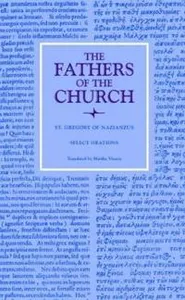
Select Orations
This translation makes available nineteen orations by the fourth-century Cappadocian father Gregory of Nazianzus. Most are appearing here in English for the first time. These homilies span all the phases of Gregory's ecclesiastical career, beginning with his service as a parish priest assisting his father, the elder Gregory, in his hometown of Nazianzus in the early 360s, to his stormy tenure as bishop of Constantinople from 379 to 381, to his subsequent return to Nazianzus and role as interim caretaker of his home church (382-83). Composed in a variety of rhetorical formats such as the lalia and encomium, the sermons treat topics that range from the purely theological to the deeply personal. Up until now, Gregory has been known primarily for his contributions as a theologian, indifferent to the social and political concerns that consumed his friend Basil. This view will change. It has been due in large measure to the interests and prejudices of the nineteenth-century editors who

Gregory of Nazianzus's Letter Collection
Saint Gregory of Nazianzus, also known as Gregory the Theologian, lived an illustrious life as an orator, poet, priest, and bishop. Until his death, he wrote scores of letters to friends and colleagues, clergy members and philosophers, teachers of...

Gregory of Nazianzus: Poemata Arcana
Known as "the Theologian", St Gregory of Nazianzus (in the eastern part of Turkey) is, with St Basil and St Gregory of Nyssa, one of the celebrated Cappadocian Fathers of the fourth-century Christian Church. Highly educated in both Chris...

Blessing of Blessings
Gregory of Narek (c. 945-1003), a monk and a priest, is best know for his poetic works, and one of the few armenian commentators on the Song of Songs, which was so great a focus among western monastic writers of the patristic and medieval periods....
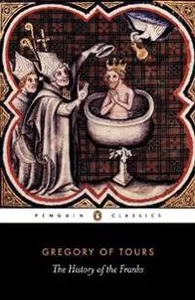
The History of the Franks
Written following the collapse of Rome's secular control over western Europe, the History of Gregory (c. AD 539-594) is a fascinating exploration of the events that shaped sixth-century France. This volume contains all ten books from the work, the last seven of which provide an in-depth description of Gregory's own era, in which he played an important role as Bishop of Tours. With skill and eloquence, Gregory brings the age vividly to life, as he relates the exploits of missionaries, martyrs, kings and queens - including the quarrelling sons of Lothar I, and the ruthless Queen Fredegund, third wife of Chilperic. Portraying an age of staggering cruelty and rapid change, this is a powerful depiction of the turbulent progression of faith at a time of political and social chaos.

On God and Man (Gregory)
St Gregory's poetry is open and self-revealing and has personal character. In these poems he speaks of the joys and frustrations of his own life; he reveals his inner questioning about the purpose and value of life in the face of sin and mortality; and his ultimate faith in Christ at redeeming and reconciling all things. The translations in this text allow the reader to see the self-reflection of the poetry in its theological context.