


Berlioz's Orchestration Treatise
Berlioz's Orchestration Treatise is a classic textbook which has been used as a guide to orchestration and as a source book for the understanding both of Berlioz's music and of orchestral practice in the nineteenth century. This was the first Engl...

Evenings with the Orchestra
During the performances of fashionable operas in an unidentified but "civilized" town in northern Europe, the musicians (with the exception of the conscientious bass drummer) tell tales, read stories, and exchange gossip to relieve the t...

A Treatise upon Modern Instrumentation and Orchestration
This is a translation of the second (1858) edition of Berlioz's landmark treatise by Mary Cowden Clarke, daughter of music publisher Vincent Novello. The book was quick to establish itself as a standard work, reflecting Berlioz's keen understandin...

A Treatise Upon Modern Instrumentation and Orchestration
A Treatise Upon Modern Instrumentation and Orchestration

Art of Music and Other Essays
"Berlioz the person-composer-writer is the sensitive child of his century and a most passionate voice of his time." -The Opera Quarterly "Berlioz could hardly have been better served than by the translator of this English edition . ...

Symphonie Fantastique, Op. 14: Edition Eulenburg No. 422
(Schott). Symphonie fantastique became the cornerstone of an entire tradition of musical composition in which figurative and literary ideas had a stimulating effect on the instrumental and orchestral music and even had a profound influence on the development of the opera.


Caravaggio
Michelangelo Merisi da Caravaggio (1571-1610) was always a name to be reckoned with. Notorious bad boy of the Italian Baroque, the artist was at once celebrated and controversial, violent in temper, precise in technique, a creative master, and a m...

Caravaggio
Michelangelo Merisi da Caravaggio (1571-1610) was always a name to be reckoned with. Notorious bad boy of the Italian Baroque, the artist was at once celebrated and controversial, violent in temper, precise in technique, a creative master, and a m...

"the Planetary Garden" and Other Writings
Celebrated landscape architect Gilles ClÉment may be best known for his public parks in Paris, including the Parc AndrÉ CitroËn and the garden of the MusÉe du Quai Branly, but he describes himself as a gardener. To care for and cultivate a plot of...

Renoir. 45th Ed.
Often misunderstood, Pierre-Auguste Renoir remains one of history's most-loved painters-undoubtedly because his work exudes such warmth, tenderness, and good cheer. Gathering brilliant reproductions and sketches, as well as photos and a complete c...
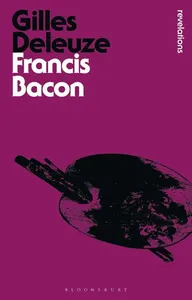
Francis Bacon
In this landmark text by one of the most influential philosophers of the twentieth century, Gilles Deleuze takes the paintings of Francis Bacon as his object of his study. The book presents a deep engagement with Bacon's work and the nature of art...

Nietzsche and Philosophy
Gilles Deleuze (1925-1995) was Professor of Philosophy at the University of Paris VIII. He is a key figure in poststructuralism, and one of the most influential philosophers of the twentieth century. "Nietzsche and Philosophy" has long b...

Foucault
Giles Deleuze (1925-1995) was Professor of Philosophy at the University of Paris VIII. He is a key figure in poststructuralism and one of the most influential philosophers of the twentieth century. In "Foucault", Deleuze presents one of ...

de Lempicka
Tamara de Lempicka (1898-1980) lived art in the fast lane. With an appetite for glamour and fame as much as Left Bank bohemianism, she fled St. Petersburg after the Bolshevik revolution and set about taking Paris by storm. Her prolific, monumental...

Martingales in Banach Spaces
This book focuses on the major applications of martingales to the geometry of Banach spaces, and a substantial discussion of harmonic analysis in Banach space valued Hardy spaces is also presented. It covers exciting links between super-reflexivit...
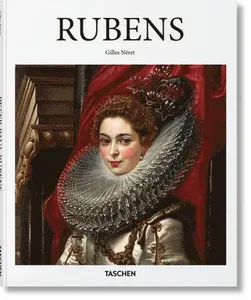
Rubens
A painter of dramatic battles as much as erotic mythologies, Sir Peter Paul Rubens was a key figure in the 16th-century art world and a flag bearer for Baroque color, motion, and sensuality. His prolific oeuvre includes altarpieces, portraits, lan...
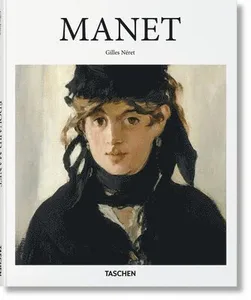
Manet
Lampooned during his lifetime for his style as much as his subject matter, French painter Édouard Manet (1832-1883) is now considered a crucial figure in the history of art, bridging the transition from Realism to Impressionism. Manet's work combi...

Klimt
Discover the shimmering and sensual oeuvre of Gustav Klimt, the Austrian symbolist painter who polarized the art world by combining decorative finesse with erotic thrill. From landscape paintings to glistening renderings of the female body, the fo...

Economic, Social, and Cultural Rights in Armed Conflict
This book addresses the international legal obligation to protect economic, social, and cultural human rights in times of armed conflict and other situations of armed violence. These rights provide guarantees to individuals of their fundamental ri...


Matisse. Cut-outs
"Painting with scissors" is how Henri Matisse referred to his cut-outs. Produced towards the end of his life, when the artist was confined to a wheelchair, these brilliant bursts of color and form delight to this day as joyous celebratio...

Klimt
The unfading popularity of Gustav Klimt (1862-1918) attests not only to the particular appeal of his luxuriant painting but also to the universal themes with which he worked: love, feminine beauty, aging, and death. The son of a goldsmith, Klimt c...

Dali
Painter, sculptor, writer, filmmaker, and all-round showman Salvador Dali (1904-1989) was one of the 20th century's greatest exhibitionists and eccentrics. One of the first artists to apply the insights of Freudian psychoanalysis to art, he is celebrated in particular for his surrealist practice, with such conceits as the soft watches or the lobster telephone, now hallmarks of the surrealist enterprise, and of modernism in general. Dali frequently described his paintings as "hand-painted dream photographs." Their tantalizing tension and interest resides in the precise rendering of bizarre elements and incongruous arrangements. As Dali himself explained, he painted with "the most imperialist fury of precision," but only "to systematize confusion and thus to help discredit completely the world of reality."Revolutionizing the role of the artist, the mustache-twirling Dali also had the intuition to parade a controversial persona in the public arena and, through printmaking, fashion, advertising, writing, and film, to create work that could be consumed and not just contemplated on a gallery wall. This book explores both the painting and the personality of Dali, introducing his technical skill as well as his provocative compositions and challenging themes of death, decay, and eroticism.
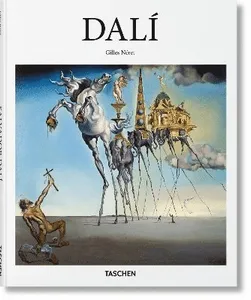
Dalí
Painter, sculptor, writer, filmmaker, and all-round showman Salvador Dalí (1904-1989) was one of the 20th century's greatest exhibitionists and eccentrics. One of the first artists to apply the insights of Freudian psychoanalysis to art, he is cel...

Logic of Sense
Logic of Sense is one of Deleuze's seminal works. First published in 1969, shortly after Difference and Repetition, it prefigures the hybrid style and methods he would use in his later writing with Felix Guattari. In an early review Michel Foucaul...

Difference and Repetition
Since its publication in 1968, Difference and Repetition, an exposition of the critique of identity, has come to be considered a contemporary classic in philosophy and one of Gilles Deleuze's most important works. The text follows the development ...

Proust and Signs
Gilles Deleuze (1925-1995) was Professor of Philosophy at the University of Paris VII. He is a key figure in poststructuralism and one of the most influential philosophers of the twentieth century. In Proust and Signs, Deleuze explores the work of...

Mental Spaces
Mental Spaces is the classic introduction to the study of mental spaces and conceptual projection, as revealed through the structure and use of language. It examines in detail the dynamic construction of connected domains as discourse unfolds. The...

Cinema I
Gilles Deleuze was one of the most influential figures in twentieth-century philosophy, well known for his works on the philosophy of art and for his master-works, Difference and Repetition and - with Felix Guattari - A Thousand Plateaus and Anti-...

Mappings in Thought and Language
Meaning in everyday thought and language is constructed at lightning speed. We are not conscious of the staggering complexity of the cognitive operations that drive our simplest behavior. This 1997 book examines a central component of meaning cons...

Cinema II
Gilles Deleuze was one of the most influential figures in twentieth-century philosophy, whose master-works, Difference and Repetition and - with Felix Guattari - A Thousand Plateaus and Anti-Oedipus have become one of the most widely-influential b...

Michelangelo
Italian-born Michelangelo di Lodovico Buonarroti Simoni (1475-1564) was a tormented, prodigiously talented, and God-fearing Renaissance man. His manifold achievements in painting, sculpture, architecture, poetry, and engineering combined body, spirit, and God into visionary masterpieces that changed art history forever. Famed biographer Giorgio Vasari considered him the pinnacle of Renaissance achievement. His peers called him simply "Il Divino" ("the divine one"). This book provides the essential introduction to Michelangelo with all the awe-inspiring masterpieces and none of the queues and crowds. With vivid illustration and accessible texts, we explore the artist's extraordinary figuration and celebrated style of terribilita (momentous grandeur), which allowed human and biblical drama to exist in compelling scale and fervor. Through the power hubs of Renaissance Italy, we take in his major commissions and phenomenal capacity for compositional schemes, whether the famous Medici library in Florence, or the extraordinary 500-square-meter ceiling (1508-1512) in the Vatican's Sistine Chapel. From the towering David to the aching grief and faith of The Pieta and the vivid drama of the Sistine Chapel's Last Judgment, this is a succinct, dependable reference to a true giant of art history and to some of the most famous artworks in the world.

Cinema I
Gilles Deleuze (1925-1995) was Professor of Philosophy at the University of Paris VIII. He is one of the key figures in poststructuralism, and one of the most influential philosophers of the twentieth century. Cinema I is a revolutionary work in t...
