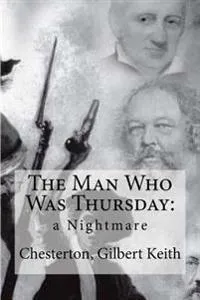
The Man Who Was Thursday: a Nightmare
Like most of Chesterton's fiction, the story includes some Christian allegory. Chesterton, a Protestant at this time (he joined the Roman Catholic Church about 15 years later), suffered from a brief bout of depression during his college days, and claimed afterwards he wrote this book as an unusual affirmation that goodness and right were at the heart of every aspect of the world. However, he insisted: 'The book ... was not intended to describe the real world as it was, or as I thought it was, even when my thoughts were considerably less settled than they are now. It was intended to describe the world of wild doubt and despair which the pessimists were generally describing at that date; with just a gleam of hope in some double meaning of the doubt, which even the pessimists felt in some fitful fashion'.

Asi hablo Zaratustra
Asi hablo Zaratustra

Falkner
Falkner

Sanin
-


Herbert West: Reanimator
Herbert West: Reanimator


The Lost World
The Lost World


Leila
-


Bel-Ami
-


Le Horla
-


Un Médico Rural
Temas sobre los que se construye la restante narrativa kafkiana: la difusa frontera entre lo humano y lo animal (El nuevo abogado, Chacales y rabes, Preocupaciones de un jefe de familia, Informe para una academia), la empresa imposible (Un m dico rural, En la galer a, El pueblo m s cercano, Un mensaje imperial), la confrontaci n entre el individuo y el poder (Un viejo manuscrito, Ante la Ley) o la frustrada relaci n entre padre e hijo que tanto influy en la vida y, por tanto, en la literatura del escritor checo (Once hijos).

Las Olas
-

