
Islamic Manners and Etiquettes
Islamic Manners and Etiquettes



The Muslim Family and the Woman's Position
The Prophet Muhammad (pbuh) established complete equality between men and women, with both having their respective special functions. This volume draws on the features of the Muslim Woman pertaining to marriage in accordance to the Qur’an and Sunnah drawing upon specific examples of incidents as well as different prominent female figures in Islam during the Prophet’s lifetime. It shows that much of what we imagine to be Islamic rules are no more than social or cultural tradition. It is short and concise and approaches wronged popular thinking in a good-natured manner all the while correcting much of what has been misinterpreted by culture and tradition. This book is well-sourced and given the topic, beneficial for all Muslims to pick up at some point in their lives.

Muslim Woman's Attire and Adornment
In Volume 4, the author shows that Islam honours women in all that it makes permissible for a Muslim woman to wear and with what she may adorn herself. This Eight volume series is the author’s abridged version of his longer work with the same Arabic title, Tahrir al-Mar’ah fi ‘Asr al-Risalah spanning a twenty-five year study comprising fourteen great anthologies of ahadith, but in this book he only rarely includes hadiths from any anthology other than the two most authentic ones of al-Bukhari and Muslim.

Muslim Woman's Participation in Social Life
The emancipation of women cannot be complete unless it is coupled with the emancipation of men. This can only be accomplished by drawing our social values from the Qur’an and the sunnah. In this volume, the author shows that mixed social life was the pattern in the early Muslim society established by the Prophet. This 8-volume series is the author’s abridged version of his longer work with the same title, spanning a 25-year study of the main sources of Islamic teachings: the Qur’an and the authentic sunnah. The author’s study comprised 14 great anthologies of hadiths, but in his book he only rarely includes hadiths from any anthology other than the two most authentic ones of al-Bukhari and Muslim. This series will illustrate the status of the Muslim woman that is greatly different from what is assumed in most Muslim societies today.


You Have Not Yet Been Defeated
Alaa Abd el-Fattah is arguably the most high-profile political prisoner in Egypt, if not the Arab world, rising to international prominence during the revolution of 2011. A fiercely independent thinker who fuses politics and technology in powerful...



Alchemy of Happiness
The Alchemy of Happiness is a work of Islamic philosophy by Persian theologian, philosopher, mystic, and moralist Al-Ghazzali. Written around AD 1105, this was one of many works by the great man to help Muslims clarify which aspects of contemporary philosophy contradicted the faith, and which supported it. In middle age, Al-Ghazzali was in the midst of a successful career as a well-known educator and guest at the court of a powerful vizier. Despite his accomplishments, he abandoned his lucrative posts in AD 1095 and disposed of his wealth, electing to live as an ascetic and mystic. He chose not to teach at state-sponsored schools anymore, opting for a life of seclusion and teaching at smaller, donation-supported schools. He was considered one of the renewers of Islam, who are said to appear at the start of each century to cleanse the faith and keep it pure. This belief was supported by Al-Ghazzali's writing. He wrote over seventy works during his lifetime, with another twenty

Den Lysande Stegen - En Handbok I Logik
Al-Akhdari handbok i logik är en översättning av hans erkända prosodi på 144 rader med tillhörande förklaring. Verket introducerar den grundläggande terminologi och funktion som logikerna använder för att tänka och resonera på ett sammanhängande och korrekt sätt. Inom ramen för islamiska vetenskaper kommer logiken till god användning som stöd vid bland annat studier inom troslära och rättslära. Som Al-Akhdari så fint förmedlar det så fungerar detta verk som allmän introduktion, en stege som man kan använda för att ta sig vidare till att förstå de mer ingående verken i logik.

Al-akhdaris Sammanfattning - Bönens Regler Enligt Malikiskolan
Detta verks tematik kan för den moderna blicken förefalla komplext och svårbegripligt. Boken är i själva verket en svunnen högcivilisations barnbok. I hundratals år studerades verket av muslimska barn i syfte att dra lärdom om en av religionens viktigaste fundament, tidebönen. Visserligen kan boken läsas av den allmänt historieintresserade för att erhålla djupare insikt om en vital praxis i en av världshistoriens viktigaste livsåskådningar men eftersom boken är författad som vägledande praktisk handbok ämnad att frambringa normativ efterlevnad är det så den främst bör läsas. Författaren var ett universalgeni profilerad inom en rad olika vetenskaper. Al-Akhdari var inte bara lärd inom muslimsk teologi och rättsvetenskap men var även en stor poet. I denna bok har han extraherat det allra mest centrala aspekterna i rättslärans regler om renhet och bön och destillerat fram en manual med så få och enkla ord som möjligt. I boken skriver författaren: "Bönen är ett mäktigt ljus som upplyser de bedjandes hjärtan". Dessa ord ramar in hela bokens syfte och mål.
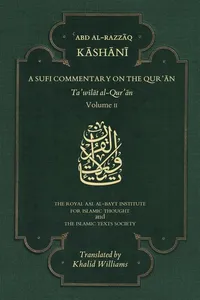
Sufi Commentary on the Qur'an
The Sufi commentary on the Qur'an by 'Abd al-Razzaq al-Kashani (Ta'wilat al-Qur'an)--long believed to have been written by Muhyi al-Din Ibn 'Arabi (d. 1240)--is one of the masterpieces of Sufi exegesis. It is a complete commentary on the Qur'an, commenting on every chapter but not on every verse. A Sufi Commentary on the Qur'an is the first translation into English of this seminal work. Though little is known about the life of 'Abd al-Razzaq al-Kashani (d. between 1329-35), it is accepted that he studied under Mu'ayyid al-Din al-Jandi, who himself had studied with Sadr al-Din Qunawi, the stepson of Ibn 'Arabi and leading exponent of Akbarian doctrine. Despite the paucity of information on his life, Kashani is recognised for the significant contribution he made to the school of Ibn 'Arabi; his influence and legacy lie in his systemisation of the ideas and thoughts of Ibn 'Arabi. The central theme of Kashani's commen-tary on the Qur'an is gnosis or direct experiential knowledge of God:
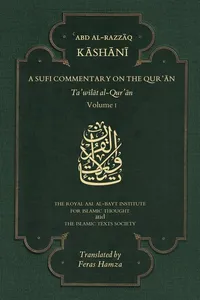
Sufi Commentary on the Qur'an
A Sufi Commentary on the Qur'an

Secret of Secrets
An interpretative translation by Shaykh Tosun Bayrak of 'Sirr al-Asrar' by Hadrat Abd al-Qadir al-Jilani (1077-1166AD), considered by many to be one of the greatest saints of Islam and the eponymous founder of the Qadiriyya order. This book, appearing in English for the first time, contains the very essence of Sufism, giving a Sufi explanation of how the outward practices of Islam - prayer, fasting, almsgiving and pilgrimage - contain a wealth of inner dimension which must be discovered and enjoyed if external actions are to be performed in a manner pleasing to God. When this is achieved the soul finds true peace and the spiritual life becomes complete.


Debunking the Myth of America's Poodle
Most writing today by activists and opponents of foreign policy is rooted in the 1960s. Underpinning many of these books is the unquestioned assumption that contemporary British imperialism is an adjunct to American foreign policy. Wherever the Un...

Erotica, Love and Humor in Arabia
The Book of Songs of Abu al-Faraj al-Isfahani (AD 897-971) is the most extensive collection of anecdotes from pre-Islam Mecca, Medina, Damascus and Baghdad to the beginning of the tenth century. Entertaining and informative, these gems have remain...

You Can Be the Last Leaf
Finalist for the 2022 National Book Critics Circle Award in Translation Translated from the Arabic and introduced by Fady Joudah, You Can Be the Last Leaf draws on two decades of work to present the transcendent and timely US debut of Palestinian ...

San'a - Öppen stad
Nu'man, en ung jemenit, är på väg från Aden hem till byn. Som så många andra i detta sägenomspunna men utarmade land, har han velat utbilda sig och bidra till något slags framåtskridande för sitt folk. Men även när både viljan och förmågan finns, ...

Nomadens ode över livets flyktighet
Arabiens förislamiska kultur uppmärksammas sällan utanför forskarvärldens akademiska ramar. Huvudsyftet med denna bok är att väcka intresse för en viktig period i världslitteraturens historia hos läsare utan förkunskaper i arabisk litteratur eller...

Towards a Critical Victimology
Towards a Critical Victimology offers a serious challenge to the law and order perspective on victims' rights and the false contest that is usually created between those rights and the rights of offenders. It sheds light on the way victim initiati...



Floden och älskarna
I novellen "En inbjudan till målning" utvecklas en dialog mellan en man och en kvinna till ett passionerat kärleks sceneri i en tavla, där flodens törst kan kännas. I "Floden" får läsaren uppleva flodens ilska och turbulenta vatten, medan måsarna och de vilsna människorna undrar vad de ska göra. ”Kakao” skildrar sociala relationer mellan en familj och dess gäster. I ”Bojor” lämnar en man in sina papper för att söka ett jobb men blir ombedd att ange sin folkbokföringsadress. På väg till myndigheten tar han en överfull buss, där något märkligt sker – särskilt mellan honom och en vacker ung kvinna. Väl framme väntar en överraskning! I "Mannen som överraskades av regnet" berättar författaren om en irakisk kämpe som ägnar hela sitt liv åt att tjäna sitt folk och sitt land, och blir en odödlig symbol. ”Låt mig leva” handlar om en ung man som saknar det utseende som brukar dra till sig kvinnors uppmärksamhet. Han är dessutom kutryggig. Men han är godhjärtad, glad, älskar sånger och musik och

Al-Ghazali on Intention, Sincerity and Truthfulness
Al-Ghazali on Intention, Sincerity & Truthfulness is the thirty-seventh chapter of the Revival of the Religious Sciences. It falls in the section dealing with the virtues. Here Ghazali deals with the very important subject of intention which is of crucial importance in Islam. He asks: 'How can someone ignorant of the meaning of intention verify his own intention; or how can someone ignorant of the meaning of sincerity verify his own sincerity; or how can someone sincerely claim truthfulness if he has not verified its meaning?' In the Book of Intention, Sincerity & Truthfulness, Ghazali gives a response to each of these questions by expounding the reality and levels of intention, sincerity and truthfulness, those acts which affirm them and those acts which mar them. As in all his writings, Ghazali bases his arguments on the Qur'an, the example of the Prophet and the sayings of numerous scholars and Sufis.

Al-Ghazali on the Ninety-nine Beautiful Names of God
'Al-Ghazali on the Ninety-nine Beautiful Names of God' (al-Masad al-asna fi sharh asma'Allah al-husna) is based on the Prophet's teaching that `Ninety-nine Beautiful Names' are truly predicated of God. In this work, Abu Hamid al-Ghazali explores the meaning and resonance of each of these divine Names, and reveals the functions they perform both in the cosmos and in the soul of the spiritual adept. In addition, Ghazali explains how man's perfection and happiness consists in being moulded by the qualities of God. Although some of the book is rigorously analytical, the author never fails to attract the reader with his profound mystical and ethical insights, which has made this book one of the perennial classics of Muslim thought, popular among Muslims to this day.

ESSENTIAL IHYA' 'ULUM AL-DIN - Volume 3
The Revival of the Religious Sciences by Imam al-Ghazālī can be described as a book that will never die. This is because it contains a vital cognitive force that time cannot obliterate. In it the Imam discusses Islamic rulings, beliefs and character, in the style of an admonisher who understands the psyche and its secrets as well as spiritual diseases. What distinguishes this book from others is its strong spiritual influence on the reader which makes him seek both soundness of heart and his Lord's pleasure through acts of worship, rather than the mere performance of acts of worship so that they are legally valid.The book is a comprehensive encyclopaedia for all of a Muslim's religious affairs, including beliefs, acts of worship, dealings and character, as well as for individual and societal welfare. Al-Ghazālī's style is that of one who practices what he knows, one who is determined to rise from the dry, ordinary manner of teaching to one which encourages action. Abū Hāmid al-Ghazālī

Al-Ghazali on Proper Conduct when Listening to Music and the Experience of Ecstasy
Al-Ghazali on Proper Conduct when Listening to Music and the Experience of Ecstasy